
If your glassware comes out of the dishwasher looking cloudy, spotted, or faintly greasy, the culprit is rarely your detergent. It is almost always a neglected filter, and the right dishwasher filter cleaning tricks can completely transform your results. Over time, food particles, grease, and mineral deposits build up in that small basket at the bottom of your machine, quietly sabotaging every wash cycle. The good news is that fixing this problem takes less time than loading the dishwasher itself.
In this guide, we are diving deep into seven phenomenal methods that will restore your machine’s sparkle, banish lingering odors, and finally give you the spotless glassware you have been chasing. We will also cover how to unclog dishwasher drain lines, clean dishwasher spray arms, and eliminate dishwasher film for good. Grab your gloves, because your dishwasher is about to get the deep clean it deserves.
Why Dishwasher Filter Cleaning Tricks Matter for Sparkling Dishes
Most modern dishwashers use a self-cleaning filtration system, but “self-cleaning” is a bit of a misleading term. These filters trap food debris so it does not redeposit on your dishes, which means they require regular manual attention. Without it, that trapped debris becomes a breeding ground for bacteria and odor.
A clogged filter forces water to recirculate through grime repeatedly instead of draining it away. This is precisely why glasses emerge hazy and silverware loses its shine. Learning a few reliable dishwasher filter cleaning tricks is the single most impactful thing you can do for appliance longevity and dish cleanliness alike.
Think of the filter as the heart of your dishwasher’s circulatory system. When it is clear, water flows freely and carries grime straight to the drain. When it is clogged, everything backs up, and your dishes pay the price for it.
Trick One: Locate and Remove the Filter the Right Way
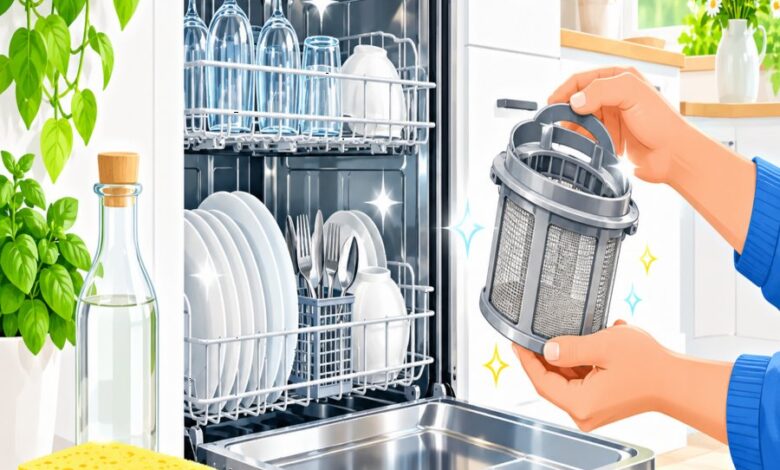
Before you can clean anything, you need to find the filter, which is typically located at the bottom of the tub beneath the lower spray arm. Most models feature a cylindrical mesh piece that twists counterclockwise to unlock. Consult your owner’s manual if you are unsure, since every manufacturer designs this component slightly differently.
Gentle removal matters. Twist slowly and lift straight up rather than yanking, since forcing a stuck filter can crack the plastic housing. If it feels stubborn, a few drops of warm water around the base can loosen hardened grime first.
Inspect before you clean. Hold the filter up to the light and look for trapped glass shards, bones, or produce stickers. Removing large debris by hand first will make the actual washing process far more effective.
Trick Two: The Vinegar Soak That Dissolves Grime Fast
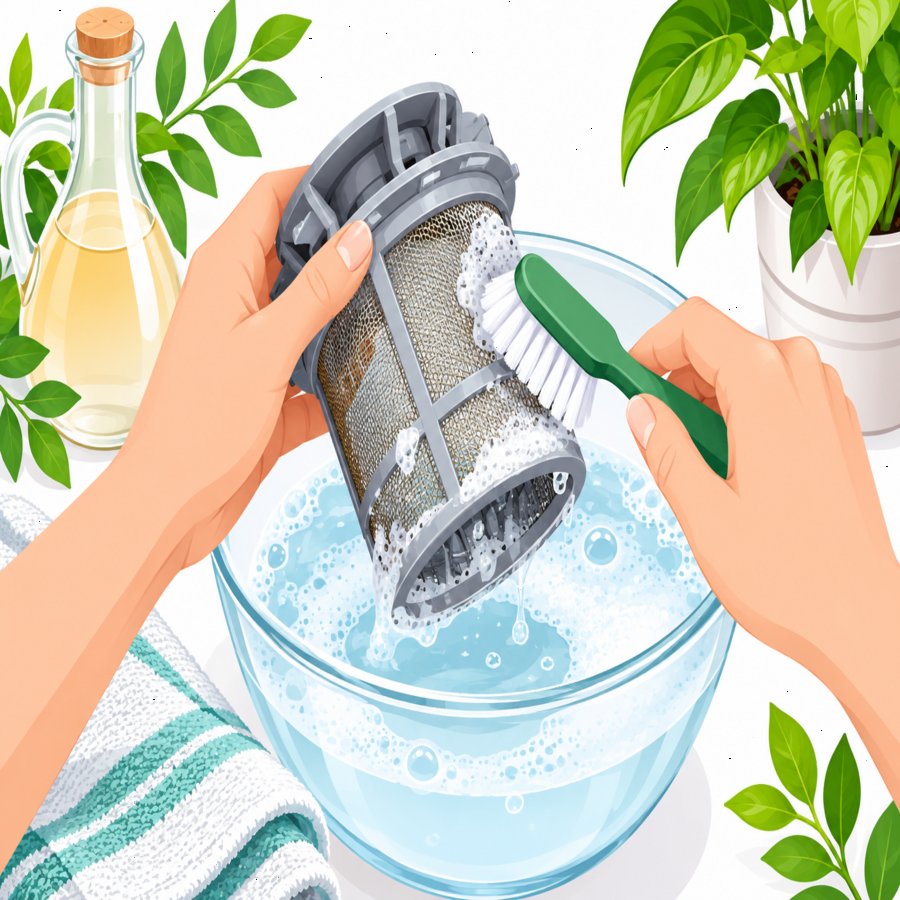
Plain white vinegar remains one of the most effective and affordable degreasers for kitchen appliances. Submerge the removed filter in a bowl of warm water mixed with one cup of distilled white vinegar. Let it soak for fifteen to twenty minutes while the acidity breaks down grease and mineral film.
After soaking, use an old, soft-bristled toothbrush to scrub inside every mesh crevice. This step is one of the most reliable dishwasher filter cleaning tricks because vinegar’s acidity targets both grease and hard water buildup simultaneously. Rinse thoroughly under running water before reinstalling.
Pro tip for stubborn stains. If grime persists, sprinkle baking soda directly onto the wet filter after the vinegar soak. The light fizzing reaction helps lift embedded particles from tight mesh gaps without scratching the metal.
Trick Three: How to Unclog Dishwasher Drain Blockages
A clean filter will not help much if the drain itself is blocked further down the line. To unclog dishwasher drain pathways, start by checking the small drain basin beneath where the filter sits. This area commonly collects wayward bits of food, broken glass, and produce labels.
Use a flashlight to inspect the drain opening for visible obstructions, then remove debris by hand with gloves on. If water still pools at the bottom of the tub after a cycle, the clog may extend into the drain hose connecting to your garbage disposal or sink drain. Disconnect the hose carefully and flush it with warm water to clear any hidden buildup.
Check the garbage disposal connection. Many dishwashers drain through a knockout plug on the disposal unit, and this plug is sometimes left in place after installation. Running the disposal briefly before starting your dishwasher cycle can also help keep this shared pathway clear.
Standing water is one of the clearest warning signs that your drainage system needs attention. Addressing it early prevents musty odors and protects the pump motor from unnecessary strain.
Trick Four: Clean Dishwasher Spray Arms for Full Water Pressure
Even a pristine filter cannot compensate for clogged spray arm nozzles. These rotating arms distribute pressurized water across every dish, and mineral deposits love to settle inside their tiny holes. To clean dishwasher spray arms, gently pop them off the mounting posts according to your model’s release mechanism.
Soak the arms in warm vinegar water alongside the filter for maximum efficiency. Use a toothpick or a straightened paperclip to carefully poke through each nozzle hole, dislodging hardened debris without widening the opening. Rinse under a strong faucet stream to confirm water flows freely through every single jet.
Test the spin before reassembling. Give each arm a manual spin once reattached to ensure nothing obstructs its rotation. A sluggish or wobbly spray arm often indicates a hidden bearing clog that needs a closer look.
Trick Five: Eliminate Dishwasher Film With a Citric Acid Rinse
That cloudy, chalky coating on glassware is usually hard water film, not leftover soap. To eliminate dishwasher film permanently, run an empty cycle with two cups of white vinegar placed in a bowl on the top rack. The steam distributes the acid throughout the tub, dissolving mineral deposits clinging to interior walls.
For households with especially hard water, consider a citric acid-based dishwasher cleaner once a month as a preventative measure. These products are formulated specifically to tackle limescale that vinegar alone sometimes cannot fully remove. Following this with a rinse aid helps water sheet off glass surfaces instead of beading and drying into spots.
According to the home cleaning experts at Better Homes & Gardens, consistent monthly maintenance cycles are one of the most overlooked ways to extend appliance performance and keep dishes genuinely spotless. Pairing this advice with your own dishwasher filter cleaning tricks routine creates a one-two punch against buildup.
Trick Six: Baking Soda and Hot Water for Odor Control
If your kitchen smells faintly sour every time you open the dishwasher door, trapped food particles are decomposing somewhere inside. After cleaning the filter and spray arms, sprinkle one cup of baking soda across the bottom of the empty tub. Run a short hot water cycle to let the baking soda neutralize lingering odors at the source.
Baking soda works as a gentle abrasive too, polishing away faint residue on the tub’s interior surfaces. This step pairs beautifully with the vinegar rinse, since combining mild acid and mild base cleaning sessions on alternating weeks keeps the machine consistently fresh. Never combine vinegar and baking soda in the same cycle, however, since they neutralize each other’s cleaning power.
Check the door gasket too. Grime loves to hide in the rubber seal around the door, so wipe it down with a vinegar-dampened cloth during this same maintenance session. A clean gasket also helps the door seal properly, preventing leaks during the wash cycle.
Trick Seven: Build a Maintenance Schedule That Actually Sticks
The best dishwasher filter cleaning tricks in the world will not help if you forget to use them regularly. Mark a recurring reminder on your calendar to rinse the filter under running water weekly, with a deeper vinegar soak once a month. Households that run the dishwasher daily should lean toward the more frequent end of that schedule.
Keep a small caddy of supplies, including an old toothbrush, white vinegar, and baking soda, stored directly under the sink for easy access. When the tools are within arm’s reach, you are far more likely to actually follow through on maintenance. This small habit prevents the kind of neglect that leads to costly repairs down the road.
If you are refreshing your kitchen’s overall functionality this season, it is worth extending that same organizational mindset to nearby living spaces. For instance, homeowners looking to streamline a small kitchen nook or open-concept dining area often find inspiration in clever low-profile furniture arrangement ideas that keep everything feeling open and uncluttered. A tidy kitchen appliance routine pairs naturally with a thoughtfully organized home overall.
Seasonal deep clean reminder. Every three months, remove and inspect every component together: filter, spray arms, drain basin, and door gasket. This quarterly ritual catches early wear and tear before it becomes an expensive service call.
Common Mistakes That Undo Your Cleaning Efforts
Overloading the dishwasher is one of the fastest ways to reintroduce grime into a freshly cleaned filter. When dishes are packed too tightly, food particles get knocked loose during the wash and immediately clog the mesh again. Leave adequate spacing between plates and bowls so water and debris can travel properly to the filter and drain.
Skipping the pre-scrape is another common culprit. While modern dishwashers are designed to handle some food residue, large chunks of rice, bones, or cheese should always be scraped into the trash first. This single habit dramatically reduces how often you will need to perform a deep filter cleaning.
Using the wrong detergent type can also sabotage your results. Gel detergents tend to leave more residue behind compared to powder or tablet formulas, especially in hard water regions. The The Old Farmer’s Almanac notes that matching your detergent formula to your local water hardness can significantly reduce filming and spotting on glassware.
Signs It Is Time for a Professional Inspection
Most filter and drain issues are fully solvable with household tools and a bit of elbow grease. However, persistent pooling water, grinding noises, or burning smells after cleaning indicate a deeper mechanical issue. A failing drain pump or motor seal requires a licensed appliance technician rather than another round of vinegar soaking.
Pay attention to your dishwasher’s age as well, since units older than ten years become increasingly prone to pump and seal failures regardless of maintenance quality. If cleaning tricks stop producing noticeable improvement, it may simply be time to weigh repair costs against a newer, more efficient replacement. Energy-efficient models released in recent years also tend to use significantly less water per cycle, which is worth factoring into that decision.
Ultimately, a few minutes of regular attention prevents the vast majority of dishwasher complaints homeowners face. By mastering these seven dishwasher filter cleaning tricks, you are not just chasing spotless glassware, you are protecting your appliance investment for years to come. Your dishes, your kitchen, and your future self will thank you for the habit.