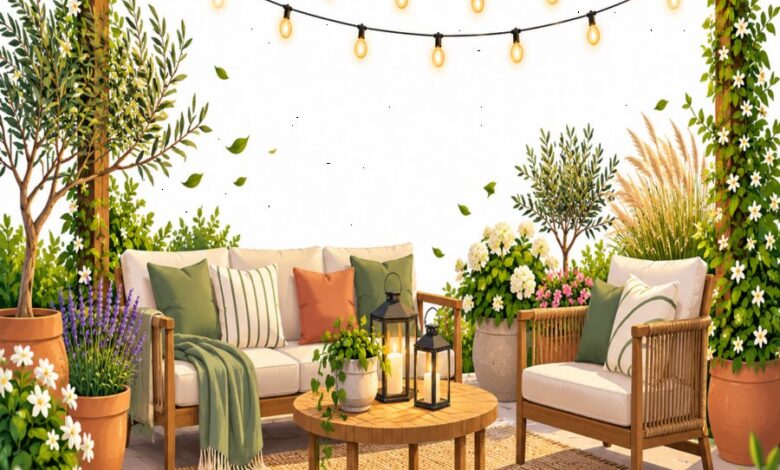
There is nothing quite like a patio glowing softly under a canopy of warm bulbs, until a gust of wind turns your dreamy setup into a tangled mess. Mastering reliable string light suspension tricks is the difference between a romantic outdoor evening and a midnight scramble to rescue fallen fixtures. Whether you have a sprawling deck, a cozy balcony, or a windswept rooftop, the right installation strategy keeps your lighting secure, beautiful, and worry-free. In this guide, we are breaking down eight brilliant, wind-resistant methods that professional landscapers and patio designers swear by. By the end, you will know exactly how to hang festoon bulbs so they survive even the gustiest nights.
Outdoor lighting is one of the simplest ways to transform a backyard into a four-season retreat, but wind is the silent enemy most homeowners forget to plan for. A sagging or swinging line of bulbs is not just an eyesore; it is a safety hazard and a quick route to broken sockets. These string light suspension tricks address tension, anchoring, and spacing so your installation looks professionally done and stays that way through storms, breezes, and everyday weather.
Essential Guide to string light suspension tricks
Why Wind Resistance Matters for Outdoor Festoon Lighting
Before diving into the techniques, it helps to understand why wind causes so much trouble for outdoor lighting setups. Bulbs and cables act like sails, catching gusts and transferring stress directly onto their mounting points. Over time, this repeated strain loosens screws, cracks sockets, and eventually brings the whole line crashing down.
Smart windproof patio lighting design reduces surface tension and distributes force evenly across multiple anchor points rather than concentrating it on just two ends. This is the foundational principle behind every trick in this article, and understanding it will help you troubleshoot any future lighting project, even beyond your patio.
The Sail Effect Explained
Think of your string lights as a long, thin sail stretched between two points. The more slack or tension imbalance there is, the more it will flap and strain in the wind. Reducing this sail effect through proper tensioning is the single most important factor in long-term durability.
Trick One: Install a Dedicated Patio Guide Wire Kit
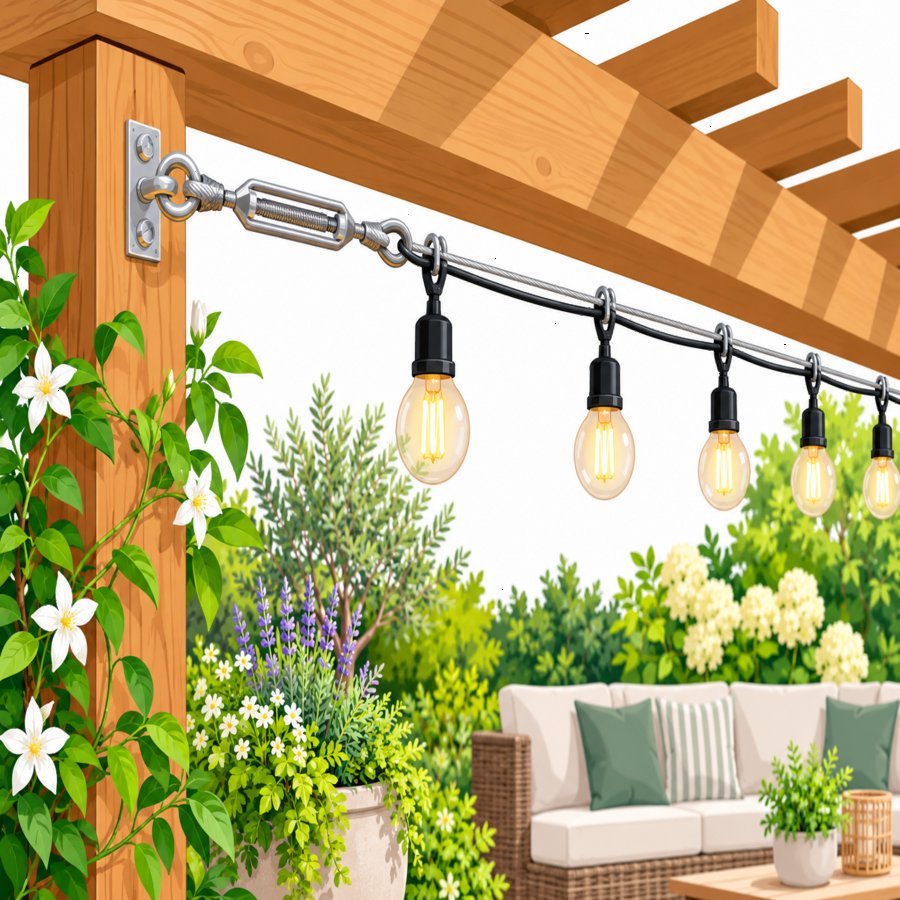
The single most effective upgrade you can make is switching from direct hook-to-hook hanging to a proper patio guide wire kit. These kits include a galvanized steel cable rated for outdoor tension, turnbuckles for adjustment, and heavy-duty eye bolts for anchoring.
Instead of the lights themselves bearing the structural load, the steel cable carries all the tension while your festoon lights simply clip onto it using cable ties or S-hooks. This separates the decorative element from the load-bearing element, which is exactly how professional event companies rig lighting for weddings and large outdoor venues.
When shopping for a kit, look for stainless or galvanized steel cable rated for at least 200 pounds of tension, even if your lighting load is much lighter. This overbuilt capacity means the wire will not stretch or sag during wind events, keeping your bulbs level and secure.
Trick Two: Master the Catenary Curve Technique
One of the most overlooked string light suspension tricks borrowed from engineering is the catenary curve, the natural sagging arc a cable forms when suspended between two points under its own weight.
Rather than pulling your lighting cable perfectly taut and flat, allow a slight, intentional curve of roughly ten to fifteen percent of the total span length. This curve distributes wind load more evenly along the cable and reduces the whipping motion that straight, overly tight lines experience in gusty conditions.
A perfectly flat, tight line might look neat on a calm day, but it acts like a guitar string in the wind, vibrating and stressing every connection point. The gentle sag actually improves both aesthetics and structural resilience.
Trick Three: Anchor to Structural Elements, Not Decorative Ones
A shockingly common mistake is anchoring lights to fence posts, lattice panels, or thin trellises that were never designed to bear lateral load. These structures may hold firm on a calm evening but fail spectacularly during the first real storm.
Instead, anchor your hanging outdoor festoon lights to load-bearing structures such as house eaves, structural posts, mature tree trunks, or dedicated steel poles sunk in concrete footings. If you are working with a pergola, confirm the beams are structurally rated before loading them with tension cables.
For gardeners who love combining greenery with their outdoor decor, a sturdy structure like a reclaimed pallet wood wall planter can double as a charming, rustic anchor point for shorter light runs, provided it is securely fastened to a wall stud or masonry anchor first.
Trick Four: Use Turnbuckles for Adjustable Tensioning
Turnbuckles are small threaded hardware pieces that allow you to fine-tune cable tension after installation, and they are an essential component of any serious patio guide wire kit. Seasonal temperature changes cause steel cable to expand and contract slightly, which can leave your lighting either too slack or uncomfortably tight.
Install a turnbuckle at one end of your cable run so you can twist it clockwise to tighten or counterclockwise to loosen as conditions change throughout the year. Check and adjust this tension at the start of each season, particularly before the windiest months in your region.
This simple hardware addition transforms a static installation into an adjustable system that adapts to weather rather than fighting against it.
Trick Five: Stabilize Freestanding Poles with Cross-Bracing
Many patios lack convenient structures on both ends of the desired lighting span, requiring freestanding poles. These poles are notoriously vulnerable to wind because they rely entirely on their base for stability.
To build genuinely windproof patio lighting poles, use a cross-bracing method with three or four guy-wires radiating outward from the top of each pole to ground anchors or heavy concrete-filled buckets. This triangulation technique is the same principle used in temporary construction scaffolding and flagpoles.
Set your poles in post bases filled with quick-setting concrete whenever possible, as surface-mounted or simply weighted bases often shift during sustained wind events. According to horticultural and landscaping experts, proper structural anchoring is just as important outdoors as it is indoors, a principle echoed by the Royal Horticultural Society in their guidance on securing garden structures against weather damage.
Trick Six: Choose Heavier Gauge Cable for Longer Spans
Not all cable is created equal, and this is one of the most important string light suspension tricks for anyone covering a large patio or garden area. Thin, lightweight copper or vinyl-coated wiring might work fine for a five-foot run between two porch posts, but it becomes dangerously unreliable across spans longer than twenty feet.
For longer spans, upgrade to a thicker gauge galvanized steel cable, ideally between one-eighth and three-sixteenths of an inch in diameter. The added weight and tensile strength resist wind-induced oscillation far better than thinner alternatives, and the slight increase in material cost is negligible compared to the cost of replacing broken bulbs after a storm.
Pair your heavier cable with properly rated eye bolts and lag screws driven into solid wood or masonry, never drywall or hollow fence panels, to complete a truly storm-ready setup.
Trick Seven: Space Your Anchor Points Strategically
Rather than relying on just two end points for a long run of lights, introduce intermediate anchor points every fifteen to twenty feet along the span. This breaks up the total wind load into smaller, more manageable sections instead of concentrating force across one long, vulnerable stretch.
Intermediate anchors can be as simple as a sturdy hook mounted to an existing pergola beam, a tree branch, or a secondary pole positioned along the route. This zigzag or multi-point layout is particularly effective for larger gatherings and patio parties where hanging outdoor festoon lights need to cover wide, open areas.
This approach also creates a more visually interesting crisscross pattern overhead, which many homeowners find more charming than a single straight line of bulbs.
Trick Eight: Secure Bulbs Individually with Zip Ties or Clips
Even with a perfectly tensioned guide wire, individual bulbs can still swing and knock against each other in strong gusts, eventually loosening sockets or shattering glass globes. Securing each bulb socket to the support cable with a small zip tie or dedicated plastic clip solves this final vulnerability.
Most retailers now sell purpose-made light line clips designed specifically to attach festoon sockets to support cables without damaging the wiring insulation. These small additions take only a few extra minutes per bulb but dramatically extend the lifespan of your entire installation.
For an extra layer of protection during forecasted storms, consider temporarily removing glass bulbs and storing them indoors while leaving the empty sockets and cable system in place, a quick precaution that prevents costly breakage.
Seasonal Maintenance for Long-Lasting Results
Even the best string light suspension tricks require periodic maintenance to stay effective year-round. Inspect every anchor point, turnbuckle, and clip at the beginning of each season, paying special attention after any major storm event.
Look for signs of rust on steel hardware, fraying at cable ends, and loosened screws in wooden anchor points. The Old Farmer’s Almanac offers excellent seasonal weather pattern insights that can help you anticipate particularly windy months in your specific climate zone, allowing you to schedule inspections proactively rather than reactively.
Taking down lights entirely during the harshest winter months, if your region experiences severe storms, is sometimes the smartest choice, allowing you to reinstall fresh and confident each spring.
Bringing It All Together for a Storm-Ready Patio
Combining several of these eight techniques will give you the most resilient results. A properly rigged patio guide wire kit paired with a gentle catenary curve, intermediate anchor points, and individually secured bulbs creates a system engineered to withstand serious wind events while still looking effortlessly elegant.
Remember that patience during installation pays dividends later. Taking an extra hour to properly tension cables and secure every connection point now will save you countless hours of repair work and replacement purchases down the road.
With these string light suspension tricks in your toolkit, your patio can finally enjoy the warm, inviting glow of festoon lighting without the constant anxiety of wind damage. Here is to many calm, beautifully lit evenings ahead, no matter what the forecast brings.