
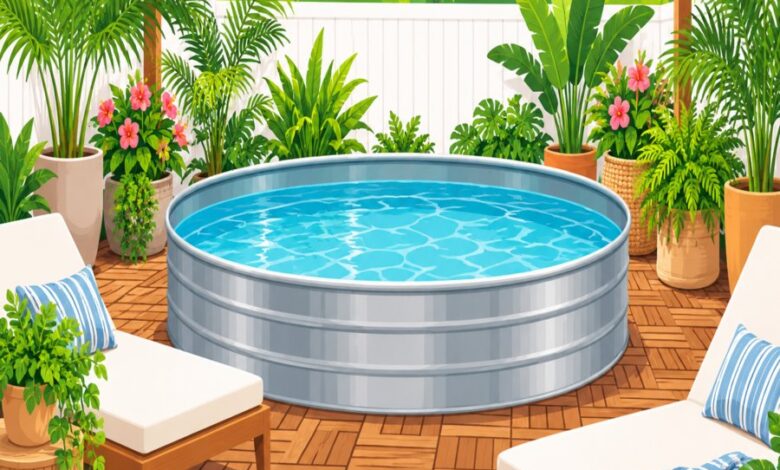
There is a reason every design-savvy homeowner is suddenly obsessed with galvanized steel troughs in the backyard. The best stock tank pool hacks transform a humble feed-store container into a sculptural, resort-worthy plunge oasis without the five-figure price tag of a concrete inground pool. With the right plumbing, filtration, and finishing touches, a simple metal tank becomes the centerpiece of summer. This guide walks through six ingenious upgrades that elevate an ordinary above ground stock tank pool into a genuinely high-end outdoor retreat.
Whether you are starting from scratch or retrofitting a tank you already own, these ideas cover everything from structural leveling to lighting design. We will also dig into galvanized pool filtration systems, smart pool pump plumbing setup choices, and the small details that separate a backyard gimmick from a luxury focal point. Grab a notebook, because these stock tank pool hacks are about to change how you think about small-space swimming.
Essential Guide to stock tank pool hacks
Why Stock Tank Pools Became the Ultimate Backyard Upgrade
Stock tanks were originally built to hold livestock water, which means the galvanized steel is thick, rust-resistant, and engineered to last decades outdoors. That same industrial durability is exactly what makes them perfect candidates for backyard swimming. Unlike inflatable pools that puncture or fade within a season, a quality tank can handle years of sun, chemicals, and heavy use.
Cost is the other obvious draw. A 10-foot diameter tank, pump, and basic filtration can often be assembled for a fraction of what a traditional pool installation costs, with far less excavation and permitting hassle. For renters, small-yard owners, or anyone wanting a seasonal setup, an above ground stock tank pool delivers real swimming depth in a footprint that fits almost anywhere.
The design world has also caught on, and that is where these stock tank pool hacks really shine. With the right cladding, lighting, and landscaping, a tank pool can look every bit as intentional and polished as a custom-built plunge pool.
Hack One: Site Prep and a Rock-Solid Foundation
Before any water goes in, the ground beneath your tank needs serious attention. A level, compacted base prevents the dreaded lean that stresses seams and shortens the tank’s lifespan. Start by marking the footprint, removing sod, and excavating a few inches of soil.
Build a compacted base layer. A combination of crushed gravel topped with a few inches of fine paver sand, compacted and leveled with a long board, creates a stable cushion that also assists drainage. Check level in multiple directions, since even a slight slope concentrates thousands of pounds of water pressure unevenly on one wall.
Consider a frame for structure. Many homeowners build a simple timber or composite deck frame around the base, which both levels uneven yards and gives you a surface to anchor steps, decking, or privacy screening later. This foundation work is unglamorous, but it is the single most important of all the stock tank pool hacks because every other upgrade depends on a stable, level base.
Hack Two: Mastering the Pool Pump Plumbing Setup
Clear, swimmable water depends entirely on getting your circulation system right. A proper pool pump plumbing setup moves water continuously through a filter, trapping debris and distributing sanitizer evenly so you are not left with a stagnant, algae-prone tank by week two.
Choose the right size pump. For most residential tanks between 8 and 12 feet in diameter, a pump rated for small above-ground or saltwater pools, cycling the full volume roughly every six to eight hours, strikes the right balance between clarity and energy use. Oversized pumps waste electricity, while undersized ones leave water cloudy.
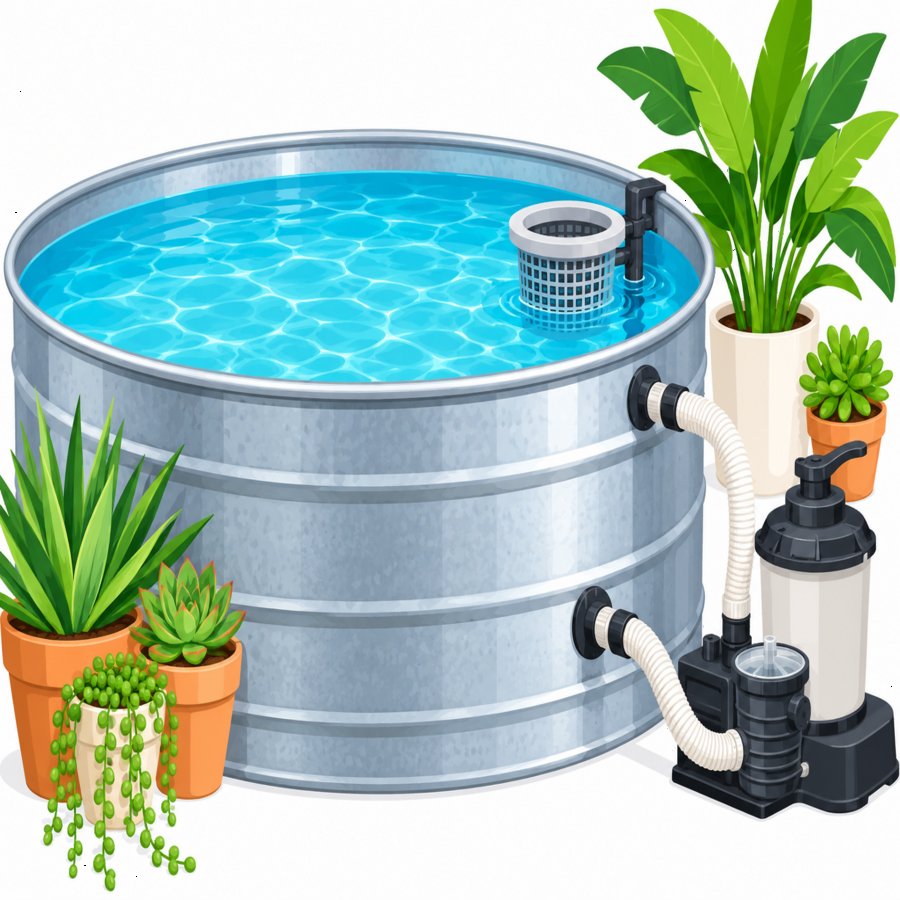
Plan your bulkhead fittings. Drilling a skimmer inlet near the top and a return jet lower on the opposite wall creates a full circulation loop instead of a single dead zone. Use bulkhead fittings with rubber gaskets on both sides of the tank wall to prevent leaks, and always tighten evenly in a star pattern rather than cranking one side down first.
Hide the hardware. A small wooden or composite box built around the pump and hoses keeps the mechanical side out of view while still allowing airflow to prevent motor overheating. This single plumbing decision is often the deciding factor in whether a tank pool feels like a polished installation or a backyard science project.
Hack Three: Upgrading Galvanized Pool Filtration for Crystal-Clear Water
Filtration is where a tank pool truly earns its luxury status. Basic cartridge filters work for casual use, but upgrading your galvanized pool filtration system pays off enormously in water clarity and reduced chemical maintenance.
Sand or cartridge, know the tradeoffs. Cartridge filters are compact and easy to clean with a garden hose, while sand filters handle finer particles and need less frequent attention, though they take up more space and require occasional backwashing. For a tank pool, a mid-size cartridge filter paired with a pre-filter skimmer sock often offers the best balance of footprint and performance.
Add a secondary skimmer basket. Floating skimmers that clip to the tank rim catch leaves and bugs before they reach the pump, extending filter life significantly. Combined with a robotic pool vacuum for the floor, this two-stage approach keeps galvanized pool filtration running efficiently all season.
Test and balance weekly. Even excellent filtration cannot compensate for unbalanced chemistry. Keep test strips on hand and adjust chlorine or saltwater levels weekly, checking pH after heavy rain or heavy swimmer traffic, which both shift balance quickly.
For detailed guidance on water chemistry and seasonal pool care, the Better Homes & Gardens outdoor living resource center offers excellent reference material that pairs well with these stock tank pool hacks.
Hack Four: Cladding and Decking That Scream Luxury
Raw galvanized metal has an undeniable industrial charm, but cladding the exterior elevates the entire aesthetic. This is where many of the most Pinterest-worthy stock tank pool hacks come from, and it is surprisingly achievable with basic carpentry skills.
Wood slat wraps. Vertical cedar or thermally modified wood slats attached to a simple frame around the tank instantly soften the industrial look and visually integrate the pool with surrounding landscaping or decking. Stain the wood to match your deck boards for a cohesive, custom-built appearance.
Built-in surround decking. Framing a wraparound deck at seat height around the tank rim creates lounging space, hides the tank’s lower half, and adds a safe, non-slip entry point. This approach mirrors the structural thinking used in interior architectural projects, similar to the layered framing techniques covered in this guide to creative faux beam ceiling design ideas for a custom home finish, where simple materials are dressed up to mimic expensive custom builds.
Stone veneer or stucco panels. For a more permanent, high-end finish, lightweight stone veneer panels can be adhered directly to a plywood collar built around the tank, giving the illusion of an in-ground plunge pool at a fraction of the cost.
Hack Five: Lighting, Heating, and Ambiance Upgrades
A plunge pool should feel just as inviting at dusk as it does at noon. Lighting and temperature control are two of the most underrated stock tank pool hacks for extending both daily usability and the overall swim season.
Submersible LED lights. Battery-powered or solar floating LED lights, or magnetic underwater lights attached to the interior wall, create a glowing resort effect after sunset without complicated electrical work. Warm white tones tend to look more upscale than multicolor strobes.
Solar rings and simple heaters. Floating solar rings absorb daytime heat and can raise water temperature several degrees overnight, while small electric or gas pool heaters extend comfortable swimming into cooler evenings and shoulder seasons. A black solar cover draped over the tank at night also helps retain heat gathered during the day.
Ambient sound and shade. A retractable shade sail or market umbrella positioned nearby, paired with a weatherproof speaker, rounds out the sensory experience and makes the space feel like a genuine backyard retreat rather than a utility tank with water in it.
Hack Six: Landscaping the Oasis Around Your Tank Pool
The planting and hardscaping surrounding your pool do as much heavy lifting as the tank itself when it comes to achieving a high-end look. Thoughtful landscaping is the finishing layer that ties all the other stock tank pool hacks together into one cohesive design.
Choose low-litter, pool-friendly plants. Ornamental grasses, succulents, and dwarf palms create a resort feel without dropping leaves or sap into the water the way many deciduous trees do. Clustering potted plants at varying heights around the tank perimeter mimics the layered planting style seen in professional landscape design.
Add a gravel or paver surround. A ring of pea gravel, flagstone, or composite decking around the base not only looks finished but also solves drainage issues and keeps grass clippings and mud out of the water. Edging the surround with steel or timber borders gives it a crisp, intentional boundary.
Think in layers, not just plants. Combine a privacy hedge or lattice screen on one side, a few large planters for height, and low groundcover at the base to build depth, much the way a professional garden designer layers a border bed. For detailed plant pairing advice suited to your specific climate zone, the Royal Horticultural Society plant selection guide is an outstanding resource for choosing species that thrive near water features.
Maintenance Habits That Keep the Oasis Looking New
Even the most beautifully designed above ground stock tank pool needs a consistent maintenance rhythm to stay inviting all season long. A little routine care prevents the small issues that eventually become expensive problems.
Run the pump daily. Set a timer so your pool pump plumbing setup cycles water for at least six to eight hours every day, even when the pool is not in use, to prevent algae blooms and stagnant spots.
Rinse filters weekly. A quick hose-down of cartridge filters keeps your galvanized pool filtration operating at peak efficiency and prevents the slow water clouding that sneaks up over a few weeks of neglect.
Cover it when not in use. A fitted solar or mesh cover blocks debris, slows evaporation, and reduces the sunscreen and sunscreen residue that otherwise builds up in the water over time.
Inspect the tank walls each spring. Check for rust spots, loose bulkhead fittings, or shifting at the base before refilling for the season, addressing small issues before they become leaks.
Final Thoughts on Building Your Dream Plunge Oasis
Transforming a galvanized tank into a stunning backyard retreat is entirely achievable with a weekend of effort and a clear plan. From foundation prep to lighting and landscaping, each of these stock tank pool hacks builds on the last to create something that looks far more expensive than it actually was.
Start with a solid, level base and a smart pool pump plumbing setup, then layer in upgraded filtration, cladding, lighting, and planting as your budget allows. The result is a durable, low-maintenance plunge pool that rivals custom installations at a fraction of the investment, giving your backyard a genuine resort-style upgrade for years to come.