Every spring, well-meaning gardeners grab a wheelbarrow and a bag of bark and head straight for the perennial beds, convinced that more mulch means healthier plants. Unfortunately, this is where the most common spring mulching mistakes quietly take root, literally. What looks like a tidy, freshly dressed garden bed can actually be smothering the crowns and root systems of your favorite perennials, setting the stage for disease, poor growth, and stunted blooms all season long.
The good news is that these errors are entirely preventable once you understand how mulch actually interacts with soil, moisture, and plant crowns. In this guide, we will walk through exactly what goes wrong, why it happens, and how to mulch your perennial beds the right way this season.
Why Spring Mulching Mistakes Are So Common
Spring is a season of enthusiasm. After months of dormant, brown landscapes, homeowners want their yards to look polished immediately, and mulch delivers that instant visual payoff.
The problem is that mulch is frequently treated as a decorative finish rather than a functional soil amendment. This mindset is the root cause of nearly every spring mulching mistake we see in residential landscapes.
The Rush to “Finish” the Bed
Many gardeners apply mulch before perennials have even fully emerged, piling material over crowns that are still pushing up new shoots. This single habit accounts for a huge share of the stunted growth homeowners report by early summer.
Misunderstanding What Mulch Actually Does
Mulch regulates soil temperature, conserves moisture, and suppresses weeds, but it is not meant to bury plant tissue. When applied incorrectly, it blocks oxygen exchange at the soil surface, which perennial roots depend on for healthy respiration.
The Mulch Volcano Hazard Explained
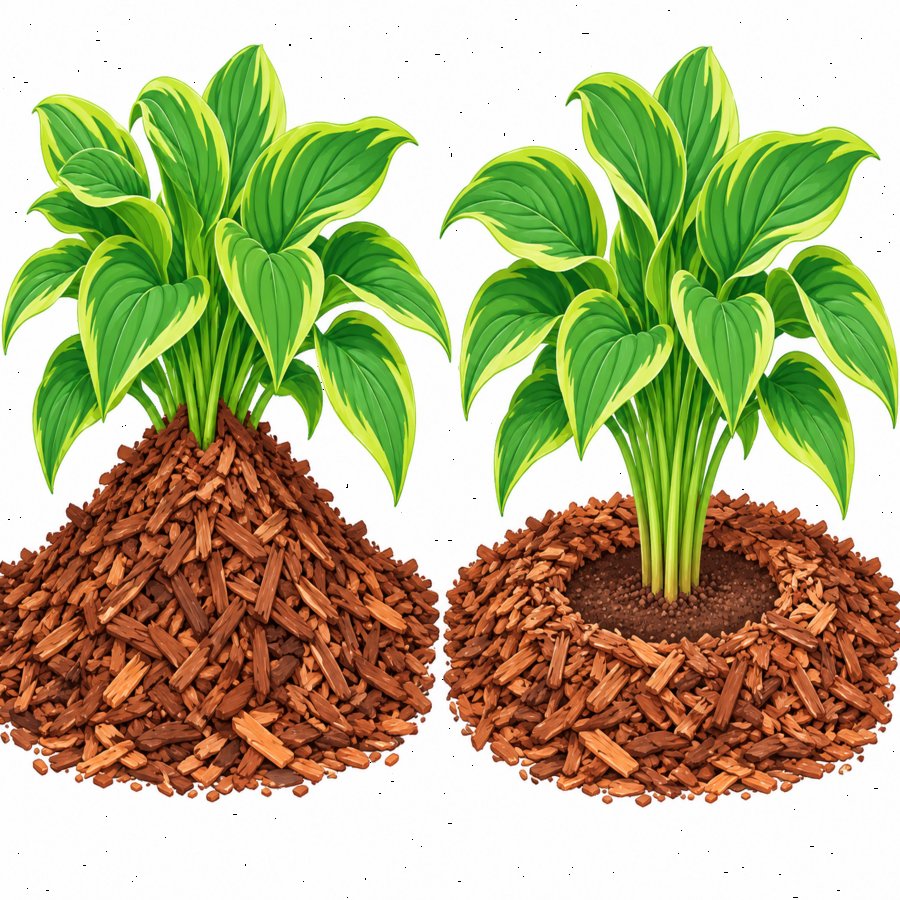
If you have driven through any suburban neighborhood in April, you have likely seen it: cone-shaped piles of mulch stacked high against tree trunks and perennial crowns like tiny volcanoes. These mulch volcano hazards are one of the most visually obvious yet widely ignored landscaping errors in America.
Piling mulch directly against stems and crowns traps excess moisture against plant tissue. That moisture, combined with warming spring temperatures, creates the perfect breeding ground for fungal pathogens and bark decay.
Why the Volcano Shape Forms
This shape typically happens because it is the fastest way to dump and spread mulch without careful measuring. Landscapers in a hurry, or homeowners eyeballing coverage, naturally let material cone upward near the base of plants.
The Hidden Root Consequences
Beneath that mounded mulch, perennial roots often begin growing upward into the moist mulch layer instead of down into native soil. This creates a shallow, unstable root system that struggles during summer heat and winter freezes alike, a direct consequence of common spring mulching mistakes.
Crown Rot Prevention Starts With Proper Technique
Crown rot prevention should be the top priority whenever you mulch perennial beds in spring. The crown, where stems meet roots, is the most vulnerable part of any perennial plant, and it has almost no tolerance for prolonged moisture exposure.
When mulch sits directly on top of the crown, it holds in dampness long after rainfall or irrigation. Combined with reduced air circulation, this creates ideal conditions for rot-causing fungi like Phytophthora and Rhizoctonia to take hold.
Leave a Donut, Not a Mound
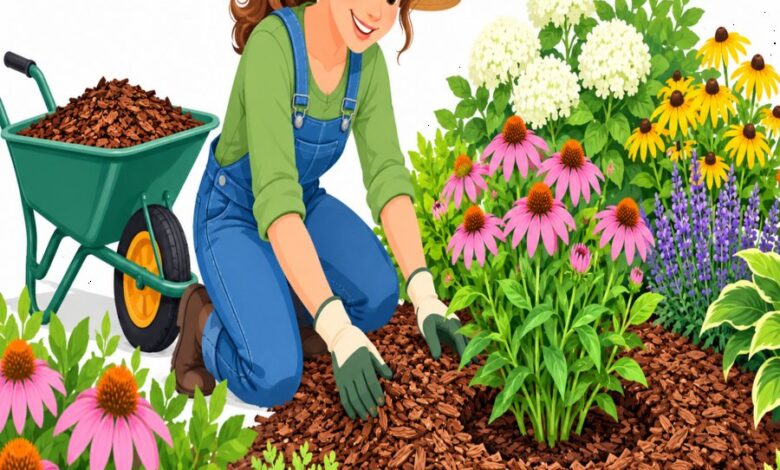
The simplest fix is to mulch in a donut shape rather than a mound. Keep a two to three inch gap of bare soil around the base of every perennial crown so air can circulate freely and moisture can evaporate naturally.
Watch for Early Warning Signs
Yellowing lower leaves, mushy stem bases, or a sudden wilting despite adequate watering are classic indicators that crown rot has already begun. Catching these symptoms early and pulling mulch away from the affected area can sometimes save the plant.
Getting Organic Bark Mulch Depth Right
One of the most overlooked spring mulching mistakes is simply applying too much material overall, regardless of how it is shaped around individual plants. Organic bark mulch depth matters just as much as placement.
The ideal depth for most perennial beds is between two and three inches. Anything beyond four inches starts to suffocate roots, restrict oxygen flow, and can even repel water instead of retaining it, especially with finely shredded bark that mats together.
Measuring Depth Accurately
Rather than guessing, use a small ruler or garden trowel to check depth in several spots across the bed. Established beds that already have a layer of decomposed mulch from previous years may only need a light top-up of half an inch to one inch.
Choosing the Right Mulch Material
Coarser, chunkier bark mulch allows better airflow and drains faster than finely shredded varieties, making it a safer choice for perennial beds prone to moisture retention issues. According to the Royal Horticultural Society, well-aerated organic mulch also encourages beneficial soil microorganisms that support long-term root health.
Timing: The Overlooked Factor Behind Spring Mulching Mistakes
Even with perfect technique, applying mulch at the wrong time can undo all your efforts. Soil temperature and moisture at the time of application play a huge role in how perennials respond.
Mulching Too Early Traps Cold and Wet Soil
Mulch acts as insulation, which is wonderful for established plants but problematic when applied before soil has warmed. Mulching too early in cold, wet soil keeps the ground chilly and damp for longer, delaying emergence and slowing root development in spring-blooming perennials.
Wait for Soil to Warm and Dry Slightly
A good rule of thumb is to wait until perennials have put on a few inches of visible new growth and the soil has dried out from winter saturation. This typically falls a few weeks after the last hard frost in most regions.
For a reliable regional guide on frost dates and planting windows, many gardeners consult The Old Farmer’s Almanac before scheduling their spring landscaping tasks.
How Poor Mulching Habits Affect the Whole Landscape
Spring mulching mistakes rarely stay contained to a single flower bed. Improper mulching habits often reflect broader landscaping shortcuts that affect drainage, hardscaping, and even nearby structural features.
Mulch Migration and Drainage Issues
Over-mulched beds often shed excess material during heavy spring rains, washing bark and debris onto walkways, patios, and paver surfaces. This not only creates slippery hazards but can also contribute to drainage problems similar to those discussed in our guide on common concrete paver walkway installation mistakes, where poor grading and material runoff undermine long-term durability.
A Holistic Approach to Spring Yard Care
Addressing mulching technique alongside broader hardscape and drainage planning ensures your entire landscape functions cohesively, rather than fighting against itself every time it rains.
A Step-by-Step Fix for Correct Spring Mulching
Now that we have covered the common pitfalls, let’s walk through a practical process for mulching perennial beds correctly this spring.
Step One: Clear Old Debris First
Remove dead foliage, matted leaves, and any compacted old mulch before adding new material. Layering fresh mulch over decaying debris traps excess moisture and invites pests.
Step Two: Check Soil Moisture
Wait until soil is moist but not soggy. Mulching over waterlogged ground seals in moisture that perennial roots cannot tolerate for extended periods.
Step Three: Apply in the Donut Shape
Spread mulch evenly between plants while keeping a clear buffer around each crown, as discussed earlier for effective crown rot prevention.
Step Four: Measure and Confirm Depth
Double-check that your organic bark mulch depth stays within the recommended two to three inch range throughout the bed, adjusting thin or thick spots as needed.
Step Five: Monitor Through the Season
Check mulch levels again in early summer, since material naturally settles and decomposes. Avoiding these spring mulching mistakes from the start makes mid-season maintenance far simpler.
Final Thoughts on Protecting Perennial Root Health
Mulch is one of the best tools available for supporting healthy perennial growth, but only when applied with intention rather than habit. Avoiding the most common spring mulching mistakes, piling mulch into volcanoes, burying crowns, mulching too deep, or timing applications poorly, protects root systems and sets perennials up for a strong, resilient growing season.
The USDA notes that proper soil and mulch management plays a direct role in sustainable landscape health, reinforcing just how important these small technique adjustments really are.
Take an extra ten minutes this spring to mulch thoughtfully rather than quickly, and your perennial beds will reward you with stronger roots, healthier crowns, and more vibrant blooms all year long.