
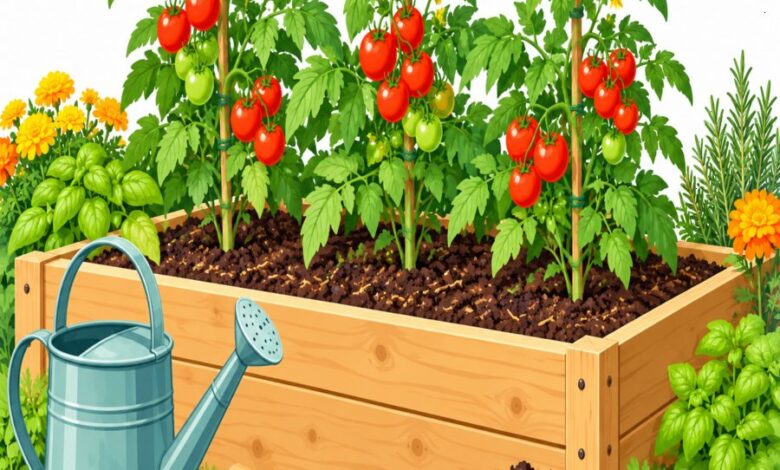
Unlocking the Raised Bed Soil Mixing Secrets for Monster Tomatoes
Every gardener dreams of harvesting basket-sized tomatoes that make neighbors stop and stare. The truth is, those jaw-dropping yields rarely come down to luck or a magic fertilizer. They come down to the raised bed soil mixing secrets that experienced growers have quietly refined for decades. Get the blend right, and your tomato plants will reward you with vigorous roots, thick stems, and pounds of fruit per plant.
In this guide, we will break down exactly what goes into a world-class raised bed, why ratios matter more than ingredients alone, and how to build a growing medium that drains well while still holding onto nutrients. By the end, you will have a repeatable formula you can use season after season.

Why Raised Beds Outperform In-Ground Gardens for Tomatoes
Raised beds warm up faster in spring, which means earlier planting and a longer fruiting season. Tomatoes are heat-loving plants, and that early soil warmth gives roots a head start that in-ground beds simply cannot match.
More importantly, raised beds let you completely control the growing medium from the ground up. You are not stuck with heavy clay or sandy, nutrient-poor native soil. Instead, you get to engineer the perfect environment using proven raised bed soil mixing secrets that balance moisture retention, drainage, and fertility in one carefully blended mix.
This level of control is precisely why dedicated vegetable gardeners and small-scale homesteaders have shifted almost entirely to raised beds over the last two decades. The results speak for themselves in fruit size, disease resistance, and overall plant vigor.
The Mel Mix Ratio: The Foundation of a Legendary Harvest
If you have spent any time researching square foot gardening, you have likely encountered the famous mel mix ratio. Developed by Mel Bartholomew, this formula calls for equal parts compost, peat moss (or coconut coir), and coarse vermiculite, mixed in a simple one-third, one-third, one-third ratio by volume.
The genius of the mel mix ratio lies in its simplicity. Compost supplies slow-release nutrition and beneficial microbes. Peat moss or coir retains moisture without becoming waterlogged. Vermiculite keeps the whole structure airy, preventing compaction that would otherwise suffocate tender tomato roots.
For tomatoes specifically, many growers adjust the classic ratio slightly, increasing the compost portion to 40 percent while reducing vermiculite to 20 percent. This tweak provides the extra nitrogen and organic matter that heavy-feeding tomato plants crave during their rapid summer growth spurt.
Use at least five different compost sources if possible. Blending mushroom compost, leaf mold, and composted manure creates a far richer nutrient profile than relying on a single bagged product alone.
Organic Amendments Tomatoes Actually Crave
Beyond the base mix, tomatoes have specific nutritional needs that separate a mediocre harvest from a monster one. Incorporating the right organic amendments tomatoes respond to is where serious growers pull ahead of the pack.
Crushed eggshells and bone meal supply calcium, which directly prevents blossom end rot, one of the most common and heartbreaking tomato diseases.
Worm castings introduce beneficial microorganisms and a gentle, slow-release nitrogen source that will not burn young transplants the way synthetic fertilizers can.
Fish emulsion or kelp meal adds trace minerals like potassium and magnesium, both essential for robust flowering and fruit set later in the season.
Mix these amendments into your compost layer two to three weeks before transplanting so microbial activity has time to stabilize. Adding them too close to planting day can shock delicate roots with an overly hot, nutrient-dense environment.
Building Well Draining Planter Loam Without Sacrificing Moisture
One of the trickiest balances in container and raised bed gardening is creating well draining planter loam that still retains enough moisture to sustain thirsty tomato plants through a hot July afternoon.
Too much drainage, and your plants wilt daily, forcing you into a constant watering cycle. Too little drainage, and roots sit in soggy, oxygen-starved soil, inviting root rot and fungal disease.
The solution is layering coarse materials like perlite or pumice throughout the mix rather than concentrating them at the bottom. A common misconception is adding a gravel layer beneath the soil; in reality, this creates a perched water table that actually traps moisture higher up in the bed.
Instead, blend perlite evenly throughout your compost and coir base at roughly 15 to 20 percent of total volume. This creates thousands of tiny air pockets that allow excess water to drain while still letting the surrounding organic matter hold onto moisture for root uptake.
According to the Royal Horticultural Society, well-structured soil with adequate organic matter and aeration is one of the single biggest predictors of healthy root development across virtually all vegetable crops, tomatoes included.
Layering Your Raised Bed: The Step-by-Step Mixing Process
Now let’s put theory into practice. Follow this layering sequence to build a tomato-ready raised bed from the ground up.
Step one: If your bed sits directly on grass or soil, lay down cardboard or landscape fabric to suppress weeds without blocking earthworm activity from below.
Step two: Add a bottom layer of coarse organic matter, such as small branches or straw, filling the bed about 20 percent full. This mimics a hugelkultur base and slowly feeds the bed as it breaks down.
Step three: Pour in your prepared mel mix ratio blend of compost, coir, and vermiculite until the bed is roughly 90 percent full, mixing thoroughly with a garden fork as you go.
Step four: Fold in your chosen organic amendments, including worm castings, crushed eggshells, and kelp meal, distributing them evenly rather than concentrating them in one spot.
Step five: Water the entire bed deeply and let it rest for one to two weeks before transplanting. This settling period allows microbial life to establish and prevents transplant shock.
Mastering these raised bed soil mixing secrets at the layering stage sets the tone for your entire growing season, so resist the temptation to rush this step.
Common Mistakes That Sabotage Your Soil Mix
Even well-intentioned gardeners fall into predictable traps when preparing their beds. Avoiding these pitfalls is just as important as following the correct ratios.
Using straight topsoil or bagged garden soil alone is a frequent error. These products compact heavily in raised beds, choking out the airflow that tomato roots depend on for nutrient absorption.
Skipping the resting period after mixing is another common misstep. Fresh compost can release heat and ammonia as it continues to break down, which may burn tender young roots if planting happens too soon.
Overloading with nitrogen-heavy amendments like fresh manure can produce lush green foliage at the expense of flowering and fruit set. Balance is always the goal, not maximum nutrient density.
The Old Farmer’s Almanac notes that tomato plants perform best in soil with a pH between 6.2 and 6.8, so testing your finished mix before planting is a smart final check before transplant day.
Maintaining Your Mix Through the Growing Season
A great soil mix does not stay great forever without a little seasonal attention. Tomatoes are heavy feeders, and by midsummer, your bed’s nutrients will start to deplete.
Top-dress monthly with an inch of fresh compost worked gently into the surface without disturbing roots. This replenishes organic matter continuously throughout the season.
Mulch heavily with straw or shredded leaves to lock in moisture and regulate soil temperature during peak summer heat, reducing watering frequency by nearly half.
Rotate your amendments yearly, alternating compost sources and amendment types to prevent nutrient imbalances from building up in the same bed season after season.
If you are also tackling other home upgrades this season, you might enjoy exploring these clever IKEA Billy bookcase hacks for creative storage solutions, which pair nicely with a freshly organized garden shed full of soil amendments and tools.
Final Thoughts on Growing Monster Tomatoes
Growing record-breaking tomatoes is not about secret seeds or expensive gadgets. It genuinely comes down to the quality of soil beneath the surface and the care taken during setup.
By applying these proven raised bed soil mixing secrets, respecting the balanced mel mix ratio, enriching with the right organic amendments tomatoes genuinely benefit from, and ensuring consistently well draining planter loam, you give your plants everything they need to thrive.
Start this process a few weeks before your regional last frost date, and by midsummer, you will be harvesting tomatoes so large and flavorful that your neighbors will be asking for your secret formula too.