
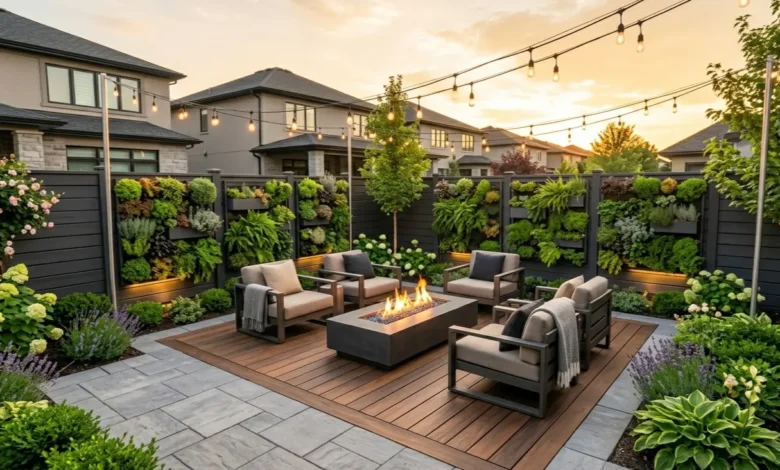
Mastering small backyard landscaping is the absolute key to unlocking the hidden potential of your property. When you are dealing with a compact outdoor area, every single square foot matters immensely to the overall flow and function.
Many homeowners look at their tiny lawns and feel completely overwhelmed by the perceived lack of space.
However, a smaller footprint simply means you need a much smarter, more intentional design strategy. I have spent years helping clients turn neglected, cramped patches of dirt into luxurious, breathtaking retreats that rival the most expansive estates. The secret lies in manipulating scale, texture, and sightlines to trick the eye.
Today, we are going to dive deeply into the absolute best techniques to maximize your limited area. By the end of this comprehensive guide, you will have a clear, actionable blueprint to execute a stunning small backyard landscaping project.
Why Proper Planning is Crucial for Compact Yards
In expansive gardens, you can afford to make a few spatial mistakes without ruining the overall aesthetic. In a compact space, a poorly placed tree or an oversized patio set can instantly make the area feel claustrophobic. Successful small backyard landscaping requires precise measurements and a clear understanding of your ultimate goals.
You must ask yourself how you primarily want to use the space before buying a single plant or paver. Do you want a tranquil meditation retreat, a bustling entertainment hub, or a miniature urban farm? Once you define the primary function, every landscaping decision becomes significantly easier to navigate.
See more : proven small yard design concepts
10 Breathtaking Small Backyard Landscaping Ideas
It is time to elevate your outdoor space with practical, high-impact strategies. These ten ideas will help you execute a flawless small backyard landscaping design that feels both intimate and expansive.
Maximize Space with Vertical Gardening
When you cannot grow outward, the most logical solution is to grow upward. Vertical gardening is a foundational concept in small backyard landscaping because it draws the eye toward the sky. This upward movement instantly makes any enclosed area feel taller and far more spacious.
Consider installing sturdy wooden trellises, hanging wall planters, or even a living wall system against your perimeter fencing. Climbing vines like jasmine or clematis are perfect choices because they provide lush greenery without consuming valuable ground space. You can also utilize tall, narrow shelving units to display a collection of potted herbs or trailing succulents.
Invest in Multi-Functional Furniture
Clutter is the absolute worst enemy of a compact outdoor area. If you fill your limited patio space with single-use items, you will quickly run out of room to move around comfortably. The smartest small backyard landscaping designs incorporate sleek, multi-functional furniture pieces.
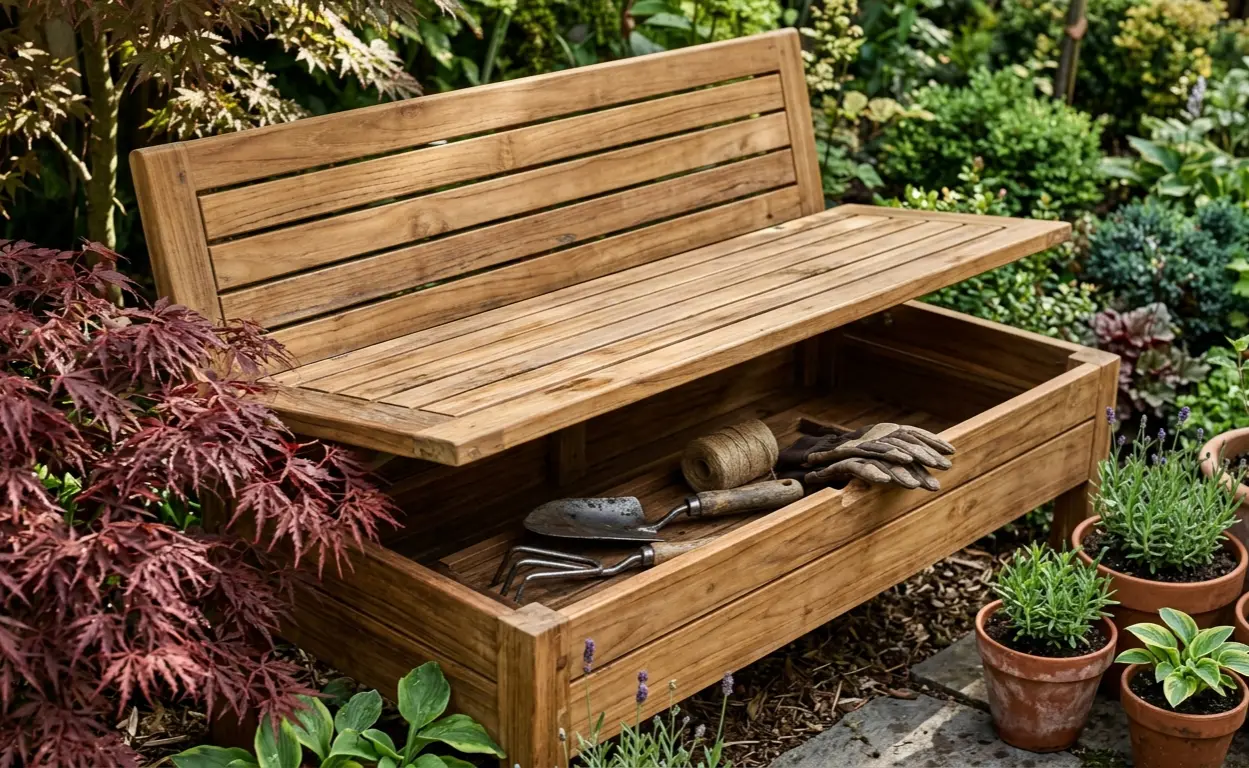
Look for heavy-duty wooden benches that feature hidden storage compartments beneath the seating area. These compartments are perfect for hiding away garden tools, outdoor cushions, and bags of potting soil out of sight. You can also invest in nesting tables or foldable dining sets that can be easily tucked away when not in active use.
Use Outdoor Mirrors for Instant Depth
This is an old interior design trick that works absolute wonders in exterior spaces as well. Placing a large, weather-resistant mirror on a garden wall or fence creates a powerful optical illusion. The reflection tricks the human eye into believing the garden continues far beyond its actual physical boundaries.
For the best results in your small backyard landscaping project, frame the mirror heavily with thick climbing plants. This softens the edges of the glass and makes the reflection look like a secret doorway or a hidden garden path.
Just ensure you place the mirror in a shaded area to prevent blinding sun glare during the afternoon.
Implement Layered Lighting Strategies
Amateur gardeners often rely on a single, harsh floodlight to illuminate their entire patio, which flattens the space completely. To make your small backyard landscaping feel luxurious, you must utilize a layered lighting approach. This involves combining ambient, task, and accent lighting to create dramatic shadows and highlights.
String lights draped across a pergola provide excellent overhead ambient warmth for evening gatherings. Combine these with low-voltage solar path lights to guide guests safely through the garden beds. Finally, use targeted LED uplighting at the base of your most attractive trees or architectural features to draw the eye upward at night.
For a visual walkthrough of these lighting transformations, check out this excellent video detailing how to map out your hardscaping and illumination.
Define Clear Micro-Zones
It might sound completely counterintuitive, but breaking a small space into even smaller, distinct zones actually makes it feel larger. When a yard is just one open patch of grass, the eye takes it all in at a single glance. By creating clear micro-zones, you force the eye to travel and process different areas sequentially.
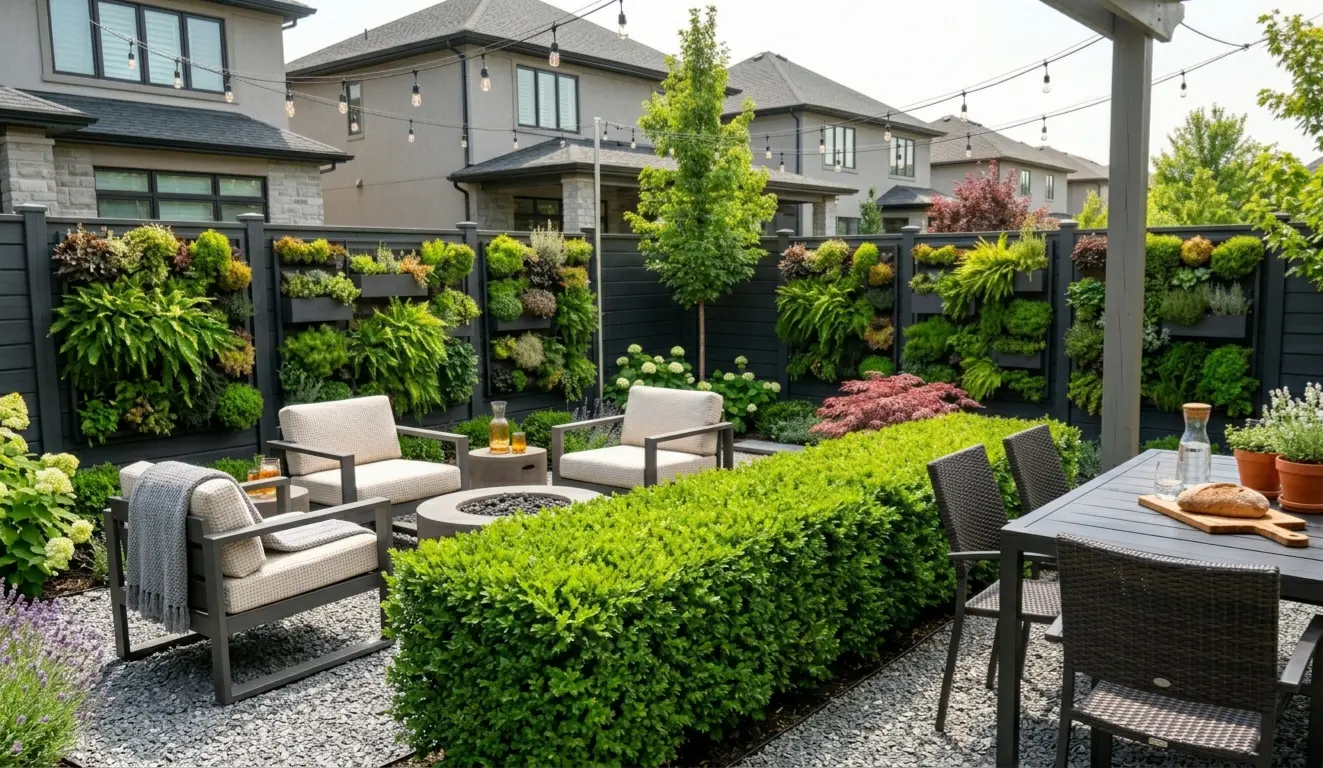
You can achieve this in your small backyard landscaping by using different ground covers, such as a wooden deck for dining and a gravel patch for a fire pit. You can also use low hedges, oversized planters, or outdoor rugs to visually separate a reading nook from an outdoor kitchen. This technique creates a sense of journey and discovery within a highly limited footprint.
Ditch Straight Lines for Sweeping Curves
Boxy, geometric layouts immediately highlight the rigid, restrictive boundaries of a small property line. To combat this claustrophobic feeling, introduce sweeping curves and organic shapes into your design layout. Curved retaining walls, circular patios, and winding garden paths soften the hard edges of your fencing.
A gentle, meandering path made of flagstones or crushed granite forces visitors to slow down and visually explore the space. It prevents the eye from zooming straight to the back fence, which would instantly reveal the shallow depth of the yard. Implementing curved garden beds is a staple technique in professional small backyard landscaping for this exact reason.
Plant Scale-Appropriate Native Species
One of the most common mistakes I see is homeowners planting saplings that will eventually outgrow the yard entirely. A massive oak tree or a wildly spreading aggressive shrub will quickly devour your limited square footage and block out all sunlight. Successful small backyard landscaping demands careful research into the mature size of every single plant.
Choose dwarf varieties of popular trees, such as compact Japanese maples or ornamental cherry trees. Furthermore, focus heavily on native plants that thrive in your specific hardiness zone. Native species require significantly less water, fertilizer, and maintenance, ensuring your compact garden remains vibrant and manageable year-round.
Build a Captivating Focal Point
Every well-designed room needs a centerpiece, and your outdoor space is absolutely no different. A strong focal point anchors the entire design and gives the eye a specific place to rest. In small backyard landscaping, this feature should be striking but correctly scaled to the environment.
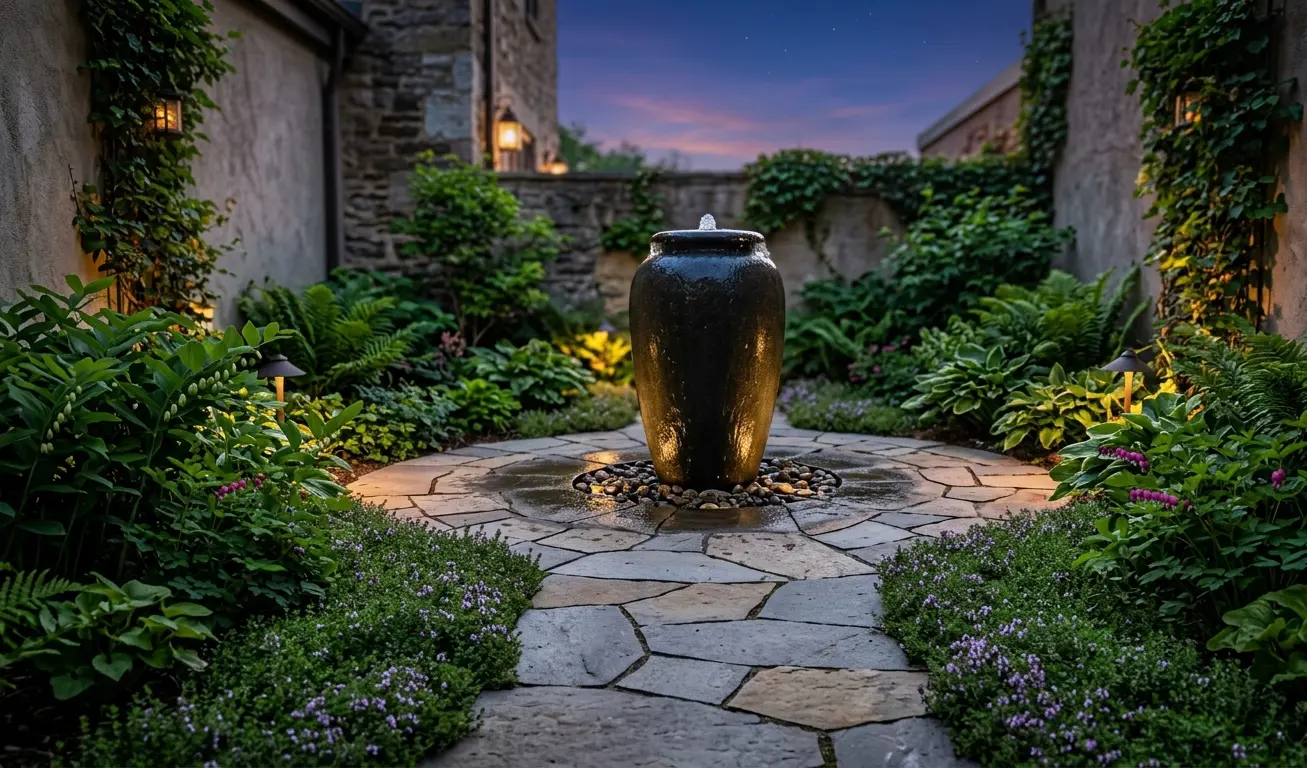
Consider installing a modern, soothing water feature like a bubbling urn or a sleek, wall-mounted fountain. Alternatively, a beautifully crafted fire pit or an intricate garden sculpture can serve the exact same purpose. Place this focal point strategically at the end of a sightline to draw attention away from the restrictive perimeter fences.
Choose Smart, Low-Profile Hardscaping
Lush, sprawling lawns require heavy maintenance and are often highly impractical for tight, shaded outdoor spaces. Replacing struggling grass with intelligent hardscaping is a phenomenal small backyard landscaping upgrade. Hardscaping provides clean, usable surface area that requires zero mowing, watering, or weeding.
Opt for large, oversized pavers rather than small, busy brick patterns, as larger tiles create a smoother, more expansive visual plane. Fill the gaps between the pavers with a low-growing, durable ground cover like creeping thyme or simple pea gravel. This provides exceptional texture and drainage while keeping the maintenance requirements wonderfully low.
Our guide to Home Staging Tips
Blur the Property Boundary Lines
If your fences are highly visible, you will constantly be reminded of exactly how small your property truly is. The ultimate goal of high-end small backyard landscaping is to make those property lines effectively disappear. You can accomplish this by planting heavily along the perimeters.
Use a staggered planting technique with tall, dense evergreen shrubs in the back and medium-sized perennials in the front. Painting your wooden fences a dark charcoal or deep forest green also helps them recede into the shadows. When the boundaries blur into the foliage, your compact yard suddenly feels like an endless, private forest retreat.
Crucial Mistakes to Avoid in Your Design
Even with the best intentions, it is incredibly easy to make spatial errors that ruin your hard work. The biggest mistake is over-cluttering the space with too many different materials and colors. Keep your hardscaping palette to two or three coordinating materials to maintain a clean, cohesive aesthetic.
Another major error in small backyard landscaping is ignoring the vertical space entirely. Leaving walls and fences bare while cramming every plant onto the ground creates a heavy, disproportionate look. Always remember to balance your horizontal footprint with upward-reaching elements to maintain perfect spatial harmony.
Final Thoughts on Transforming Your Space
A tiny outdoor footprint is never an excuse to settle for a boring, unusable patch of dirt. By utilizing strategic verticality, creating distinct zones, and choosing scale-appropriate features, you can achieve remarkable results. Small backyard landscaping requires discipline and creativity, but the final reward is a breathtaking oasis tailored exactly to your lifestyle.
Take the time to meticulously plan your layout, invest in high-quality, multi-functional pieces, and always respect the scale of your environment. With these expert strategies applied, your compact yard will quickly become your favorite “room” in your entire home.