If your backyard fence is looking tired, bare, and begging for a makeover, a pallet wood wall planter might be the single most transformative project you tackle this season. Instead of hauling away old shipping pallets, you can turn them into stunning vertical gardens that breathe life into forgotten corners of your yard. This guide walks you through eight smart, budget-friendly ways to build a pallet wood wall planter that instantly elevates any barren fence into a lush, layered green masterpiece.
Whether you’re a seasoned DIYer or a weekend beginner, these projects combine sustainability, style, and function in equal measure. Get ready to fall in love with your fence again.
Why Every Fence Deserves a Pallet Wood Wall Planter
Fences often become the forgotten real estate of a garden, serving as nothing more than a boundary line. A well-built pallet wood wall planter changes that narrative entirely.
By mounting reclaimed wood directly onto your fence, you create instant depth, texture, and dimension without sacrificing precious ground space. This is especially valuable for small backyards or narrow side yards where horizontal garden beds simply aren’t an option.
Sustainability meets style. Repurposing pallets diverts usable lumber from landfills while giving your landscape a rustic, farmhouse-chic aesthetic that store-bought planters rarely match.
Before you begin any build, it helps to understand what’s happening beneath the surface. Healthy root systems inside tight planter boxes depend heavily on airflow, so reviewing proper soil aeration techniques for container gardening will set your plants up for long-term success.
Project 1: The Classic Tiered Pallet Wood Wall Planter
The classic tiered design remains the gold standard for good reason. You simply stand a pallet upright, line the back and sides with landscape fabric, and fill each slat gap with potting soil.
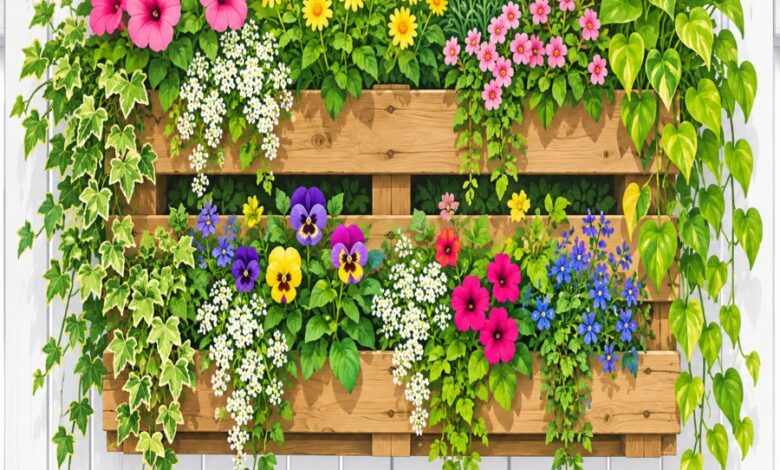
This style works beautifully as an exterior fence planter because the natural slats create built-in shelving for herbs, succulents, or trailing flowers like lobelia and verbena.
Pro tip: Sand the pallet thoroughly and seal it with an exterior-grade wood stain to prevent rot before mounting it against your fence.
Project 2: Vertical Pallet Garden with Mason Jar Vases
For a charming cottage look, attach small hose clamps to a horizontal pallet frame and slide mason jars through them. This vertical pallet garden style is perfect for cut flowers, fresh herbs, or even propagating cuttings.
Because jars are removable, you can easily swap blooms for seasonal displays, making this one of the most flexible upcycled garden decor ideas on this list.
Design note: Paint the pallet in a soft white or sage green to let the glass jars and colorful blooms truly pop against the fence line.
Project 3: Herb Spiral Pallet Wood Wall Planter for Kitchen Gardens
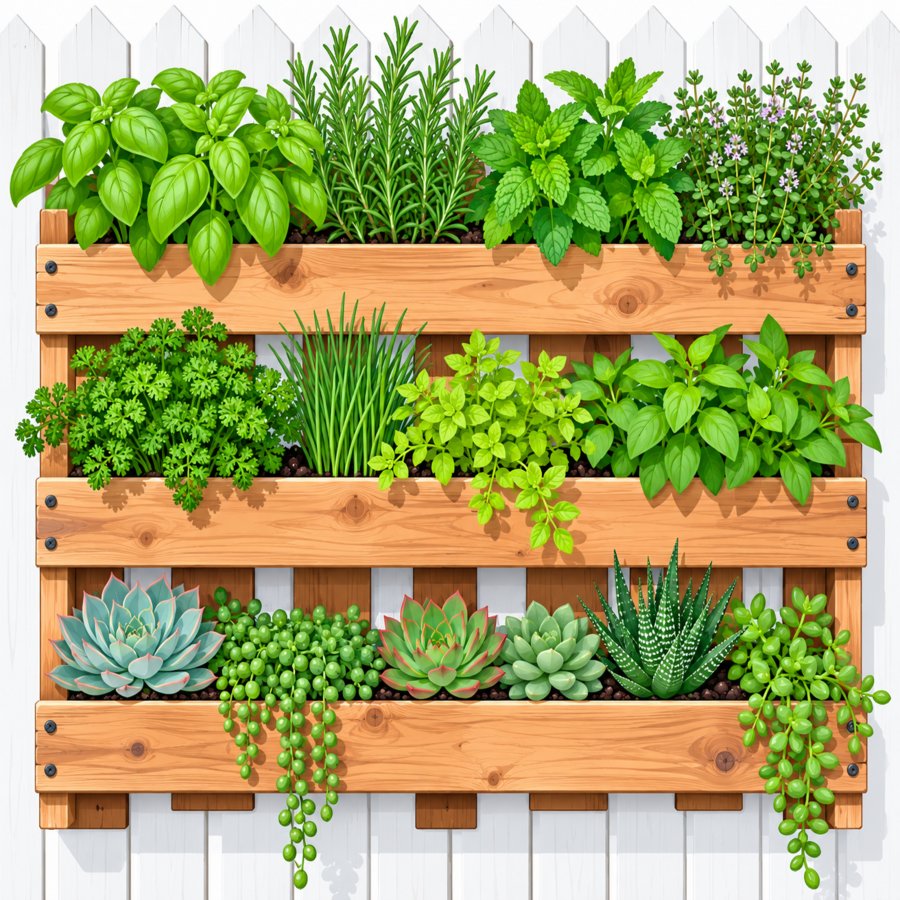
If you cook often, mount your pallet wood wall planter near the kitchen door for an herb garden that’s always within arm’s reach. Basil, thyme, oregano, and chives thrive in the shallow soil pockets created between slats.
Group herbs by water needs, placing drought-tolerant rosemary and thyme toward the top where soil dries faster, and moisture-loving mint or parsley lower down.
According to The Old Farmer’s Almanac, grouping herbs by sunlight and watering requirements significantly improves yield and flavor concentration, which makes this layout especially rewarding.
Project 4: Succulent Mosaic Exterior Fence Planter
Succulents are the low-maintenance darlings of the plant world, and a pallet turned exterior fence planter is the ideal canvas for a living mosaic.
Lay the pallet flat, staple hardware cloth across the back, pack it with well-draining cactus soil, and tuck in rosettes of echeveria, sedum, and hens-and-chicks through the wire.
Let it cure horizontally for two to three weeks so roots anchor firmly, then mount it vertically against a sun-facing fence panel for a striking, nearly maintenance-free display.
Project 5: Pallet Wood Wall Planter with Chalkboard Plant Labels
Add a playful, organized touch by painting small wooden tags with chalkboard paint and hanging them beneath each planting pocket of your pallet wood wall planter.
This small detail transforms a casual DIY project into a polished, garden-center-worthy feature while helping you track watering schedules and plant varieties at a glance.
Bonus idea: Use the labels to note bloom times, creating a rotating calendar of color across your fence throughout the growing season.
Project 6: Shadow Box Style Upcycled Garden Decor
Deconstruct a pallet into individual boards and reassemble them as a shallow shadow box frame, then fit a wooden crate or shallow planter box inside.
This approach gives you more control over soil depth and drainage compared to the standard slatted design, making it perfect for root vegetables like radishes or compact lettuces.
The result is one of the most versatile pieces of upcycled garden decor you can build, equally at home on a fence, a garage wall, or a covered patio.
Project 7: Hanging Pocket Vertical Pallet Garden for Renters
Renters often hesitate to drill into fences, so this project uses heavy-duty fence hooks and canvas fabric pockets stapled to a slim pallet frame instead of permanent fasteners.
The entire vertical pallet garden can be lifted off and relocated in minutes, making it ideal for apartment patios, rental backyards, or seasonal rearranging.
Fill the pockets with annual flowers for a burst of temporary color that you can refresh every few months without committing to permanent installation.
Project 8: Climbing Vine Trellis Pallet Wood Wall Planter
For fences that need serious coverage, nothing beats pairing a pallet planter base with a built-in trellis for climbing plants like clematis, morning glory, or sweet peas.
Attach the pallet near the base of the fence, plant the climbers in the bottom pockets, and let the vines weave naturally up and over the fence panel as they mature.
Within a single growing season, this living screen can fully camouflage a chain-link or weathered wood fence, turning an eyesore into a flowering focal point.
Choosing the Right Pallet and Preparing It Safely
Not all pallets are created equal, and selecting the right one is critical before you build any pallet wood wall planter.
Look for pallets stamped with “HT,” which means they were heat-treated rather than chemically fumigated. Avoid any pallet marked “MB,” since that indicates methyl bromide treatment, a chemical unsuitable for garden use.
Safety checklist: Remove protruding nails, sand rough edges, and apply a food-safe sealant if you plan to grow edible herbs or vegetables.
The Royal Horticultural Society recommends lining reclaimed wood planters with breathable landscape fabric to prevent soil erosion while still allowing excess moisture to escape, which extends the life of the wood significantly.
Mounting, Drainage, and Long-Term Care Tips
A beautiful pallet wood wall planter is only as good as its mounting hardware. Always use galvanized lag bolts or heavy-duty L-brackets rated for outdoor exposure, and anchor into fence posts rather than thin pickets whenever possible.
Drainage is equally important. Drill small weep holes along the bottom of each planting pocket to prevent waterlogged roots, especially after heavy rain.
Seasonal maintenance: Inspect the wood each spring for warping or rot, refresh mulch layers, and rotate plantings to keep your exterior fence planter looking vibrant year-round.
Lightly loosening compacted soil every few weeks also keeps roots oxygenated, so revisiting those earlier-mentioned soil aeration methods for raised planters pays off throughout the growing season.
Final Thoughts on Reviving Your Fence with Reclaimed Wood
From tiered herb gardens to climbing vine trellises, these eight projects prove that a simple pallet wood wall planter can completely transform a neglected fence line into a thriving green sanctuary.
Start small with one panel, master the mounting and drainage basics, and expand your vertical pallet garden as your confidence grows. Your fence, your plants, and your wallet will all thank you.