
Why Every Backyard Deserves the Best Chainsaw Sharpening Tool Kits
A dull chainsaw turns a simple afternoon of pruning or firewood prep into a frustrating, dangerous chore. The right chainsaw sharpening tool kits solve this problem at the root by keeping every cutting tooth consistently sharp and properly angled. Whether you maintain a quarter-acre garden or manage several wooded acres, understanding these kits is essential for safe, efficient, and satisfying outdoor work.
In this guide, we will break down exactly what separates a mediocre sharpening setup from a professional-grade one, review the top tool categories on the market, and show you how to choose the ideal option for your specific saw and skill level.
A sharp chain is not just about clean cuts; it is fundamentally a safety issue. Dull chains cause the saw to bounce, require more force to push through wood, and dramatically increase the risk of kickback.
Investing in quality chainsaw sharpening tool kits pays for itself quickly by extending chain life, reducing fuel consumption, and saving you the recurring cost of professional sharpening services. For homeowners who also tackle other woodworking or structural DIY projects, like adding character to a room with rustic faux beam ceiling hacks, having sharp tools on hand makes every cut cleaner and every project faster.
Understanding the Anatomy of a Chainsaw Chain Before You Sharpen
Before diving into specific products, it helps to understand what you are actually sharpening. Each chain link contains a cutting tooth with a top plate and a side plate, separated by a depth gauge, sometimes called a raker.
Filing Angle Matters
Most standard chains require a 25 to 30 degree filing angle on the top plate. Straying from this angle, even by a few degrees, significantly reduces cutting efficiency and can cause the chain to wander during a cut.
Depth Gauge Settings
The depth gauge controls how deep each tooth bites into the wood. If it sits too high, your saw will cut painfully slowly even with razor-sharp teeth.
This is precisely why a round file guide depth gauge is considered a non-negotiable component in any serious sharpening kit. It locks your file at the correct height and angle simultaneously, removing guesswork from the equation.
Manual Chainsaw Sharpening Tool Kits: The Classic, Portable Option
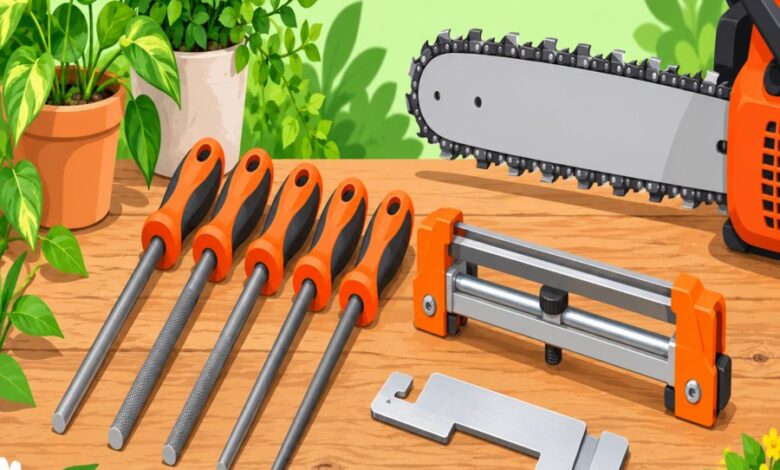
Manual kits remain the gold standard for gardeners and landowners who want precision without plugging into an outlet. These typically include a set of round files in varying diameters, a flat file for the depth gauges, and a filing guide that clips onto the chain.
Best For Field Use
Manual kits are lightweight, require no power source, and fit easily in a tool bag. Many professional arborists still carry a basic manual kit in their truck for quick touch-ups between jobs.
Skill Curve
There is a learning curve to maintaining consistent stroke pressure and angle by hand. However, once mastered, manual sharpening offers unmatched control over the exact profile of each tooth.
Look for kits that bundle multiple file diameters (typically 4.0mm, 4.8mm, and 5.5mm) since chain pitch varies between saw models. A quality case with a built-in depth gauge tool and a chain-cleaning brush rounds out a complete, travel-ready set.
Electric Chainsaw Chain Grinder Options for Speed and Consistency
For homeowners who sharpen frequently or maintain multiple chains, an electric chainsaw chain grinder dramatically speeds up the process. These bench-mounted or portable units use a rotating abrasive wheel to grind each tooth to a precise, repeatable angle.
Why Choose Electric
An electric grinder removes human error from the angle equation since the chain is clamped in a fixed vise and the wheel swings down at a preset degree. This makes it ideal for restoring severely damaged or very dull chains that have hit rocks or dirt.
Considerations Before Buying
Electric grinders remove more metal per pass than manual filing, which can shorten chain life if used too aggressively or too often. Reserve grinding for heavily damaged chains and use manual touch-ups for routine maintenance in between.
Watch for models with adjustable grinding wheel angles, a built-in work light, and a vise that accommodates multiple chain pitches. These features justify the higher upfront cost for anyone managing a large property or small firewood business.
Comparing the Top Chainsaw Sharpening Tool Kits on the Market
With dozens of products competing for attention, narrowing down the best chainsaw sharpening tool kits requires comparing a few key categories rather than just brand names.
Budget-Friendly Starter Kits
Entry-level sets usually include two or three round files, a flat file, a filing guide, and a storage pouch. These are perfect for occasional gardeners who sharpen a single chain a few times per season.
Mid-Range Combo Kits
These bundles add extras like a bar groove cleaner, a chain tension tool, and multiple file diameters for different saw brands. They offer the best balance between price and versatility for most backyard users.
Professional Grinder Systems
Priced higher but built for durability, these electric systems typically include replacement grinding wheels, a sturdy mounting base, and adjustable guides for various chain types. They suit landowners, loggers, and anyone running a tree service.
Regardless of price point, the best kits always pair a quality filing guide with an accurate round file guide depth gauge, since these two components determine most of your final cutting performance.
Step-by-Step: How to Sharpen Your Chain Like a Pro
Once you have selected your tools, the actual sharpening process is straightforward if you follow a consistent routine every single time.
Secure the Chainsaw
Clamp the saw bar in a vise or stable holder so the chain cannot shift while you work. Engage the chain brake for added safety before you begin filing.
Mark Your Starting Tooth
Use a marker or paint dot on the first tooth so you know when you have completed a full rotation around the chain.
File Each Tooth Uniformly
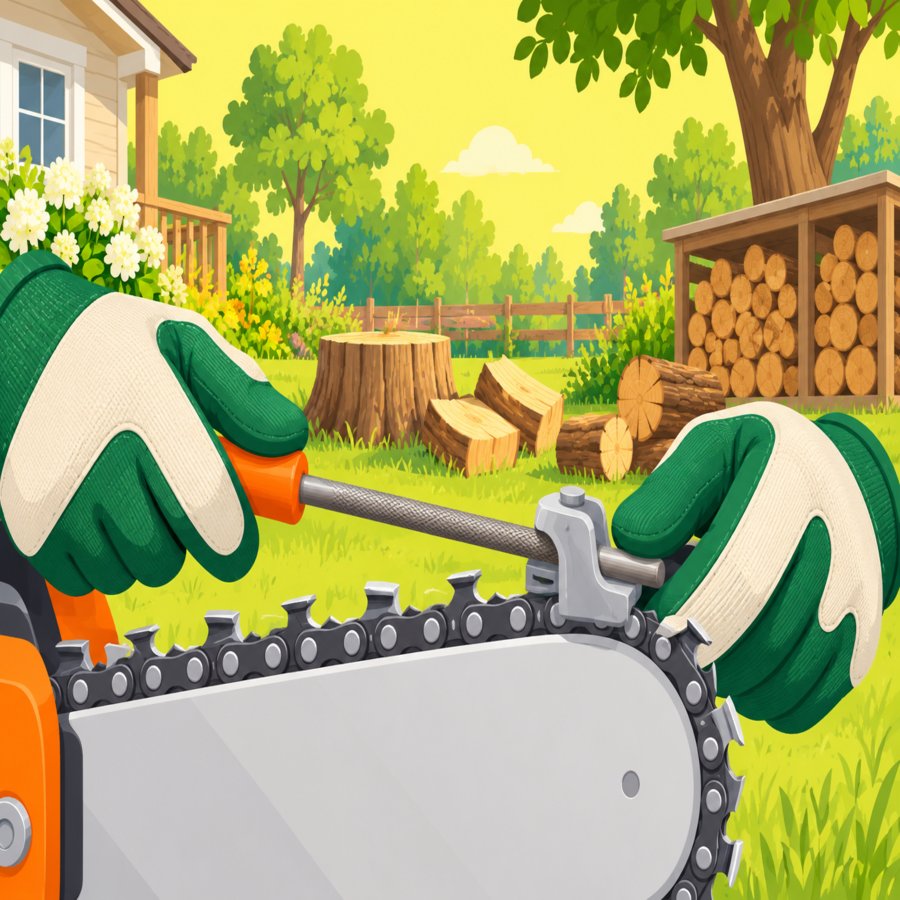
Place the file guide flush against the chain and push the file forward using even strokes, lifting it on the return stroke. Count your strokes per tooth and repeat that number on every tooth for uniform results.
Check and Adjust Depth Gauges
Every third or fourth sharpening, use the flat file with your depth gauge tool to file down the rakers so they match the recommended height for your chain pitch.
Clean and Lubricate
Wipe away metal filings and apply fresh bar and chain oil before storing the saw. This final step is a core part of proper bar and chain maintenance and prevents rust from forming on freshly sharpened edges.
Essential Bar and Chain Maintenance Habits Between Sharpenings
Sharpening is only one piece of the puzzle. Consistent bar and chain maintenance extends the life of both the chain and the guide bar, saving you money on replacements.
Flip the Bar Regularly
Flipping the guide bar every couple of sharpenings ensures even wear on both sides, preventing the groove from widening unevenly.
Clean the Groove and Oil Holes
Sawdust and debris build up inside the bar groove and block oil holes, starving the chain of lubrication. A simple groove cleaning tool, often included in combo kits, clears this buildup in seconds.
Check Chain Tension
A chain that is too loose will derail during use, while one that is too tight strains the motor and bar. Always check tension before and during extended cutting sessions.
For broader seasonal guidance on tool upkeep and outdoor equipment care, resources like the Old Farmer’s Almanac gardening and tool care guides offer helpful, time-tested advice that complements your sharpening routine.
Choosing the Right Kit for Your Garden and Lifestyle
The ideal choice among chainsaw sharpening tool kits ultimately depends on how often you use your saw and how much precision control you want over the final edge.
Occasional Pruners and Gardeners
If you only use your chainsaw a handful of times a year for trimming overgrown branches or clearing storm debris, a basic manual kit with a filing guide is more than sufficient.
Regular Firewood Cutters and Landowners
Those processing multiple cords of firewood each season benefit from an electric grinder paired with a manual kit for quick field touch-ups between full grinding sessions.
Whichever option fits your needs, remember that consistency matters more than the specific brand. A modest manual kit used correctly will always outperform an expensive grinder used carelessly, so take your time learning proper technique before worrying about upgrading your gear.
A well-sharpened chain, paired with disciplined bar and chain maintenance, turns tough outdoor jobs into manageable tasks and keeps your garden, firewood pile, and landscaping projects running smoothly all year long.