A blank hallway is one of the most underused spaces in any home, yet it holds enormous decorating potential. The right gallery wall layouts can turn a dull, narrow corridor into a curated art display that guests actually stop to admire. Whether you are working with a tall staircase wall or a short entryway stretch, there is a layout formula that fits your space, your art collection, and your personal style.
In this guide, we will walk through eight sophisticated arrangements that professional designers rely on, along with practical tips for spacing, framing, and lighting. By the end, you will have everything you need to plan a picture frame arrangement that feels intentional rather than accidental.
Why Hallways Deserve Thoughtful Gallery Wall Layouts
Hallways are transitional spaces, which means they are often neglected in favor of living rooms and bedrooms. But because people walk through them daily, hallways are actually prime real estate for storytelling through art.
Well-planned hallway decor ideas can make a narrow space feel wider, a low-ceilinged space feel taller, and a plain space feel personal. The key is choosing a layout that respects the architecture of the hallway rather than fighting it.
Before hanging a single nail, measure the wall’s width, height, and any obstructions like light switches or thermostats. This groundwork ensures your final gallery wall layouts look balanced from every angle, not just straight on.
1. The Grid Layout for Clean Symmetry
The grid layout is the most structured of all gallery wall layouts, relying on identical frame sizes arranged in even rows and columns. This is ideal for modern or minimalist hallways where clean lines matter most.
Spacing matters. Keep gaps between frames consistent at two to three inches so the eye reads the arrangement as a single cohesive block rather than scattered pieces.
Choose matching frame finishes, whether that is matte black, brushed brass, or natural wood, to reinforce the sense of order. This layout works especially well for displaying a themed photo series, like black-and-white family portraits or botanical prints.
2. The Salon-Style Cluster for Eclectic Charm
Named after the dense, floor-to-ceiling hangings in 19th-century European art salons, this style mixes frame sizes, shapes, and orientations into one dynamic cluster. It is the most forgiving of all picture frame arrangement styles because imperfection is part of the charm.
Start by laying your frames out on the floor first, mixing large statement pieces with smaller accent art. Once the composition feels balanced, trace the outlines onto kraft paper and tape the templates to the wall before committing to any nails.
This approach is particularly effective for collectors who want to showcase mismatched frames, vintage mirrors, and sentimental objects together as a genuinely curated art display.
3. The Horizontal Line Layout for Narrow Hallways
For long, narrow hallways, a single horizontal line of evenly spaced frames keeps the eye moving forward instead of cluttering the space vertically. This is one of the simplest yet most elegant gallery wall layouts for corridors under four feet wide.
Hang the center line at roughly 57 to 60 inches from the floor, which is standard eye-level height used by most museums and galleries. Keep frame tops and bottoms aligned precisely for a crisp, architectural feel.
According to Better Homes & Gardens, consistent eye-level placement is one of the most reliable tricks for making any gallery feel professionally designed rather than haphazard.
4. The Staircase Ascending Layout
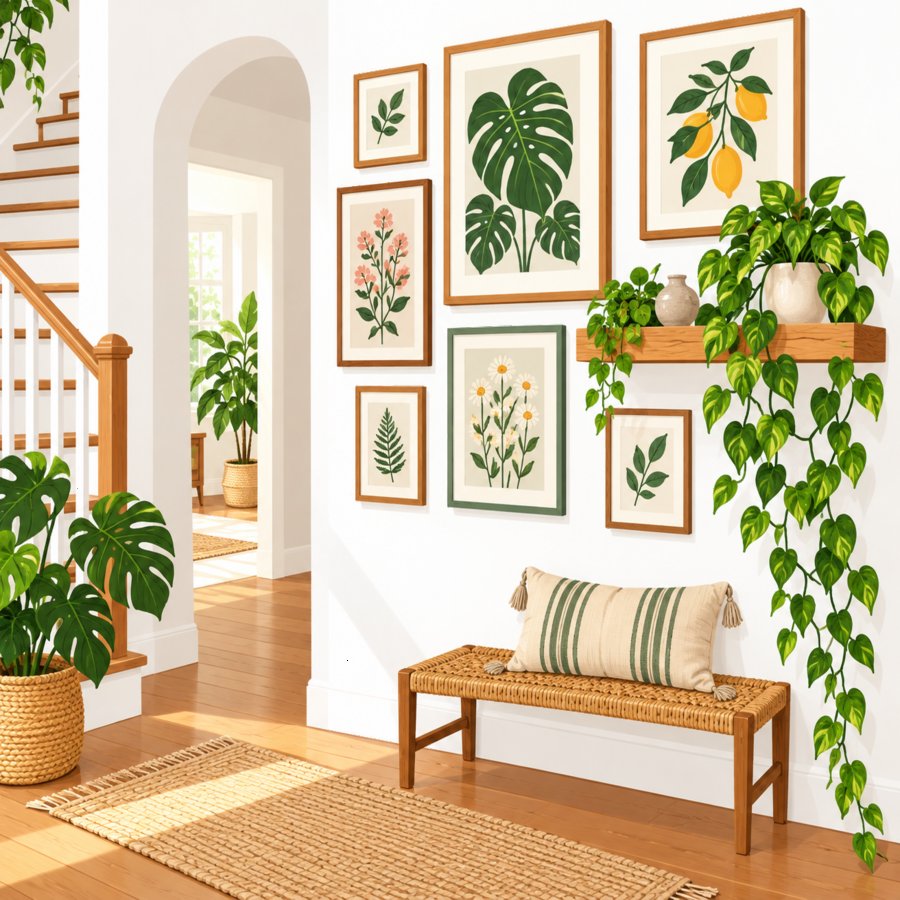
If your hallway includes a staircase, an ascending diagonal arrangement follows the natural rise of the steps. Each frame steps up in parallel with the stair treads, creating visual rhythm as you climb.
Measure twice before drilling. Use a long level or laser line to ensure the diagonal stays consistent, since even a slightly crooked frame becomes obvious on an angled wall.
This layout pairs beautifully with family photo timelines, travel prints, or a progression of botanical illustrations that tell a visual story as guests move through the home.
5. The Floating Shelf Layout for Flexibility
Not every hallway display needs to be nailed permanently to the wall. Narrow floating shelves let you lean frames, layer them in front of one another, and swap out art seasonally without patching extra holes.
This shelf-based approach is one of the most adaptable gallery wall layouts for renters or anyone who likes to refresh their decor often. For step-by-step installation guidance and creative styling tricks, check out these clever floating wood shelf hacks for displaying art and decor.
Mix in small potted succulents, ceramic bud vases, or a strand of fairy lights between the frames to soften the arrangement and add dimension beyond flat wall art.
6. The Single Statement Piece With Accents
Sometimes less truly is more. A single oversized piece of art, flanked by two or three small accent frames, creates a sophisticated focal point without overwhelming a small hallway.
This minimalist strategy works well in hallways that double as a transition between busier rooms, since it offers a visual pause rather than competing for attention. Choose a statement piece with colors that echo your existing hallway decor ideas, such as a large botanical print that matches nearby plant stands.
Keep the accent pieces understated, perhaps simple line drawings or textured paper art, so they support rather than distract from the centerpiece.
7. The Color-Blocked Gallery Wall Layouts
For hallways that need a jolt of personality, organizing art by color rather than size or theme creates a bold, gallery-like impact. Group warm tones on one end and cool tones on the other, or create a rainbow gradient that flows from floor to ceiling.
This approach is especially popular among homeowners who want their gallery wall layouts to feel more like modern art installations than traditional family photo walls.
To keep the color-blocked look from feeling chaotic, stick to a limited frame palette of just two finishes, such as white and natural wood, so the color story remains the main attraction.
8. The Botanical Curated Art Display
Botanical prints have become a favorite for hallway art because they bring an organic, garden-inspired feel indoors. Pair pressed leaf illustrations, watercolor florals, and vintage seed packet reproductions for a layered, nature-driven curated art display.
If you grow your own cutting garden, consider framing pressed flowers or herbs harvested from your backyard beds. The Royal Horticultural Society offers excellent guidance on pressing and preserving garden specimens for exactly this kind of decorative use.
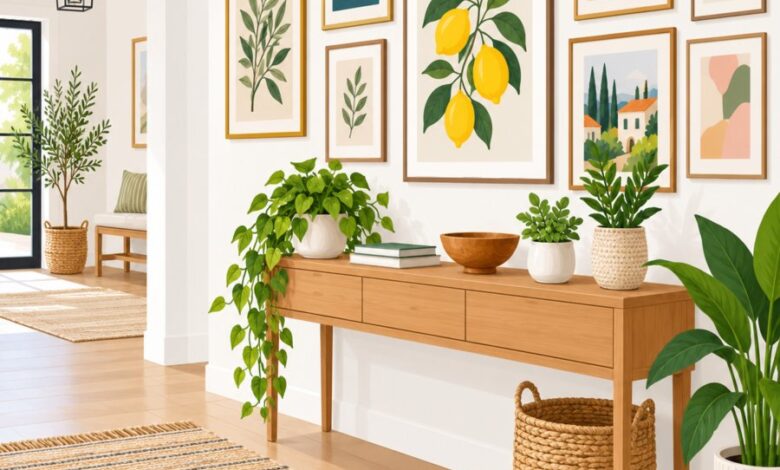
Add a narrow console table beneath the display with a single potted fern or trailing pothos to blur the line between indoor art and living greenery.
Planning Tools and Final Tips for Lasting Impact
Regardless of which style you choose, successful picture frame arrangement always starts with planning. Use painter’s tape to outline frame positions directly on the wall, or cut paper templates to test spacing before drilling a single hole.
Lighting matters more than most people realize. A narrow LED picture light or a well-placed wall sconce can make even a budget-friendly art display look gallery quality after dark.
Finally, resist the urge to finalize everything in one weekend. The best hallway decor ideas evolve over time, so leave room to add a new frame or swap out a piece as your collection and tastes grow.
With these eight approaches in your toolkit, you now have a full range of gallery wall layouts to transform even the most overlooked hallway into a space that feels thoughtfully designed, personal, and genuinely welcoming.