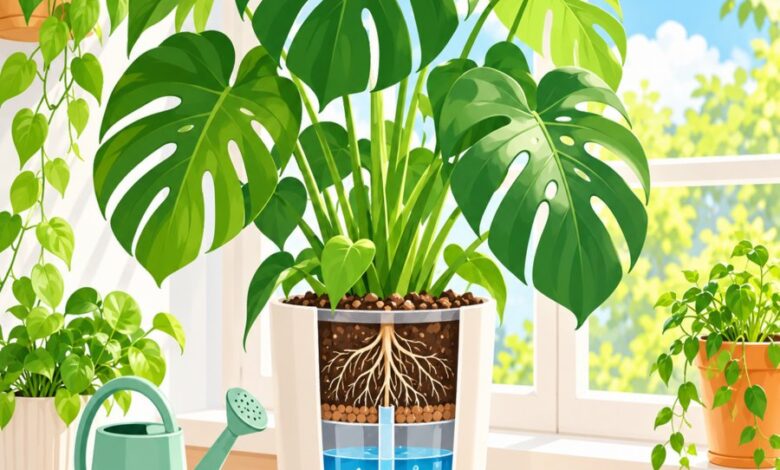
If your Monstera or Philodendron looks sadder since you switched to a self-watering planter, you are not alone. Most of these failures trace back to a short, predictable list of self-watering planter mistakes that quietly drown roots instead of nourishing them. Aroids are forgiving plants, but their thick, oxygen-hungry roots have very little tolerance for a reservoir system that’s set up wrong. The good news? Every one of these mistakes is fixable once you know what to look for.
In this guide, we’re breaking down the seven most ruinous errors gardeners make with self-watering containers, specifically as they relate to aroids like Monstera, Philodendron, Pothos, and Anthurium. We’ll also cover the mechanics behind aroid root suffocation, common sub irrigation wick errors, and why indoor planter drainage matters even in a “self-watering” system. By the end, you’ll know exactly how to set up these planters so they actually help your plants thrive.
Why Aroids Are Especially Vulnerable to Self-Watering Planter Mistakes
Aroids evolved as epiphytes and hemiepiphytes, climbing through loose, chunky forest debris where air moves freely around their roots. Their root systems are built for oxygen exchange, not for sitting in standing water.
This is precisely why self-watering planter mistakes hit aroids harder than they hit thirstier plants like ferns or peace lilies. A reservoir system that works beautifully for a moisture-loving fern can be a death trap for a Philodendron if the wicking distance, soil mix, or water level isn’t calibrated correctly.
Understanding this fundamental mismatch is the first step toward avoiding aroid root suffocation, which happens when roots are deprived of oxygen for extended periods due to excess moisture retention near the root zone.
Mistake 1: Using Standard Potting Soil Instead of Chunky Aroid Mix
Dense, moisture-retentive potting soil is one of the most common self-watering planter mistakes homeowners make. In a traditional pot, you can compensate for heavy soil by watering less often. In a self-watering system, the reservoir constantly feeds moisture upward, so dense soil stays saturated almost permanently.
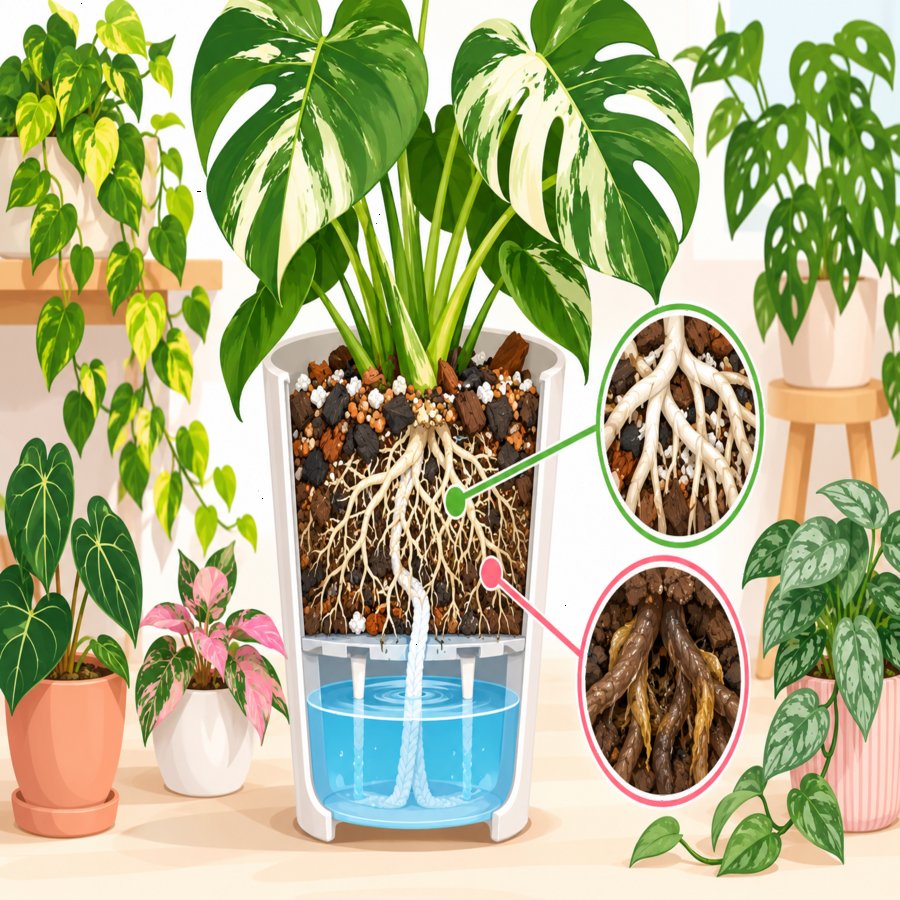
The fix: Blend a chunky aroid mix with orchid bark, perlite, horticultural charcoal, and coarse coconut coir. This structure allows the wicking action to distribute moisture evenly while still leaving air pockets around the roots.
According to the Royal Horticultural Society, well-aerated growing media is essential for healthy root respiration, a principle that applies directly to container gardening indoors as much as it does outdoors.
Mistake 2: Letting the Reservoir Water Touch the Root Ball Directly
A properly designed self-watering planter should have a clear gap between the water reservoir and the bottom of the soil chamber. When that gap closes, either from overfilling or a poorly designed insert, roots end up sitting directly in standing water.
This is one of the fastest routes to aroid root suffocation. Roots submerged in water lose access to oxygen within days, leading to blackened, mushy tissue and a rotten smell that signals irreversible damage.
The fix: Always check the manufacturer’s maximum fill line, and never top off the reservoir “just to be safe.” If you’re unsure, let it run dry between refills rather than overfilling.
Mistake 3: Poor Wick Placement and Sub Irrigation Wick Errors
Wicks are the lifeline of a self-watering system, but they’re also a frequent source of failure. Common sub irrigation wick errors include using a wick that’s too thick, placing it off-center, or forgetting to replace it when it becomes clogged with mineral deposits.
A wick that’s too saturating will keep the entire soil column wet at all times, essentially recreating the same conditions as direct water contact. A clogged or degraded wick, on the other hand, stops moving water altogether, leaving your aroid parched despite a full reservoir.
The fix: Use a cotton or nylon wick sized appropriately for your pot, position it centrally, and inspect it every few months. Replace it at the first sign of mineral buildup or fraying.
Mistake 4: Ignoring Indoor Planter Drainage Even in a Sealed System
Many people assume that because a self-watering planter has a sealed reservoir, indoor planter drainage no longer matters. This is false, and it’s one of the costliest self-watering planter mistakes among aroid owners.
Excess water from rainfall exposure on a balcony, overzealous misting, or accidental overfilling still needs somewhere to go. Without an overflow hole or drainage outlet, that extra water has nowhere to escape except upward into the root zone.
The fix: Choose self-watering planters with a built-in overflow hole positioned just below the maximum fill line. If yours doesn’t have one, drill a small overflow hole yourself at the correct height.
Mistake 5: Choosing the Wrong Pot Size for Your Aroid’s Root System
Oversized self-watering planters are a trap. A small root ball in a huge soil chamber means most of that soil stays wet without ever being accessed by roots, creating stagnant, oxygen-poor pockets exactly where new roots need to grow.
This mismatch is especially damaging for slower-growing aroids like Anthurium or mature Philodendron varieties, which simply can’t “catch up” to the excess moisture before rot sets in.
The fix: Size up gradually, no more than two inches in diameter at a time, and only repot once roots have visibly filled the current container.
Mistake 6: Skipping Reservoir Cleaning and Letting Algae Build Up
Stagnant reservoirs are breeding grounds for algae, fungus gnats, and bacterial growth, especially in warm, humid indoor environments. Over time, this buildup clogs the wick and introduces pathogens straight into the root zone.
This is one of the sneakier self-watering planter mistakes because it develops slowly and is easy to overlook until the plant starts declining for no obvious reason.
The fix: Empty and rinse the reservoir every four to six weeks. A diluted hydrogen peroxide rinse, followed by a thorough water flush, keeps algae and fungal growth in check without harming the plant.
Mistake 7: Placing Self-Watering Aroids in Low Light With High Moisture
Light and moisture are deeply connected. In bright light, plants transpire quickly and use up reservoir water at a healthy pace. In dim corners, that same reservoir can stay full for weeks, keeping the root zone constantly damp.
Pairing a self-watering system with low light is a near-guaranteed path to aroid root suffocation, since the plant simply isn’t using water fast enough to prevent oversaturation.
The fix: Reserve self-watering planters for aroids in medium to bright indirect light. In darker rooms, stick with traditional pots and manual watering for better control. The Old Farmer’s Almanac notes that matching watering method to light exposure is one of the most overlooked factors in houseplant care.
How to Audit Your Current Self-Watering Setup
If your aroid is showing yellowing lower leaves, mushy stems, or a sour smell near the soil, it’s time for a full inspection. Unpot the plant and check the root color: healthy aroid roots are firm and white or tan, while suffocated roots turn brown, black, or slimy.
Trim away any damaged roots with sterilized scissors, refresh the soil mix, and reassess every point covered above before repotting. Most plants recover well once the underlying self-watering planter mistakes are corrected.
While you’re reworking your plant displays, consider pairing recovered aroids with creative vertical storage. These floating wood shelf display ideas are a great way to showcase trailing aroids while keeping airflow around the pots optimal.
Building a Long-Term Routine That Avoids Self-Watering Planter Mistakes
Prevention is far easier than recovery. Set a recurring reminder to check reservoir levels, inspect the wick, and flush the system monthly. Rotate the plant occasionally so moisture doesn’t pool unevenly on one side of the pot.
Keep a simple log of watering intervals for the first few months with any new planter. This helps you spot patterns early, long before aroid root suffocation becomes visible above the soil line.
With the right chunky mix, correct wick maintenance, proper drainage, and appropriate light pairing, self-watering planters can absolutely work for aroids. The key is respecting their need for oxygen just as much as their need for moisture.