
No-till gardening has become the darling of the sustainable gardening movement, and for good reason. But the shift away from the shovel and tiller is not as simple as just doing nothing, and many well-meaning gardeners stumble into no-till gardening blunders that quietly destroy the very soil ecosystem they are trying to protect. If you have switched to no-dig beds and still see struggling plants, compacted dirt, or disappointing harvests, the problem is likely one of these common missteps.
In this guide, we will dig into (figuratively, of course) the real reasons no-till methods fail, how to protect fragile soil biology, and the exact steps to build a thriving, living garden bed from the ground up.
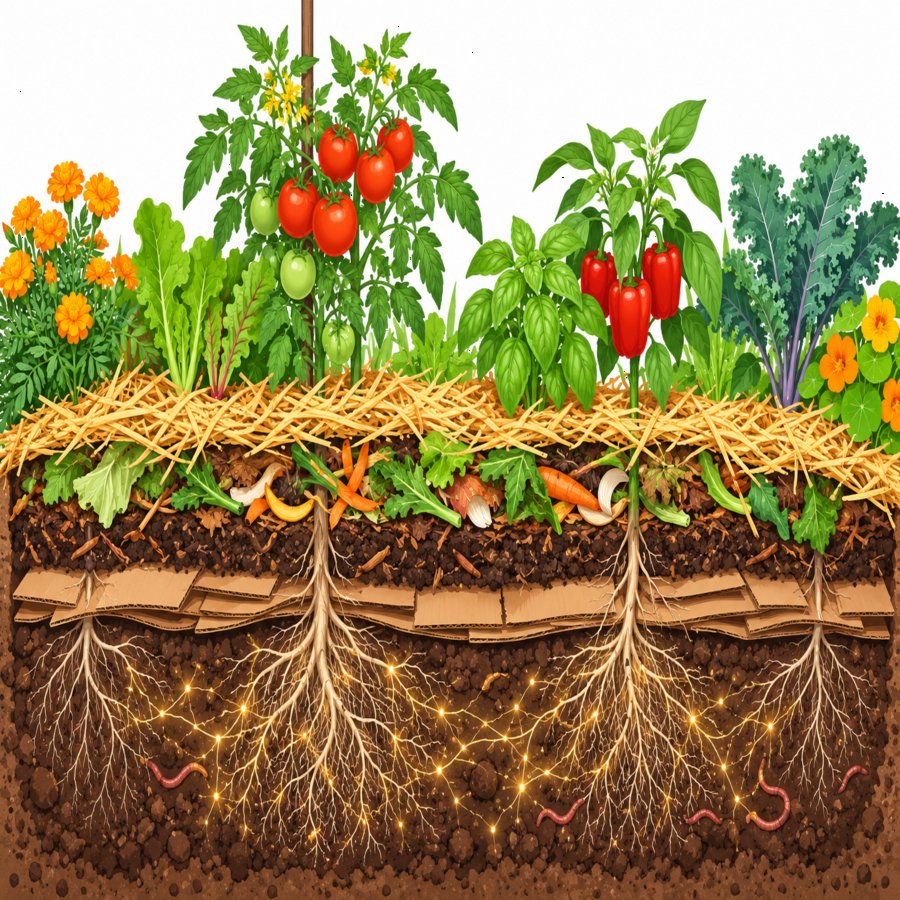
Why No-Till Gardening Blunders Happen in the First Place
Most gardeners adopt no-till methods because they have heard that tilling destroys soil structure and harms beneficial organisms. This is absolutely true.
The trouble starts when gardeners assume no tilling equals no effort . In reality, no-till systems require more intentional planning, not less, because you are relying on biology instead of brute force to break down organic matter and aerate the soil.
Without understanding this shift, gardeners often make no-till gardening blunders that undo years of soil-building progress in a single season. Compacting wet soil by walking on beds, skipping mulch layers, or using the wrong amendments are all symptoms of this misunderstanding.
Mycorrhizal Fungi Care: The Hidden Network You Are Probably Destroying
Beneath every healthy garden bed lies a vast underground network of fungal threads called mycelium. These threads form symbiotic relationships with plant roots, and proper mycorrhizal fungi care is essential to no-till success.
Mycorrhizal fungi extend a plant’s root system exponentially, helping it absorb water and nutrients like phosphorus that would otherwise be out of reach. In exchange, the plant feeds the fungi sugars produced through photosynthesis.
The problem is that this delicate fungal network is easily severed by physical disturbance. Even gentle digging, excessive raking, or using synthetic fungicides can sever these threads and set your soil back months.
To truly practice mycorrhizal fungi care, avoid walking directly on planting beds, use dedicated pathways, and skip synthetic fertilizers that can suppress fungal activity. Phosphorus-heavy fertilizers in particular can trick plants into abandoning their fungal partnerships entirely .
Soil Biology Protection: What Lives Beneath Your Feet
A single teaspoon of healthy garden soil can contain billions of bacteria, thousands of protozoa, and dozens of beneficial nematodes. Soil biology protection is the entire foundation of no-till philosophy, yet it is the piece most gardeners overlook.
These microscopic organisms break down organic matter, cycle nutrients, and even help suppress plant diseases. When you till, you expose these organisms to sunlight and oxygen levels that kill them almost instantly.
But soil biology protection is not just about avoiding the tiller. Common no-till gardening blunders that harm soil life include leaving beds bare over winter, using chemical pesticides indiscriminately, and allowing soil to dry out completely between waterings.
According to the Royal Horticultural Society, maintaining consistent organic matter and minimizing soil disturbance are two of the most effective ways to support long-term soil health and biodiversity.
Keep beds covered with mulch or living cover crops year-round whenever possible. Bare soil is vulnerable soil , and exposed dirt loses moisture, temperature stability, and microbial diversity far faster than covered ground.
Sheet Mulching Layers: Building Soil the Right Way
One of the best tools for avoiding no-till gardening blunders is mastering proper sheet mulching layers . This technique, sometimes called lasagna gardening, builds fertile soil directly on top of existing ground without a single turn of the spade.
The classic sheet mulching layers method starts with a weed-suppressing base, typically cardboard or several layers of newspaper, laid directly over grass or weeds. This smothers existing vegetation while providing food for earthworms and fungi.
On top of that base, alternate layers of nitrogen-rich “green” materials like grass clippings or kitchen scraps with carbon-rich “brown” materials like straw, dried leaves, or wood chips. Finish with a thick layer of compost or aged mulch on top , which will serve as your actual planting medium.
A common mistake among these no-till gardening blunders is skipping the cardboard layer because gardeners want to plant immediately. Patience is essential here, since the decomposition process needs weeks or even months to properly break down into usable soil.
The Old Farmer’s Almanac notes that sheet mulching works especially well when started in fall, allowing winter moisture and microbial activity to fully transform the layers before spring planting.
The Compaction Trap: A Silent No-Till Gardening Blunder
Soil compaction is perhaps the most underestimated of all no-till gardening blunders. Without regular tilling to loosen the ground, many gardeners mistakenly believe compaction is no longer a concern.
In truth, compaction remains a serious threat in no-till systems, especially when beds are walked on repeatedly or worked while wet. Compacted soil squeezes out the air pockets that roots, worms, and beneficial microbes all depend on to survive.
The fix is surprisingly simple: designate permanent pathways between your beds and never step onto growing areas. Raised beds or clearly marked rows naturally discourage foot traffic and keep the growing zone undisturbed.
Interestingly, the discipline required to avoid compaction mirrors the precision needed in other home improvement projects. Just as careless technique can ruin a finished surface, as explored in this guide to common tile grouting mistakes that ruin a finished surface, careless footwork in the garden can undo months of careful soil building in minutes.
Overfeeding and Chemical Shortcuts That Backfire
Another frequent misstep among no-till gardening blunders involves relying too heavily on synthetic fertilizers for quick results. These products can deliver a fast nutrient boost, but they often come at the expense of soil biology.
Synthetic nitrogen, in particular, can suppress the natural fungal and bacterial populations responsible for long-term soil fertility. Plants become dependent on artificial inputs rather than the living soil web designed to feed them continuously.
Pesticides and herbicides pose similar risks. Broad-spectrum chemicals do not discriminate between harmful pests and the beneficial insects, earthworms, and microbes that keep your no-till system functioning properly.
Instead, lean on compost, well-aged manure, and organic amendments like kelp meal or rock dust. These feed the soil slowly and support the microbial populations that ultimately feed your plants.
Neglecting Crop Diversity and Living Roots
Monoculture, or planting the same crop in the same bed season after season, is another one of the classic no-till gardening blunders that gradually depletes soil health. Different plants support different microbial communities, and repetition narrows that diversity over time.
Living roots in the soil, even during off-seasons, continue feeding mycorrhizal fungi and soil bacteria through root exudates. When beds sit empty, this food source disappears and microbial populations decline.
Cover crops like clover, winter rye, or vetch solve this problem beautifully. Plant a cover crop at the end of each growing season instead of leaving beds bare, then chop and drop the foliage directly onto the soil surface before it sets seed.
Crop rotation within the same bed also helps break pest and disease cycles while diversifying the nutrients drawn from and returned to the soil. Aim to rotate plant families every season rather than planting tomatoes in the exact same spot year after year.
Watering Mistakes That Undermine Soil Structure
Improper watering is a surprisingly common contributor to no-till gardening blunders. Both overwatering and underwatering disrupt the delicate balance of soil moisture that beneficial organisms require to thrive.
Overwatering saturates soil pores, driving out oxygen and suffocating aerobic bacteria and fungi. This creates anaerobic conditions that favor harmful pathogens instead of the beneficial organisms you want to encourage.
Underwatering, meanwhile, causes soil to dry and crack, severing fungal networks and stressing microbial life just as effectively as physical tilling would. Consistency matters more than volume when it comes to protecting soil biology.
Drip irrigation or soaker hoses paired with a thick mulch layer help maintain even moisture levels without the swings that stress soil organisms. According to Better Homes & Gardens, mulched beds can retain significantly more moisture than bare soil, reducing both watering frequency and stress on root systems.
Building a Resilient No-Till System for the Long Term
Avoiding no-till gardening blunders ultimately comes down to patience and observation. Healthy soil biology takes seasons, not weeks, to fully establish, and rushing the process almost always leads to setbacks.
Start by committing to permanent beds and dedicated walking paths so compaction never becomes an issue. Layer organic matter consistently using proper sheet mulching layers rather than digging amendments into the ground.
Prioritize mycorrhizal fungi care by minimizing soil disturbance and avoiding high-phosphorus fertilizers that discourage fungal partnerships. Keep living roots in the ground year-round through cover crops and succession planting whenever possible.
Above all, treat soil biology protection as the central goal of every decision you make in the garden, from watering schedules to what tools you choose to pick up. The organisms beneath your feet are not just along for the ride, they are the engine driving every successful no-till garden.
With these principles in mind, you can sidestep the most damaging no-till gardening blunders and build a garden bed that genuinely improves with every passing season rather than declining from neglect or misguided effort.