
A timber pergola can transform a plain backyard into a shaded retreat worthy of a magazine cover, but even seasoned DIYers fall victim to common timber pergola mistakes that quietly invite wood rot into the structure. These errors often start small, a missed coat of sealant here, a poorly drained post base there, and within a few seasons they snowball into soft, crumbling beams and wobbling posts. Understanding exactly where things go wrong is the first step toward building a pergola that lasts decades instead of years. In this guide, we will walk through the seven most ruinous mistakes homeowners make, and more importantly, how to avoid them entirely.
Why Timber Pergola Mistakes Lead to Catastrophic Rot
Wood rot is not an overnight event; it is the slow result of trapped moisture, fungal spores, and oxygen working together inside untreated or poorly protected timber. Once fungal hyphae take hold inside a beam, they spread through the grain, breaking down the cellulose that gives wood its strength.
Most timber pergola mistakes share one root cause: a failure to manage water. Whether it is rain pooling at a post base, condensation trapped under a poorly ventilated beam, or splashback from a nearby sprinkler, moisture is the common thread running through nearly every rotted pergola we have ever inspected.
The good news is that every one of these failure points is preventable with the right materials, the right joinery details, and a consistent maintenance routine. Let’s break down exactly what goes wrong and how to fix it before it becomes structural.
Mistake One: Skipping Proper Outdoor Post Anchoring
The single most damaging error we see is setting timber posts directly into concrete or soil without any barrier between the wood and the ground. This practice wicks moisture straight up into the end grain, which is the most absorbent part of any post.
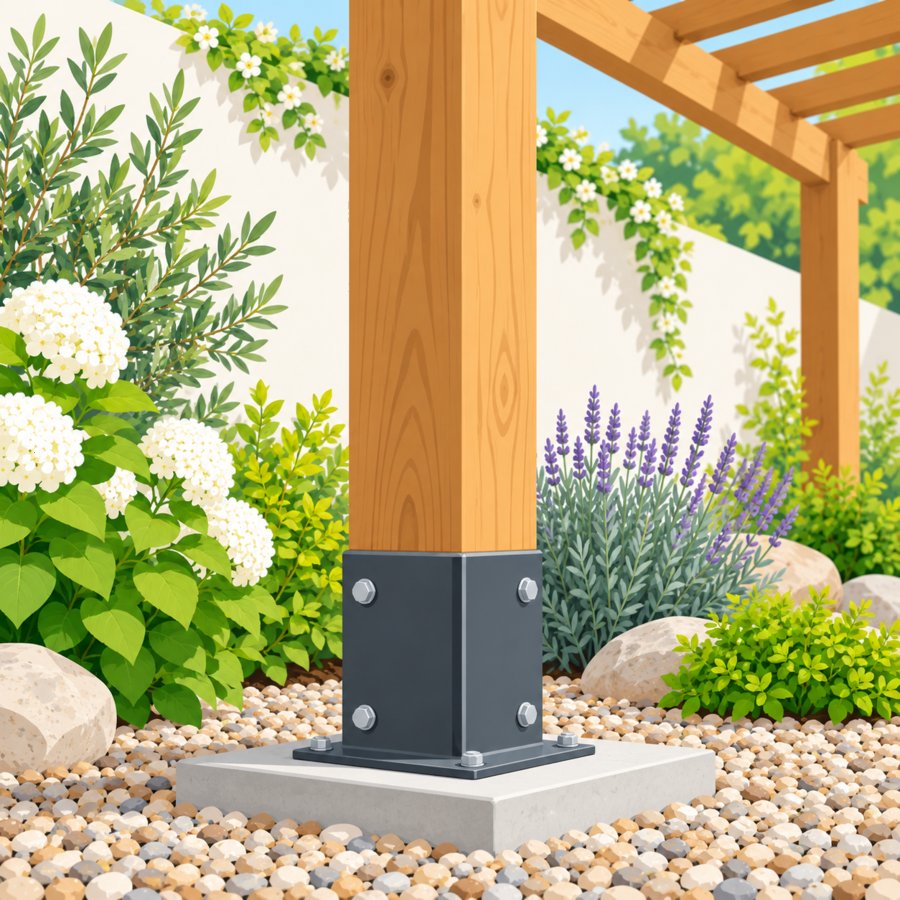
The fix: Proper outdoor post anchoring means using galvanized steel post bases that lift the timber at least an inch above the concrete footing or deck surface. This single detail prevents standing water from ever touching the vulnerable end grain.
Adjustable post anchors also allow for precise leveling before the concrete cures, which eliminates another frequent issue: posts that lean or twist as the footing settles. Investing in quality hardware here pays for itself many times over in avoided repairs.
Mistake Two: Ignoring Pressure Treated Lumber Care
Pressure treated lumber is chemically infused to resist insects and decay, but many homeowners mistakenly believe it is completely maintenance-free once installed. This assumption is one of the most costly timber pergola mistakes because the treatment chemicals only protect the wood for a limited window before they begin to break down from UV exposure.
Proper pressure treated lumber care involves letting new boards dry fully before staining, typically four to eight weeks depending on climate, and then applying a water-repellent sealant rated for treated wood. Skipping this drying period causes sealants to trap moisture inside rather than keeping it out.
Pro tip: Sprinkle a few drops of water on the wood surface. If it beads up, the lumber is still sealed. If it soaks in immediately, it is time to reapply a protective finish.
Mistake Three: Neglecting Cedar Pergola Maintenance Routines
Cedar is prized for its natural oils that resist decay and insects, which leads many owners to assume it needs no attention at all. This is a dangerous misconception, because cedar’s natural resistance fades significantly within five to seven years of sun and rain exposure.
Consistent cedar pergola maintenance includes an annual inspection for graying wood, light sanding of rough patches, and reapplication of a UV-protective oil or stain. Without this upkeep, cedar’s surface fibers break down and become porous, allowing moisture to penetrate deeper than expected.
According to horticultural and outdoor structure guidance from the Royal Horticultural Society, outdoor timber structures situated near garden beds benefit from extra attention because splashing soil and plant irrigation accelerate moisture absorption at the base. Positioning your pergola posts away from direct sprinkler lines is a simple preventative step.
Mistake Four: Poor Joinery That Traps Water
Flat, horizontal joints where beams meet posts are notorious for collecting rainwater. Without a slight slope or drip edge cut into the design, water sits in these joints for days after a storm, slowly saturating the wood fibers.
This is one of those subtle timber pergola mistakes that goes unnoticed until the joint is already compromised. By the time discoloration or softness appears, internal decay has usually been progressing for a year or more.
Better joinery practices:
Cut a slight bevel on horizontal beam tops so water sheds outward instead of pooling.
Add metal flashing at critical joints where two pieces of timber meet, especially at the top of posts.
Leave small gaps between decorative rafter tails and posts to allow airflow and faster drying after rain.
Mistake Five: Using the Wrong Fasteners and Hardware
Standard zinc-coated screws and nails corrode rapidly when they come into contact with the copper-based preservatives found in most pressure treated lumber. As these fasteners rust, they leave behind dark streaks and, worse, create tiny channels that let water seep directly into the wood’s core.
Always choose stainless steel or hot-dip galvanized hardware rated specifically for treated lumber. This small upfront cost difference is negligible compared to the expense of replacing rotted framing members down the line.
If you are repurposing old hardware from previous projects, such as hinges or brackets salvaged while working on something like our upcycled cabinet door projects, make sure they are rated for exterior exposure before installing them on a pergola frame.
Mistake Six: Overlooking Soil Contact and Drainage Grading
Even with proper outdoor post anchoring, a pergola built in a low spot of the yard will constantly battle water runoff from surrounding landscaping. If the ground slopes toward the posts instead of away from them, every rainstorm sends a fresh wave of moisture toward the base of the structure.
Before construction begins, grade the soil so it slopes gently away from each footing location. Adding a layer of gravel around the base of posts also improves drainage and reduces splashback from heavy rain.
Resources from The Old Farmer’s Almanac on seasonal rainfall patterns can help you anticipate how much water your specific region typically delivers, allowing you to plan drainage accordingly before the first post ever goes into the ground.
Mistake Seven: Delaying Repairs After the First Sign of Damage
The final and perhaps most common of all timber pergola mistakes is procrastination. A small soft spot on a rafter or a slightly discolored post base rarely looks urgent, so it gets pushed to next weekend’s to-do list, and then the weekend after that.
Rot does not pause while you wait. What starts as a surface-level issue can spread through an entire beam within a single rainy season, especially in humid climates.
Quick inspection checklist:
Press a screwdriver gently into suspicious areas; healthy wood resists, rotted wood crumbles.
Check post bases every spring for dark staining, softness, or insect activity.
Replace affected boards immediately rather than patching, since rot spreads through hidden grain pathways.
Building a Long-Lasting Pergola Maintenance Schedule
Preventing these seven timber pergola mistakes is far easier when you follow a predictable seasonal routine rather than reacting to problems as they appear. Spring and fall inspections catch small issues while they are still cheap and easy to fix.
In spring, clean the entire structure with a soft-bristle brush and mild soap solution to remove winter grime, then inspect every joint and post base for softness or discoloration. In fall, apply a fresh coat of sealant before freezing temperatures arrive, since frozen moisture trapped in wood fibers expands and accelerates structural damage.
Guidance published by the USDA on wood durability and natural decay resistance reinforces that even naturally rot-resistant species benefit from routine sealing in climates with significant rainfall or humidity swings.
A well-maintained timber pergola, free from these avoidable errors, can comfortably last twenty years or more. The effort required is minimal compared to the cost and disappointment of rebuilding a structure that failed prematurely due to preventable neglect.
By prioritizing proper outdoor post anchoring, consistent pressure treated lumber care, disciplined cedar pergola maintenance, and smart joinery choices, you are building far more than shade. You are building a durable outdoor living space your family can enjoy for decades without the looming threat of catastrophic wood rot.