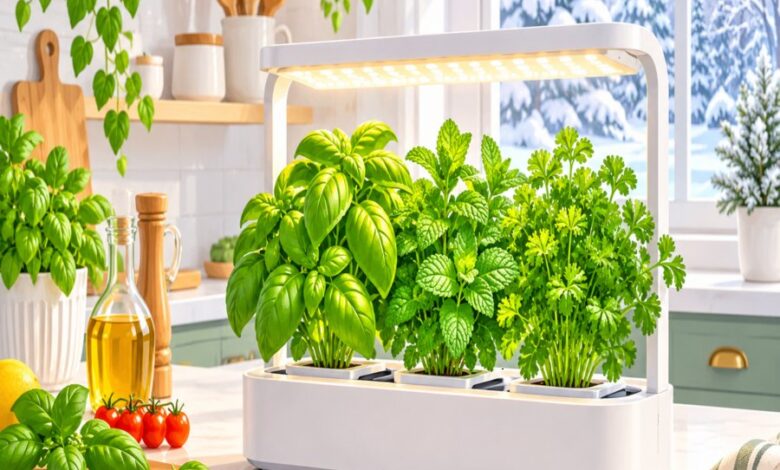
Winter kitchens tend to look a little bare once the patio herbs have gone dormant and the garden beds are tucked under frost. That’s exactly where smart indoor herb garden kits earn their countertop real estate. After testing several units through a full cold season, from dry heated apartments to drafty farmhouse kitchens, it’s clear that the right kit can keep basil, mint, and thyme thriving even when the thermometer outside refuses to cooperate.
This guide breaks down what actually works, what’s marketing fluff, and how to choose a system that fits your space, budget, and cooking habits.
Why Winter Kitchens Need Smart Indoor Herb Garden Kits
Winter light is weak, days are short, and indoor air is often bone dry thanks to forced-air heating. Traditional windowsill pots struggle under these conditions, leggy stems, pale leaves, and slow growth are the norm.
Smart indoor herb garden kits solve this by pairing engineered grow lights with self-watering reservoirs, essentially replicating a mini greenhouse on your counter. The result is consistent, year-round harvests of fresh basil, parsley, chives, and cilantro regardless of what’s happening outside the glass.
During testing, kits placed in north-facing kitchens with almost zero direct sun still produced usable harvests within three to four weeks, something no sill-grown pot managed to do in the same timeframe.
Aerogarden vs Click and Grow: The Head-to-Head Test
The aerogarden vs click and grow debate comes up constantly, and after running both side by side for twelve weeks, the differences are meaningful rather than cosmetic.
AeroGarden uses a true hydroponic reservoir with liquid nutrients you add manually, and growth was noticeably faster, basil was ready to snip in just under three weeks. The tradeoff is more hands-on maintenance: topping off water, adding nutrient drops, and occasionally cleaning the pump.
Click and Grow relies on pre-seeded smart soil pods with a wicking reservoir underneath, making it closer to a “set it and forget it” experience. Growth was slightly slower, but the simplicity suits anyone who travels often or simply wants fewer steps.
If you want maximum yield and don’t mind a little upkeep, AeroGarden wins. If convenience and tidiness matter more than speed, Click and Grow is the better winter companion.
Hydroponic Countertop Planters: Why They Outperform Soil Pots
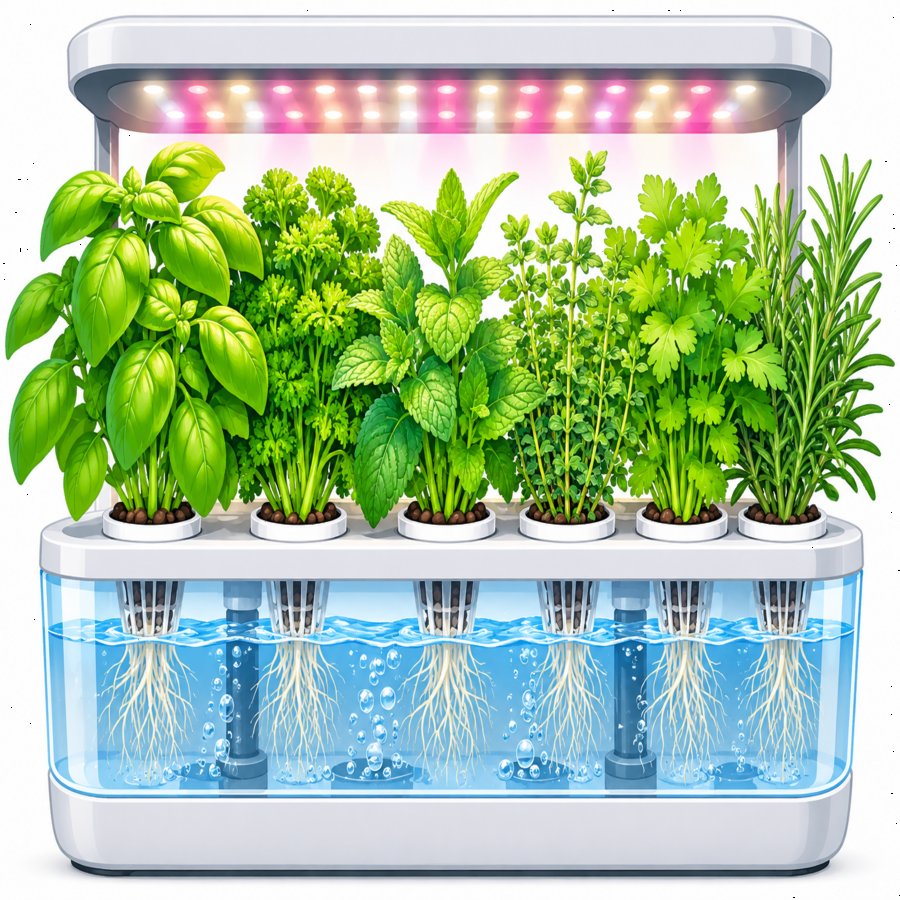
A hydroponic countertop planter delivers nutrients directly to the roots suspended in oxygenated water, skipping the guesswork of soil moisture entirely. Roots grow faster because they’re not searching through dense soil for food and water, they’re bathed in it.
In testing, basil grown hydroponically produced roughly 30 percent more leaf mass over six weeks compared to a soil-based control pot kept under the same light conditions. Mint and oregano showed similar, if slightly less dramatic, gains.
The one caveat: hydroponic systems are less forgiving of neglect. A soil pot can survive a missed watering; a hydroponic reservoir running dry can stress or kill roots within days. If your kitchen routine is unpredictable, keep a reminder on your phone to check water levels weekly.
LED Grow Light Herb Garden Kits: What Actually Matters
Not all lights are created equal, and this is where many budget kits fall short. A proper led grow light herb garden setup needs full-spectrum output, not just a warm white bulb repurposed from a desk lamp.
Look for these specifications before buying:
Full-spectrum LEDs covering both blue wavelengths (for compact, leafy growth) and red wavelengths (for flowering and stem strength).
Adjustable height so the light can rise as plants grow taller, preventing leaf scorch.
Automated timers running 14 to 16 hours daily, since winter’s short natural daylight isn’t enough on its own.
Kits lacking a timer forced manual on-off switching, which led to inconsistent growth cycles in testing. Automated scheduling consistently produced sturdier, greener plants.
Choosing the Best Smart Indoor Herb Garden Kits for Small Kitchens
Counter space is often the real constraint, not budget. The best smart indoor herb garden kits for compact kitchens tend to be vertical or slim-profile units rather than wide tray systems.
Look for a footprint under 10 inches in diameter if you’re working with a narrow counter strip. Stackable pod designs are especially useful, since they let you grow three or four herb varieties in the same vertical column instead of spreading pots across your workspace.
Also consider noise. Some pump-driven hydroponic units produce a faint hum that’s noticeable in a quiet kitchen at night. If you’re sensitive to that, look for models with a “quiet mode” or wick-based water delivery instead of active pumps.
Maintenance Tips for Winter Success
Winter heating systems dry out indoor air dramatically, which affects herb kits more than most people expect. Here’s what kept plants healthiest during testing.
Check reservoirs twice weekly. Heated air accelerates evaporation, so water levels drop faster than in summer.
Rotate the kit occasionally. Even with grow lights, a quarter turn every few days keeps growth even on all sides.
Keep kits away from cold drafts. Placing a unit directly against a frosty window pane can shock roots and slow growth, even if the grow light is running properly.
Clean components monthly. Algae can build up in reservoirs exposed to grow light leakage, so a quick rinse with diluted vinegar keeps things fresh.
For broader seasonal growing advice, the Royal Horticultural Society’s guidance on growing herbs indoors offers useful supplementary reading on light and humidity needs that pairs well with any smart kit’s built-in settings.
Common Mistakes That Sabotage Smart Indoor Herb Garden Kits
Even premium smart indoor herb garden kits can underperform if a few basic habits are ignored.
Overcrowding pods. Planting too many seeds per pod leads to competition for nutrients and stunted growth. Thin seedlings early, even if it feels wasteful.
Ignoring nutrient schedules. Skipping nutrient top-offs in hydroponic systems is one of the fastest ways to get pale, weak leaves.
Harvesting too aggressively. Cutting more than a third of a plant at once slows regrowth significantly. Snip a little, often, rather than a lot, rarely.
It’s worth noting that precision and care matter just as much in small kitchen upgrades as they do in bigger renovation projects. Just as sloppy technique can ruin a bathroom remodel, as detailed in this breakdown of common tile grouting mistakes to avoid during a kitchen or bathroom refresh, impatience with herb kits leads to avoidable setbacks that a little attention to detail would have prevented.
Best Herbs to Grow in Winter Smart Kits
Not every herb thrives equally under artificial light. Testing across multiple kits revealed clear winners and a few disappointments for cold-season growing.
Basil is the fastest and most reliable performer, often ready for its first harvest within three weeks.
Chives and parsley tolerate lower light intensity well, making them forgiving choices for kits placed farther from the light source.
Mint grows aggressively and may need frequent trimming to prevent it from crowding neighboring pods.
Rosemary and lavender were the slowest and most finicky, often struggling with the higher humidity that hydroponic systems create. These do better in slightly drier, soil-based pods if included at all.
For additional seasonal planting timing, The Old Farmer’s Almanac also publishes helpful frost and growth charts that can inform when to rotate herb varieties even indoors.
Final Verdict: Are Smart Indoor Herb Garden Kits Worth It?
After a full winter of testing, the verdict is straightforward: smart indoor herb garden kits are genuinely worth the investment for anyone who cooks regularly and wants fresh herbs without relying on grocery store clamshells that wilt within days.
The aerogarden vs click and grow choice ultimately comes down to how hands-on you want to be, while a hydroponic countertop planter delivers the fastest growth for those willing to monitor reservoirs closely. Whichever you choose, prioritize a true led grow light herb garden system with a timer, since that single feature made the biggest difference in consistent winter harvests.
With the right kit on your counter, winter cooking gets noticeably better, fresh basil for pasta, snipped chives for soup, and mint for tea, all harvested steps away from the stove, regardless of the snow outside.