If your sofa has seen more spilled coffee, muddy paw prints, and juice box accidents than you care to admit, you are not alone. Every home eventually faces that moment of panic when a stain sets into the cushions and refuses to budge. The good news is that professional cleaners rely on a specific set of upholstery cleaning secrets to rescue fabric that looks beyond saving, and most of these techniques are surprisingly easy to replicate at home with the right tools and a little patience.
In this guide, we are pulling back the curtain on the exact methods trained technicians use to restore furniture to near-original condition. We will cover fabric identification, pre-treatment tricks, steam cleaner techniques, enzyme-based solutions, and the delicate art of caring for luxury materials like velvet. By the end, you will have a complete toolkit of upholstery cleaning secrets that work on everything from canvas sectionals to delicate accent chairs.
Secret One: Always Identify Your Fabric Before You Clean
The single biggest mistake homeowners make is grabbing a cleaning product without checking the fabric code first. Nearly every piece of furniture has a hidden tag, usually tucked under a cushion or along the frame, marked with a letter code.
Understanding the codes: “W” means water-based cleaners are safe, “S” means you need a solvent-based cleaner, “WS” allows either, and “X” means vacuum only, no liquid whatsoever. Skipping this step is how silk blends get ruined and how watermarks become permanent on certain synthetics.
Professional cleaners always test in an inconspicuous spot first, like the back of a cushion, before treating a visible stain. This single habit is one of the most overlooked upholstery cleaning secrets in the industry, yet it prevents the vast majority of DIY disasters. Patience during this testing phase saves hours of regret later.
Secret Two: Master Velvet Fabric Care Before It Crushes or Stains
Velvet is one of the most stunning upholstery choices, but it is also one of the trickiest to maintain. Proper velvet fabric care requires a gentler hand than cotton or polyester blends because the pile can crush, mat, or develop permanent shiny patches if scrubbed aggressively.
The brushing technique: Before applying any cleaner, use a soft-bristled upholstery brush to lift the nap in one direction. This loosens surface dust and restores the velvet’s natural sheen without introducing moisture.
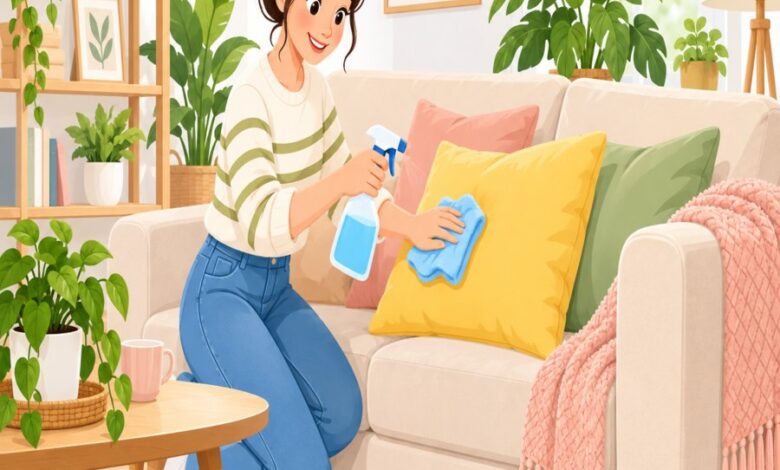
Spot treatment for velvet: When a stain appears, blot immediately with a dry white cloth rather than rubbing. Follow with a diluted solution applied via spray bottle, then dab gently and always brush the pile back into place while damp so it dries looking uniform rather than patchy.
Mastering velvet fabric care is genuinely one of the most valuable upholstery cleaning secrets you can learn, since a single mistake can leave a watermark that is nearly impossible to reverse. When in doubt, a professional cleaning service experienced with delicate textiles is worth the investment.
Secret Three: Steam Cleaner Techniques That Lift Stains Without Soaking Fabric
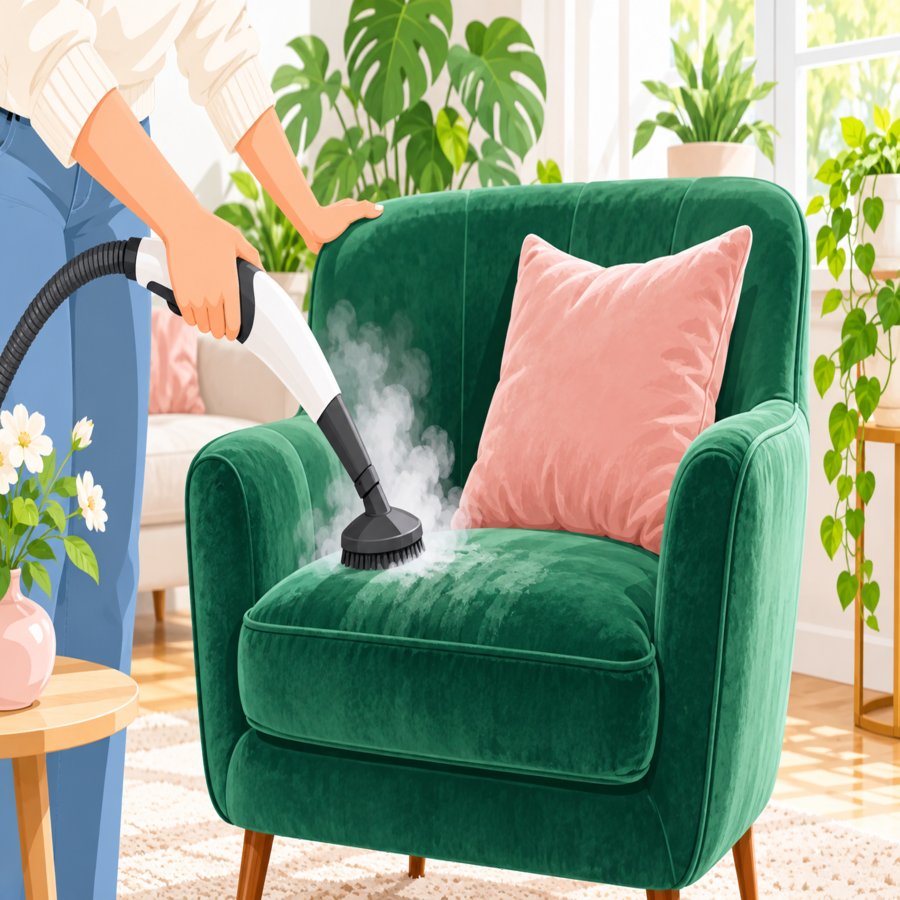
Steam is one of the most powerful tools in a professional’s arsenal because it loosens grime using heat and vapor rather than saturating fabric with liquid. Learning proper steam cleaner techniques means understanding that less moisture, applied correctly, achieves far better results than a drenched cushion.
Low and slow wins the race: Set your steam cleaner to its lowest safe setting for upholstery, and glide the nozzle slowly across the fabric in overlapping passes. Rushing the process or hovering in one spot too long can scorch delicate fibers or cause shrinkage.
Drying is non-negotiable: Always follow a steam pass with a dry microfiber cloth to absorb residual moisture, and position a fan nearby to accelerate drying. Trapped humidity inside cushions invites mold and that telltale musty smell nobody wants in their living room.
These steam cleaner techniques pair beautifully with other upholstery cleaning secrets on this list, particularly when tackling grease stains or pet odors embedded deep in cushion foam. For broader guidance on moisture-sensitive surfaces around the home, the Royal Horticultural Society offers excellent resources on humidity control that apply surprisingly well to indoor fabric care.
Secret Four: Deploy an Enzyme Stain Remover for Organic Messes
Not all stains respond to soap and water, especially those left behind by pets, food, or bodily fluids. This is where an enzyme stain remover becomes indispensable, since it works biologically rather than chemically to break down the organic matter causing both the stain and the odor.
How enzymes actually work: The active enzymes target proteins, starches, and oils, literally digesting the molecules that make up the stain. This is why enzyme formulas are so effective on things like urine, vomit, and grease that leave other cleaners helpless.
Application tips for best results: Saturate the stained area generously, then allow the enzyme stain remover to sit undisturbed for at least fifteen minutes so the enzymes have time to work. Cover the spot with a damp cloth to prevent premature drying, which can stop the reaction before it finishes the job.
Keeping a bottle of enzyme cleaner on hand is one of those practical upholstery cleaning secrets that pet owners and parents swear by. It is also gentle enough for repeated use without breaking down fabric fibers the way harsh bleach alternatives can.
Secret Five: Build a Pre-Treatment Ritual Before Every Deep Clean
Professional cleaners rarely jump straight into scrubbing. Instead, they follow a consistent pre-treatment ritual that dramatically improves the outcome of whatever method comes next.
Step one, vacuum thoroughly: Use an upholstery attachment to remove loose dirt, crumbs, and pet hair before introducing any moisture. Cleaning wet fabric over trapped debris just grinds grit deeper into the weave.
Step two, blot rather than rub: Fresh spills should be blotted immediately with a clean cloth, working from the outside edges of the stain inward. Rubbing spreads the mess and pushes it further into the padding underneath.
Step three, apply a baking soda buffer: A light dusting of baking soda left for twenty minutes before vacuuming helps absorb odors and loosen grease before any liquid treatment begins. This small addition is one of those free upholstery cleaning secrets that costs nothing but makes a noticeable difference.
Interestingly, the same logic of removing debris before deep treatment applies across the home. Homeowners dealing with grout discoloration often make the same rushed mistakes, which is exactly why reviewing common tile grouting mistakes that damage bathroom surfaces can help you avoid similar missteps in other rooms while you are in a deep-cleaning mindset.
Tackling the Toughest Stains: A Category-by-Category Breakdown
Different stains demand different strategies, and knowing which approach matches which mess separates amateur attempts from genuinely professional results.
Red wine and juice: Blot excess liquid immediately, then apply a mixture of dish soap and hydrogen peroxide for light fabrics, testing first on darker upholstery to avoid bleaching.
Grease and oil: Sprinkle cornstarch directly onto the stain to absorb oils before vacuuming, then follow with a degreasing dish soap solution and warm water.
Ink stains: Rubbing alcohol on a cotton swab, dabbed rather than smeared, can lift fresh ink before it sets permanently into the fibers.
Pet accidents: This is where your enzyme stain remover does the heaviest lifting, since standard cleaners often fail to eliminate the odor that draws pets back to the same spot repeatedly.
Protecting Your Investment After the Cleaning Is Done
Once your furniture looks fresh again, a little maintenance keeps it that way far longer than people expect.
Apply a fabric protector: A breathable fabric guard spray creates an invisible barrier that repels liquids long enough for you to blot a spill before it sets, buying you precious extra minutes during the next accident.
Rotate cushions regularly: Flipping and rotating cushions every few weeks distributes wear evenly and prevents one section from fading or flattening faster than the rest.
Keep sunlight in check: Direct sun exposure fades fabric and dries out natural fibers like cotton and linen, so consider sheer curtains if your sofa sits near a bright window.
Combining these maintenance habits with the five core upholstery cleaning secrets outlined above means your furniture will consistently outperform expectations, staying vibrant and fresh for years longer than furniture that only gets attention after a disaster strikes.
Final Thoughts on Mastering Upholstery Cleaning Secrets
Restoring stained furniture does not require a professional service every single time. Armed with fabric codes, proper velvet fabric care, effective steam cleaner techniques, and a reliable enzyme stain remover, you can handle the vast majority of household accidents with confidence.
The real secret, if there is just one, is consistency. Treat stains quickly, test products before full application, and maintain a regular cleaning rhythm rather than waiting for furniture to look visibly dirty before taking action.
With these five professional-grade techniques in your back pocket, stubborn stains will no longer feel like a lost cause. Your furniture deserves the same thoughtful care you give to the rest of your home, and now you have the knowledge to deliver it.