
Few houseplants inspire as much devotion and heartbreak as the fiddle leaf fig. One week it stands tall and glossy in the corner of your living room, and the next it is shedding leaves like autumn arrived indoors. Most of this drama traces back to common fiddle leaf fig blunders that even experienced plant parents make without realizing it. The good news is that once you understand what triggers sudden defoliation, you can reverse the damage and keep your tree thriving for years.
This guide walks through every major mistake, from watering missteps to light placement errors, so you can diagnose your plant’s distress and fix it with confidence.
Why Fiddle Leaf Fig Blunders Lead to Sudden Leaf Loss
Fiddle leaf figs, botanically known as Ficus lyrata, are native to the warm, humid lowland rainforests of West Africa. They crave consistency, and when their environment shifts even slightly, they react dramatically.
Unlike hardier houseplants that tolerate neglect, this tree treats inconsistency as a threat and responds by dropping leaves to conserve energy. That single survival mechanism is the root cause behind nearly every case of sudden defoliation reported by frustrated owners.
Understanding this biology is the first step toward avoiding the most common fiddle leaf fig blunders that plague beginner and seasoned growers alike.
Overwatering and Underwatering: The Classic Culprits
Watering mistakes rank at the very top of the list when it comes to ficus lyrata dropping leaves. Too much water suffocates roots and invites rot, while too little leaves the plant dehydrated and stressed.
Overwatering signs: Yellowing leaves with brown spots, a mushy trunk base, and soil that stays soggy for days are red flags. Root rot develops quickly in waterlogged pots and is one of the hardest problems to reverse once it sets in.
Underwatering signs: Crispy brown edges, drooping leaves, and dry soil pulling away from the pot’s edge indicate thirst. The tree often drops older, lower leaves first to redirect moisture to new growth.
The fix is simple but requires discipline: water only when the top two to three inches of soil feel dry, and always use a pot with proper drainage holes. A moisture meter removes the guesswork entirely and prevents this frequent fiddle leaf fig blunder from recurring.
Indoor Tree Light Requirements Most Owners Get Wrong
Insufficient brightness is another leading cause of leaf drop, and it ties directly into misunderstood indoor tree light requirements. Fiddle leaf figs are rainforest canopy dwellers that need bright, indirect light for the majority of the day.
Placing the tree in a dim corner “because it looked nice there” is a decorative decision that often backfires biologically. Without enough light, the plant cannot photosynthesize efficiently and begins shedding leaves it can no longer support.
Ideally, position your fig near an east or south-facing window where it receives several hours of filtered sunlight daily. Rotate the pot a quarter turn weekly so growth stays even on all sides rather than leaning toward one light source.
If natural light is limited in your space, a quality grow light can supplement the deficit. According to the Royal Horticultural Society, most tropical foliage plants perform best with consistent bright, indirect exposure rather than direct harsh rays, which can scorch delicate leaves.
Ficus Draft Damage and Temperature Shock
One of the sneakiest fiddle leaf fig blunders involves placement near drafty windows, doors, air vents, or radiators. Ficus draft damage happens when the plant experiences rapid temperature swings that it simply cannot tolerate.
A sudden cold blast from an opened door in winter or a stream of hot air from a heating vent can shock the plant’s vascular system. The response is almost immediate: leaves curl, brown, and drop within days.
Keep your fig at least three feet away from exterior doors, air conditioning units, heating vents, and fireplaces. Maintain a stable room temperature between 65 and 75 degrees Fahrenheit, and avoid moving the plant outdoors during seasonal transitions unless you acclimate it gradually over several days.
Even brief exposure to a chilly draft during a grocery run home from the nursery can trigger stress that shows up a week later, leaving owners confused about the delayed reaction.
Repotting and Relocation Mistakes
Moving a fiddle leaf fig to a new pot or a new room is necessary at times, but doing it carelessly ranks among the most damaging fiddle leaf fig blunders a plant owner can commit.
Repotting disturbs the root system, and if done too aggressively or too frequently, the plant enters a prolonged state of shock. Only repot every two to three years, sizing up the container by just two inches in diameter at a time.
Similarly, relocating the tree to a different room disrupts its established light and humidity patterns. If a move is unavoidable, transition it gradually by shifting the pot a few feet every few days rather than making one dramatic change.
Fresh, well-draining potting mix with added perlite supports healthy root aeration after any transplant. For creative ways to style the empty wall space behind your newly repotted fig, consider browsing this collection of budget-friendly canvas art DIY hacks that complement lush indoor greenery beautifully.
Pest Infestations and Nutrient Deficiencies
Not every leaf drop stems from environmental mishandling. Pests like spider mites, scale, and mealybugs quietly drain the plant’s resources, weakening its ability to hold onto foliage.
Inspect the undersides of leaves monthly for sticky residue, tiny webs, or small bumps along the stems. Early detection allows treatment with insecticidal soap or neem oil before an infestation spirals out of control.
Nutrient deficiencies also contribute to decline. Fiddle leaf figs are relatively heavy feeders during their active growing season from spring through early fall.
Feed monthly with a balanced liquid fertilizer diluted to half strength, and skip fertilizing entirely during winter dormancy. Over-fertilizing is itself one of the fiddle leaf fig blunders that burns roots and causes leaf tips to brown and curl.
Low Humidity and Dusty Leaves
Indoor heating and air conditioning systems strip moisture from the air, leaving humidity levels far below what a rainforest native prefers. Dry air causes leaf margins to crisp and eventually detach.
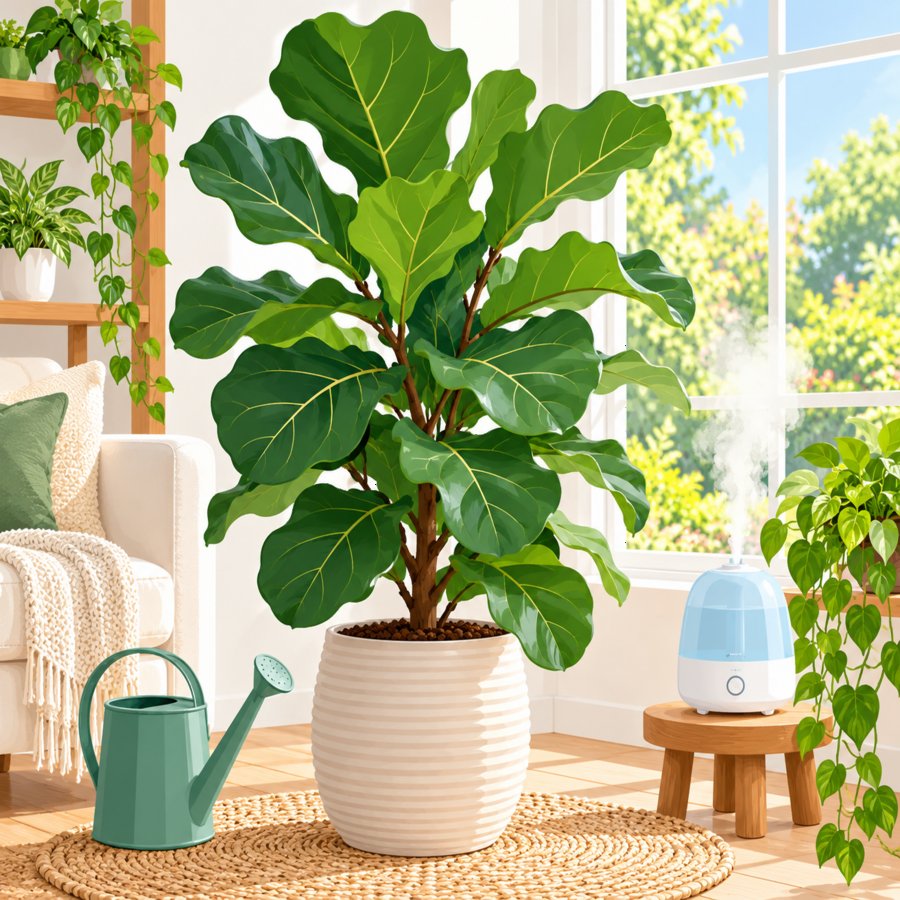
Running a small humidifier nearby, grouping plants together, or placing a pebble tray filled with water beneath the pot can raise ambient moisture meaningfully.
Dust accumulation on broad leaves blocks light absorption and clogs the pores plants use to breathe. Wipe each leaf gently with a damp microfiber cloth every two weeks to keep photosynthesis running efficiently.
The Old Farmer’s Almanac notes that maintaining humidity between 40 and 60 percent benefits most tropical houseplants, and a fiddle leaf fig is no exception to this guideline.
Building a Routine That Prevents Fiddle Leaf Fig Blunders
Consistency is the single greatest gift you can give this finicky tree. Establish a weekly check-in where you assess soil moisture, rotate the pot, and inspect leaves for early warning signs.
Quick reference checklist: Bright indirect light for six or more hours daily, water only when topsoil dries out, stable temperatures away from drafts, monthly feeding during growing season, and regular dusting of leaves.
Keep a simple journal noting watering dates and any changes in leaf appearance. This record becomes invaluable for spotting patterns before a minor issue escalates into dramatic defoliation.
Avoiding the most common fiddle leaf fig blunders ultimately comes down to patience and observation rather than any single magic fix. Trees that receive steady, attentive care reward their owners with glossy, upright leaves and impressive height for many years to come.
With the environmental and care mistakes outlined above addressed, your fiddle leaf fig has every opportunity to transform from a stressed, leaf-dropping liability into the thriving statement plant it was always meant to be.