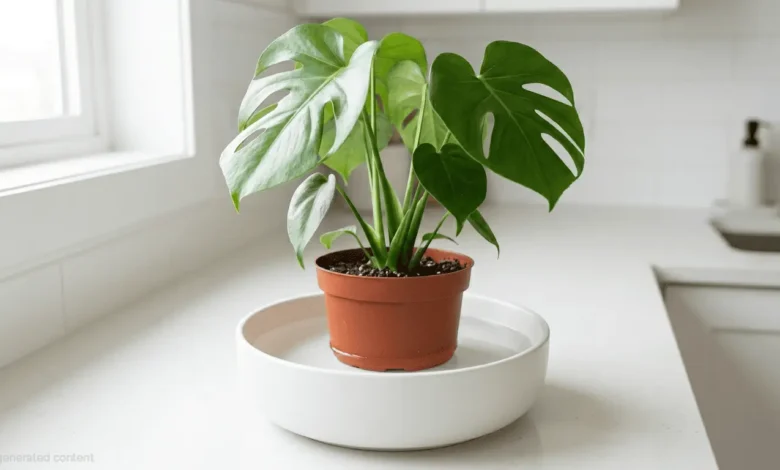
If you find your indoor plants dying, you are not alone. Many plant owners struggle with this, but it is often easier to fix than you think.
You water your houseplants religiously, ensure they get bright indirect light, and yet their leaves continue to turn yellow and drop. The problem is not your watering schedule, but a stealthy killer that renders your watering efforts completely useless.
After rehabilitating over 200 dying houseplants for clients across the Pacific Northwest, I discovered that 80 percent of them were suffering from the exact same easily reversible condition. Most plant owners assume their leafy companions are either overwatered or suffering from a lack of fertilizer. In reality, the most common culprit is hydrophobic soil.
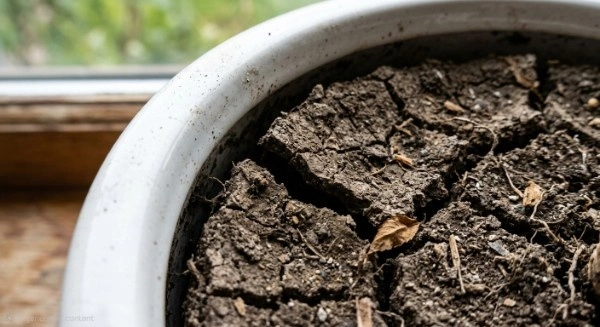
When potting soil dries out entirely, particularly peat-heavy mixes common in commercial garden centers, it loses its ability to absorb moisture. Instead of soaking into the root ball, the water simply runs down the inside edge of the nursery pot and straight out the drainage hole. You think you are watering your plant, but the roots are actually trapped in a bone-dry, suffocating brick of dirt.
Why Your Indoor Plants Dying Is a Common Problem
To stop this cycle of dehydration, you first need to diagnose the problem correctly. If you notice these symptoms, stop top-watering immediately.
Here are the undeniable signs that your potting soil has become hydrophobic:
- The water drains out of the bottom of the pot almost instantly after you pour it in.
- The soil pulls away from the inner edges of the planter, leaving a visible gap.
- The planter feels suspiciously light when you pick it up, even right after a heavy watering session.
- The top layer of soil feels rock hard to the touch and resists being pressed down.
- Your plant exhibits crispy, brown leaf tips despite a consistent watering routine.
If you see your indoor plants dying, don’t panic.
The 5-Minute Fix to Save Your Houseplants
Do not throw your dying plant away, and do not attempt to solve the problem by dumping a massive amount of water directly on top of the soil. Flooding the top of the plant will only create a muddy mess and potentially lead to crown rot. You need to break the surface tension of the soil and rehydrate the root ball from the bottom up.
Step 1: The Aeration Method
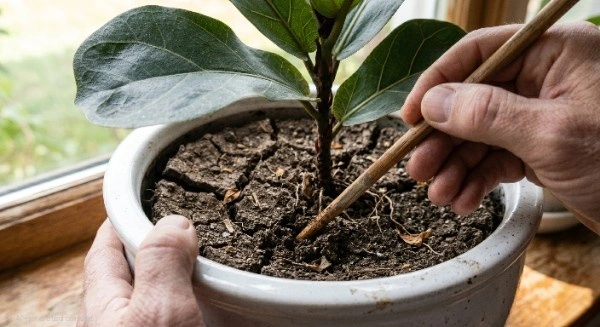
Before introducing any water, you must physically break up the compacted dirt. Take a wooden chopstick or a long metal skewer and gently plunge it into the soil, pushing it all the way down to the bottom of the pot. Wiggle it around slightly to create small tunnels.
Repeat this process every two inches around the entire surface area of the pot. Be gentle to avoid severing major taproots, but apply enough pressure to break apart the hardened clumps of peat moss. This vital step creates pathways for water and oxygen to finally reach the center of the root system.
Step 2: The Bottom-Watering Soak
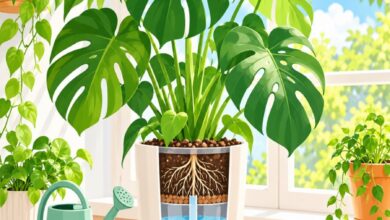
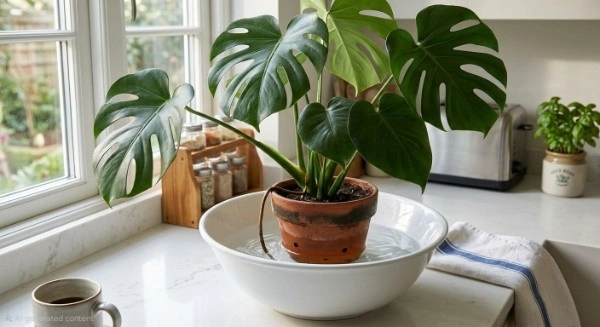
Now that the soil is aerated, you must bypass top-watering entirely. Fill a large bowl, a deep saucer, or your kitchen sink with room-temperature water. Place the plant, still in its nursery pot with drainage holes, directly into the water. The water line should reach about halfway up the side of the pot.
Leave the plant to sit in this water bath for 30 to 45 minutes. Through capillary action, the soil will act like a sponge and slowly draw moisture upward, saturating the root ball completely and evenly.
Step 3: Drain and Recover
After the top layer of the soil feels moist to the touch, remove the plant from the water bath. This is the most crucial part of the recovery process: let the pot drain completely in the sink or bathtub for at least 15 minutes. Never let your plant sit in stagnant water once the soil is rehydrated, as this will trigger root rot.
Once fully drained, return the plant to its usual bright, indirect light location. Within 24 hours, you will notice the leaves plumping back up, stems standing taller, and a complete reversal of the wilting process. Implement this bottom-watering technique once a month, and you will never lose another houseplant to hydrophobic soil.
Saving indoor plants dying from neglect is simple.
If you have more questions, feel free to contact us.