

Welcome to your ultimate masterclass on indoor plant care. If you have recently brought home a stunning weeping fig or fiddle leaf fig, you already know they can be incredibly temperamental. It takes highly specific knowledge to Keep Your Ficus Tree vibrant, lush, and full of leaves year after year. Most beginners fail because they treat this complex tropical specimen like a standard, low-maintenance houseplant.
We are going to change that today. As an experienced interior landscaper and botanist, I have rescued countless weeping figs from the brink of death. These plants are native to tropical environments, meaning our standard climate-controlled homes in the USA can feel quite harsh to them. If you want to successfully Keep Your Ficus Tree in pristine condition, you must replicate its natural habitat.
From understanding the exact balance of soil moisture to mastering ambient humidity, this guide will serve as your definitive roadmap. Ficus plants are notoriously dramatic, but once you decode their specific needs, they become some of the longest-living additions to your indoor garden. Let us dive into the expert strategies that will transform your space.
Why It Is So Difficult To Keep Your Ficus Tree Thriving
The Ficus genus, which includes the popular Ficus benjamina and Ficus lyrata, is famous for its sudden leaf-dropping tantrums. These plants are creatures of intense habit. They despise sudden changes in their immediate microclimate, reacting to stress by shedding their beautiful foliage.
When you first bring your plant home from the nursery, it experiences a massive shift in temperature, light, and humidity. This initial shock is normal, but ongoing instability is what ultimately harms the plant. To consistently Keep Your Ficus Tree healthy, you must create a highly stable, unwavering environment in your living room or sunroom.
9 Vital Secrets to Keep Your Ficus Tree Alive and Lush
1. Master the Art of Lighting to Keep Your Ficus Tree Happy
Lighting is arguably the most critical factor in indoor plant success. Ficus trees demand bright, indirect sunlight to sustain their dense canopies. Placing your plant in a dark corner will immediately trigger leaf loss and stunted growth.
Ideally, position your plant near an east-facing or south-facing window. You want the plant to receive bright ambient light all day long. Direct, scorching afternoon sun can burn the leaves, so filtering the light through sheer curtains is an excellent professional trick.
If your home lacks natural sunlight, you must supplement the area with high-quality LED grow lights. Ensuring adequate light is the absolute first step to Keep Your Ficus Tree from growing leggy and weak.

2. Establish a Strict and Monitored Watering Schedule
Overwatering is the number one killer of indoor trees. Ficus roots need to breathe, and sitting in stagnant water suffocates them almost immediately. You should only water your plant when the top two to three inches of the potting mix feel completely dry to the touch.
When you do water, soak the soil thoroughly until excess water runs out of the drainage holes at the bottom of the pot. Never let the nursery pot sit in a saucer full of drained water. If you leave the plant in a puddle, it will rapidly develop a fatal case of root rot.
3. Eliminate Cold Drafts and HVAC Vents Immediately
Tropical plants are incredibly sensitive to temperature fluctuations. Ficus trees thrive in temperatures between 65 and 85 degrees Fahrenheit. They will suffer severe cellular damage if exposed to temperatures dropping below 55 degrees Fahrenheit.
Walk around your home and identify the locations of your air conditioning vents, heating grates, and drafty exterior doors. You must place your plant far away from these turbulent air sources. A sudden blast of cold winter air from an open front door is enough to make a Ficus drop half its leaves overnight.
4. Formulate the Perfect Soil Blend to Keep Your Ficus Tree Healthy
The soil you choose dictates how well the root system functions. Heavy, dense potting soils hold too much moisture and restrict essential airflow. You need a premium, well-draining mixture specifically tailored for tropical houseplants.
Create a custom blend using two parts high-quality indoor potting soil, one part perlite, and one part orchid bark. This chunky mixture allows water to flow through the root zone quickly while retaining just enough moisture for hydration. Repotting into this superior mix is a brilliant way to Keep Your Ficus Tree vibrant for decades.
Repotting into this superior mix is a brilliant way to Keep Your Ficus Tree vibrant for decades.

5. Boost Ambient Humidity Around the Foliage
Central heating and air conditioning strip the moisture out of our indoor air. Ficus trees evolved in humid jungles, so the dry air in an average home can cause their leaf tips to turn brown and crispy. You should aim for an indoor humidity level of at least 50 percent around your plant.
To achieve this, place a dedicated cool-mist humidifier a few feet away from the tree. Alternatively, you can place the plant pot on top of a wide pebble tray filled with water, ensuring the water level sits below the bottom of the pot. As the water evaporates, it creates a localized microclimate of beneficial humidity.
Our guide to 5 Creative Rules for Propagating Your Monstera Plant Easily
6. Feed Strategically During the Active Growing Season
Your tree requires a steady diet of essential macronutrients to produce fresh, glossy leaves. However, Ficus plants do not need heavy feeding year-round. You should only apply fertilizer from early spring through late summer when the plant is actively growing.
Use a balanced liquid houseplant fertilizer with an NPK ratio of 10-10-10 or 3-1-2. Dilute the liquid food to half the recommended strength to avoid burning the sensitive root hairs. Cease all fertilization during the dark winter months when the plant enters its natural dormancy period.
7. Commit to Routine Pruning for Structural Integrity
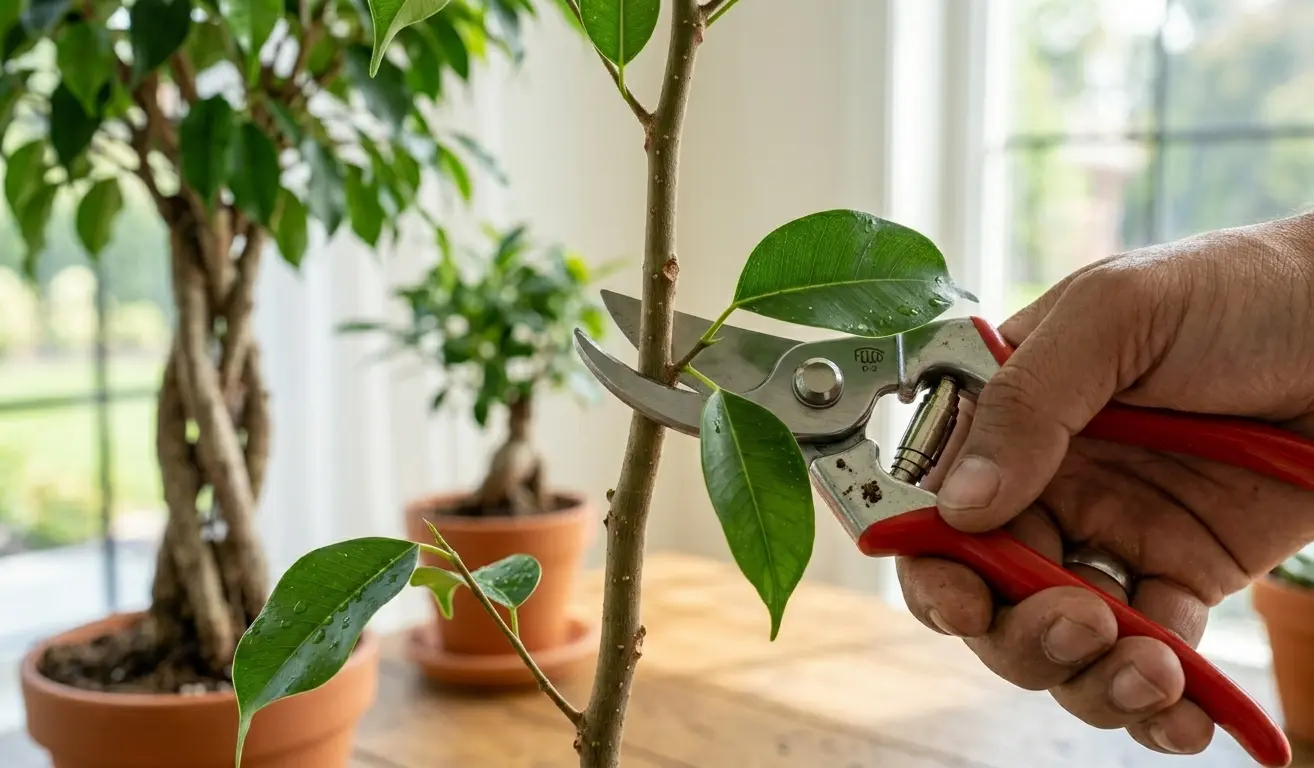
Over time, your indoor tree may develop crossing branches or become top-heavy. Routine pruning encourages branching, giving you a bushier and more aesthetically pleasing canopy. You should conduct major structural pruning in the early spring just before the active growth phase begins.
Always use sterilized, razor-sharp bypass pruning shears to make clean cuts directly above a leaf node. Trimming away dead, diseased, or completely shaded internal branches improves airflow throughout the canopy. Knowing exactly how to prune is a master skill necessary to Keep Your Ficus Tree looking like a living piece of architecture.
8. Prevent and Treat Common Houseplant Pests Promptly
Even the healthiest indoor trees can fall victim to sap-sucking insects. Spider mites, scale, and mealybugs absolutely love hiding in the dense foliage of a weeping fig. You must inspect the undersides of the leaves and the junctions of the branches every single time you water.
If you spot fine webbing, sticky honeydew residue, or tiny white cottony clusters, isolate the plant immediately. Treat the entire canopy with a high-quality organic neem oil spray or an insecticidal soap. Repeat the treatment every seven days until the infestation is completely eradicated.
9. Avoid Moving Your Plant Unnecessarily
As previously mentioned, these tropical trees despise change. Once you find a location with the perfect lighting and no drafts, leave the plant there permanently. Rotating the pot slightly a quarter-turn every month is fine to ensure even growth, but never move it to a completely new room.
If you absolutely must relocate the plant due to a house move or renovation, prepare for immediate leaf drop. Do not panic or overwater the plant when this happens. Just maintain your consistent care routine, and the tree will slowly push out new foliage once it acclimates to its new corner.
Final Thoughts on How to Keep Your Ficus Tree Flourishing
Growing a lush, towering indoor tree is one of the most rewarding experiences for a home gardener. While they demand a higher level of attention than a common pothos or snake plant, the visual impact they bring to a room is unmatched. The secret lies entirely in mimicking their natural tropical environment.
Remember to prioritize bright indirect light, practice disciplined watering habits, and maintain stable temperatures year-round. Avoid the temptation to move the plant when it drops a few leaves, and always inspect for pests. Follow this professional blueprint, and you will Keep Your Ficus Tree thriving, adding breathtaking natural beauty to your home for generations to come.