If your once-glossy Swiss cheese plant is looking sickly, you are likely making one of several common monstera deliciosa care mistakes without even realizing it. These lush tropical beauties are forgiving to a point, but small missteps in watering, light, and soil compound quickly into yellowing leaves, stunted growth, and root damage. The good news is that nearly every one of these issues is fixable once you know what to look for.
In this guide, we will walk through the most frequent monstera deliciosa care mistakes plant parents make, how to spot them early, and exactly how to correct course so your plant bounces back with vigorous, fenestrated leaves.
The Most Common Monstera Deliciosa Care Mistakes Explained
Most monstera problems trace back to a handful of root causes: overwatering, poor light placement, compacted soil, and inconsistent feeding. Each of these monstera deliciosa care mistakes creates stress signals that show up on the foliage long before the plant is in real danger.
The tricky part is that many symptoms overlap. A droopy, yellowing leaf could mean too much water, too little water, or even a nutrient deficiency, so diagnosing the exact cause requires checking the soil, roots, and recent care routine together.
Why consistency matters most
Monsteras thrive on predictable routines. Erratic watering schedules, sudden light changes, or jumping between fertilizer brands confuses the plant’s root system and slows its ability to produce those coveted split leaves.
Understanding Yellow Monstera Leaves
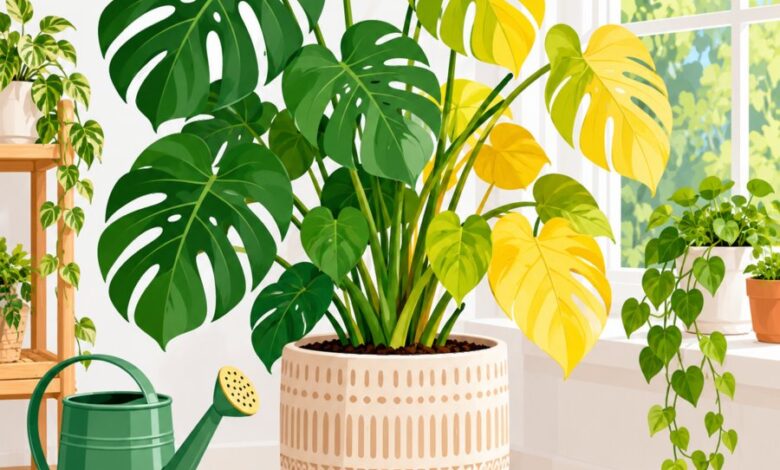
Yellow monstera leaves are one of the clearest distress signals your plant can send. While an occasional older leaf yellowing naturally is normal as the plant sheds growth, widespread or rapid yellowing points to a care issue that needs immediate attention.
The most frequent trigger for yellow monstera leaves is overwatering. When soil stays saturated for too long, oxygen cannot reach the roots, and the plant responds by yellowing its leaves as a visible cry for help.
Other causes to rule out
Low light, nutrient-depleted soil, and extreme temperature swings can also cause leaves to fade from vibrant green to pale yellow. If multiple lower leaves yellow at once while new growth looks healthy, it is usually an old-leaf drop; if upper or middle leaves yellow unevenly with soft texture, suspect water-related stress instead.
Overwatering: The Root Cause Behind Root Rot Symptoms
Overwatering is arguably the single most damaging of all monstera deliciosa care mistakes, and it almost always leads to root rot symptoms if left unaddressed. These tropical climbers prefer their soil to dry out partially between waterings, mimicking the well-draining forest floor conditions of their native habitat.
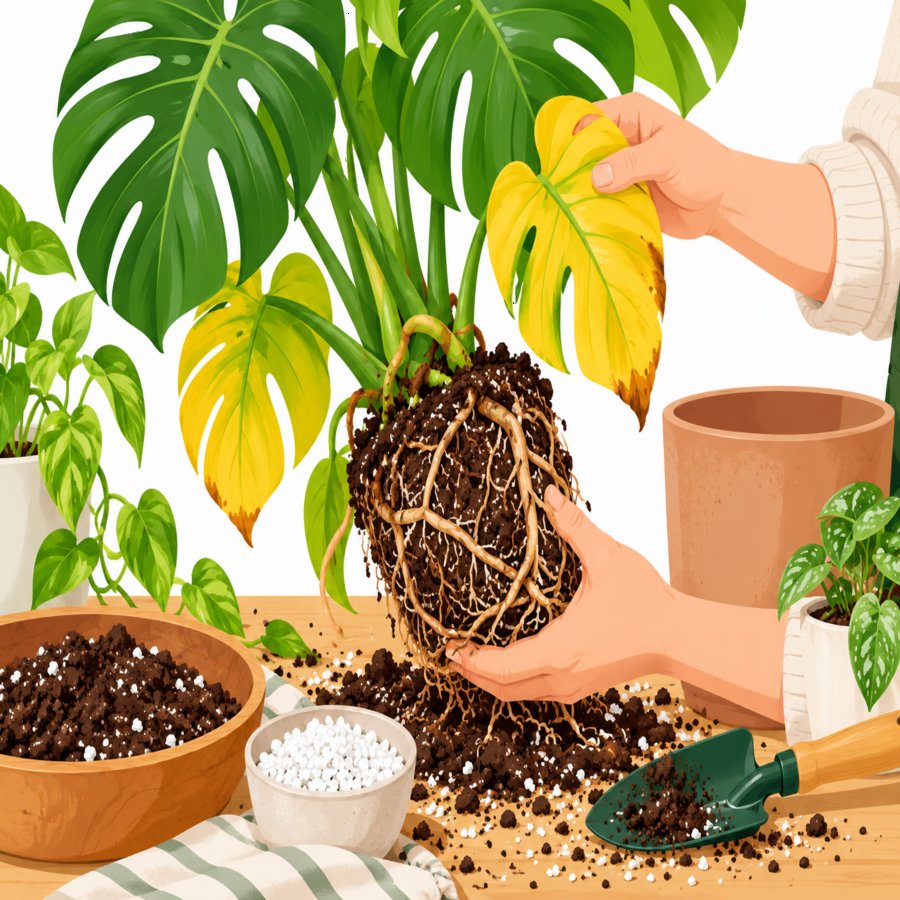
Classic root rot symptoms include a sour or musty smell coming from the pot, mushy brown or black roots instead of firm white ones, and leaves that go limp despite moist soil. If you catch any of these signs, unpot the plant immediately and inspect the root ball.
How to treat root rot
Trim away all blackened or slimy roots with sterilized scissors, rinse the remaining healthy roots under lukewarm water, and repot into fresh, fast-draining soil. Hold off on watering for several days afterward to let any remaining cut surfaces callous over and reduce reinfection risk.
According to the Royal Horticultural Society, ensuring pots have adequate drainage and avoiding waterlogged compost are essential preventative steps for houseplants prone to root diseases.
Getting Tropical Houseplant Watering Right
Mastering tropical houseplant watering is less about a rigid schedule and more about reading your plant’s actual moisture needs. Instead of watering every seven days out of habit, check the top two to three inches of soil with your finger or a moisture meter before adding more water.
Proper tropical houseplant watering also depends on the season. Monsteras drink more during active spring and summer growth, while their water needs drop significantly in the cooler, lower-light months of fall and winter.
The soak-and-drain method
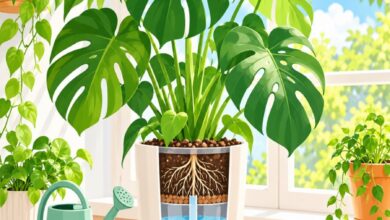
Water thoroughly until liquid runs freely from the drainage holes, then empty any excess collected in the saucer. Never let the pot sit in standing water, as this is one of the quickest ways to invite root rot symptoms back into a recovering plant.
A chunky, well-aerated mix of potting soil, orchid bark, and perlite dramatically improves drainage and oxygen flow, making tropical houseplant watering far more forgiving even if you occasionally water a day or two early.
Light, Humidity, and Placement Errors
Insufficient or inconsistent light is another one of the overlooked monstera deliciosa care mistakes that quietly stalls growth. These plants need bright, indirect light to photosynthesize efficiently and produce their signature split leaves.
Placing a monstera too close to a cold, drafty window or directly in front of an air conditioning vent causes leaf curling and brown edges. Likewise, direct harsh afternoon sun can scorch leaves, leaving crispy yellow-brown patches that are often mistaken for watering issues.
Humidity matters more than you think
Native to humid rainforests, monsteras appreciate ambient humidity above 50 percent. Dry indoor air from heating or air conditioning can cause leaf edges to brown and growth to slow, so a pebble tray, humidifier, or grouping plants together can help recreate their natural environment.
If you are refreshing your plant corner, pairing your monstera display with creative wall decor is a great finishing touch; check out these clever canvas art DIY hacks for styling your indoor plant nook for inspiration.
Soil, Fertilizer, and Potting Mistakes
Dense, moisture-retentive soil is a silent contributor to many monstera deliciosa care mistakes, since it traps water around the roots far longer than the plant can tolerate. Standard all-purpose potting soil packed straight from the bag is often too heavy for monsteras on its own.
Over-fertilizing is an equally common trap. Pushing too much fertilizer in hopes of faster growth can scorch roots and cause salt buildup, which shows up as crispy brown leaf tips and, eventually, yellow monstera leaves.
Repotting the right way
Repot every one to two years into a container only one to two inches larger in diameter. An oversized pot holds excess soil volume and moisture that the root system cannot absorb quickly enough, setting the stage for rot.
Feed with a balanced, diluted liquid fertilizer only during the active growing season, and always water first to prevent the fertilizer from burning dry, thirsty roots.
Pests, Disease, and Neglected Maintenance
Skipping regular leaf inspections is one of the quieter monstera deliciosa care mistakes that allows pests like spider mites, mealybugs, and scale to establish colonies before you notice anything wrong. These pests weaken the plant and often cause speckled, yellowing foliage that mimics overwatering symptoms.
Wipe down leaves monthly with a soft, damp cloth to remove dust and catch early pest activity. This simple habit also keeps the leaf pores clear, allowing better photosynthesis and gas exchange.
Fungal and bacterial leaf spot
Dark, water-soaked spots with yellow halos usually signal bacterial or fungal infection, often worsened by overhead watering that leaves foliage wet for extended periods. Water at the soil line instead of misting directly onto leaves, and always use clean, sterilized pruning tools to avoid spreading pathogens between plants.
Building a Long-Term Recovery and Prevention Routine
Correcting monstera deliciosa care mistakes is only half the battle; building sustainable habits prevents them from recurring. Start a simple care journal noting watering dates, fertilizer applications, and any new growth you observe.
Rotate your plant a quarter turn every week so all sides receive even light exposure, which encourages balanced, symmetrical growth rather than a lopsided plant leaning toward the window.
Supporting climbing growth
As a natural climber, monstera deliciosa develops larger, more fenestrated leaves when given a moss pole or trellis to grip. Mimicking its wild growth habit encourages the plant to mature faster and reduces stress-related yellowing over time.
With attentive, consistent care and a watchful eye for the warning signs covered in this guide, your monstera can recover fully and reward you with the dramatic, split-leaf foliage it is famous for.