Raised garden beds promise bigger harvests, fewer weeds, and easier maintenance, but that promise only holds up when the setup is right. Unfortunately, a handful of common raised garden bed mistakes quietly sabotage even the most enthusiastic gardener’s season. From the moment you choose a location to the day you finally plant your seedlings, small missteps compound into stunted growth, root rot, and disappointing yields. The good news is that every one of these mistakes is entirely avoidable once you know what to look for. In this guide, we’re breaking down the seven most damaging raised garden bed mistakes and showing you exactly how to fix them before they wreck your harvest.
Why Raised Garden Bed Mistakes Happen So Easily
Raised beds look simple: build a frame, fill it with soil, and plant. That simplicity is exactly why so many gardeners skip the planning stage entirely.
Unlike in-ground gardens, raised beds behave like giant containers. They drain faster, heat up quicker, and run out of nutrients sooner than traditional garden rows.
That means the margin for error is smaller. A mistake that a forgiving backyard plot might absorb can snowball into a full crop failure inside a raised bed.
Understanding this unique dynamic is the first step toward avoiding the raised garden bed mistakes that trip up even experienced growers every single season.
Mistake 1: Ignoring Sunlight Requirements Before Building
Most fruiting vegetables need six to eight hours of direct sun daily, yet countless raised beds get built wherever space is convenient rather than where light is abundant.
A bed tucked against a fence or shaded by a mature tree might look tidy, but it will starve tomatoes, peppers, and squash of the energy they need to produce fruit.
How to fix it: Track sunlight patterns across your yard for a full day before placing your frame. Morning sun with afternoon shade is often ideal in hotter climates, while all-day sun suits cooler regions.
If you’re also growing ornamental or indoor-outdoor plants nearby, pay attention to their light needs too. For guidance on caring for sun-sensitive houseplants that sometimes move outdoors in summer, this guide on how to keep your ficus tree healthy through seasonal changes offers helpful insight into balancing light exposure.
Mistake 2: Poor Soil Drainage That Drowns Roots
Of all the raised garden bed mistakes on this list, poor soil drainage is arguably the most destructive because it works silently, rotting roots long before leaves show visible distress.
Many gardeners assume raised beds automatically drain well simply because they sit above ground level. That assumption is false, especially when beds are filled with heavy topsoil or built directly on compacted clay.
When water has nowhere to go, it pools at the base of the bed, suffocating roots and inviting fungal disease. Proper soil drainage is non-negotiable for healthy vegetable gardening success.
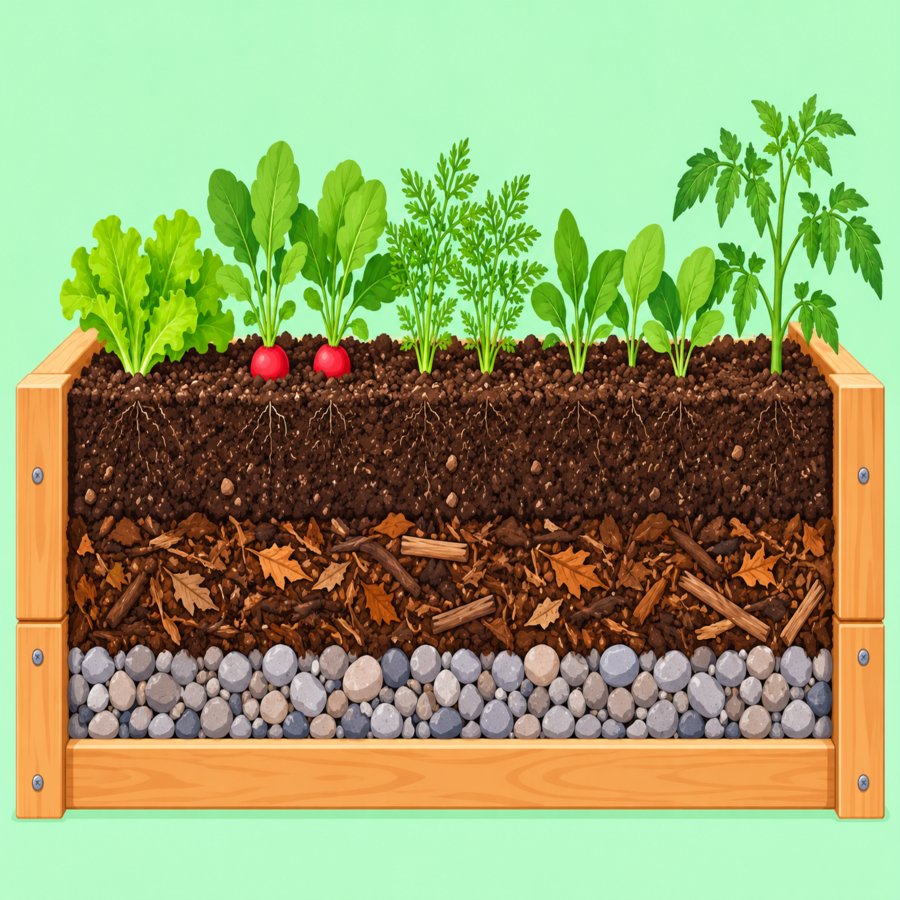
How to fix it: Layer coarse material like small gravel or broken terracotta at the base before adding soil, and always blend in compost, perlite, or coarse sand to improve structure.
Avoid placing beds directly on concrete or hardpan soil without a drainage layer, and consider drilling a few weep holes along the lowest board if your frame is solid-sided.
According to the Royal Horticultural Society’s soil guidance, healthy root development depends heavily on a balance between moisture retention and free drainage, a principle that applies directly to raised bed design.
Mistake 3: Using the Wrong Soil Mix Entirely
Filling a brand-new raised bed with plain garden soil or cheap fill dirt is one of the fastest ways to guarantee a disappointing harvest.
Raised beds need a loose, nutrient-dense blend because roots can’t spread laterally into surrounding earth the way they would in an open garden plot.
The ideal mix: A combination of roughly 40% high-quality topsoil, 40% compost, and 20% aeration material such as perlite or coarse sand creates a fertile, well-draining foundation.
Skipping compost entirely is another common shortcut that leads to nutrient-poor soil within just one growing season, since raised beds lose fertility faster than in-ground plots.
Refresh the top few inches with fresh compost every spring, and rotate in organic matter throughout the season to keep your vegetable gardening efforts productive year after year.
Mistake 4: Overcrowding Plants to Save Space
Raised beds encourage tighter planting than traditional rows, but there’s a fine line between efficient spacing and dangerous overcrowding.
Cramming too many seedlings into a small footprint restricts airflow, which creates the perfect environment for powdery mildew, blight, and pest infestations to spread unchecked.
Overcrowded roots also compete fiercely for water and nutrients, meaning every plant ends up smaller and less productive than if fewer had been planted with proper spacing.
How to fix it: Follow square-foot gardening principles or seed packet spacing guidelines strictly, even when it feels like you’re leaving empty space behind.
Vertical trellising for vining crops like cucumbers and pole beans is a smart way to maximize yield without falling into the overcrowding trap that ruins so many vegetable gardening plans.
Mistake 5: Watering Inconsistently or Incorrectly
Because raised beds drain faster and sit above ground, they dry out noticeably quicker than traditional garden soil, especially during summer heat waves.
Many beginner gardeners water on a fixed schedule rather than checking actual soil moisture, which leads to both underwatering stress and, ironically, overwatering that compounds existing soil drainage problems.
Inconsistent watering is one of those raised garden bed mistakes that causes cracked tomatoes, bitter cucumbers, and blossom end rot, all signs of irregular moisture delivery.
How to fix it: Check soil moisture with your finger two inches deep before watering, and install drip irrigation or soaker hoses for consistent, deep hydration.
A two to three inch layer of mulch on top of the soil helps retain moisture between waterings and reduces the temperature swings that stress plant roots.
Mistake 6: Choosing the Wrong Bed Materials
The material you build your frame from matters more than most gardeners realize, and this oversight ranks among the most costly raised garden bed mistakes long-term.
Pressure-treated lumber manufactured before 2003 often contained chromated copper arsenate, a chemical you absolutely do not want leaching into soil meant for edible crops.
Even modern pressure-treated wood warrants caution for food production, while untreated softwoods like pine break down within just a few short years in damp climates.
Safer material choices: Cedar and redwood naturally resist rot and insects without chemical treatment, while galvanized metal, composite lumber, and food-safe sealed concrete blocks all offer excellent longevity.
The team at Better Homes & Gardens consistently recommends rot-resistant woods like cedar specifically for their durability and safety in edible garden applications.
If budget is tight, line untreated wood frames with heavy-duty plastic sheeting to create a barrier between the lumber and your growing soil.
Mistake 7: Neglecting Bed Depth for Root Vegetables
Shallow raised beds under six inches deep might work for lettuce and herbs, but they spell disaster for carrots, potatoes, and other root vegetables that need room to develop.
Many kits sold at hardware stores are built shallow for cost savings, leading gardeners straight into this frustrating raised garden bed mistake without realizing it until harvest day reveals stunted, misshapen crops.
Depth guidelines: Aim for at least 12 inches for most vegetables, and 16 to 18 inches if you plan to grow deep-rooted crops like carrots, parsnips, or potatoes.
If you already own a shallow bed, consider double-stacking frames or choosing shorter root varieties specifically bred for container and shallow-bed gardening.
The Old Farmer’s Almanac notes that adequate root depth directly correlates with crop size and overall yield, reinforcing just how much bed depth influences your final harvest.
Bonus Tips to Prevent Future Raised Garden Bed Mistakes
Beyond the seven major mistakes above, a few habits will help you stay ahead of problems before they start.
Rotate your crops annually. Planting the same vegetable family in the same bed year after year depletes specific nutrients and invites recurring pests and diseases.
Test your soil pH annually. Most vegetables thrive between 6.0 and 7.0, and a simple at-home test kit can reveal imbalances before they stunt your plants.
Level your bed before filling it. An unlevel frame causes water to pool on one side, undermining even the best soil drainage efforts elsewhere in the bed.
The USDA also offers regional planting calendars and hardiness zone maps that can help you time your vegetable gardening schedule for maximum success.
Keep a garden journal. Recording what you planted, when, and how it performed turns every season into useful data for avoiding repeat raised garden bed mistakes.
Final Thoughts on Avoiding Raised Garden Bed Mistakes
Building a thriving raised bed garden isn’t about luck or a green thumb you either have or don’t, it’s about understanding the specific needs these elevated growing spaces demand.
Every mistake covered here, from poor sunlight placement to inadequate soil drainage and shallow bed depth, is fixable with a little planning and the right materials from the start.
Take the time now to audit your current setup against this list, and you’ll spend far less time troubleshooting wilted plants come midsummer.
With these corrections in place, your raised bed will finally deliver on its promise: a productive, low-maintenance space that rewards your vegetable gardening efforts with a genuinely abundant harvest.