Small balconies have a funny way of making gardeners feel limited, but a few clever tricks can turn even the tightest corner into a thriving green pantry. Before we get into the genius ideas that double your harvest, it’s worth noting that many of the lessons learned from raised garden bed mistakes actually apply beautifully to balcony containers too, since both share the same core challenges of drainage, soil volume, and root space. Whether you’re growing herbs for dinner or stacking lettuce for salads, these five ideas will help you maximize every square inch you’ve got.
Why Balcony Gardens Fail the Same Way Raised Beds Do
It might seem strange to compare a balcony planter to a backyard raised bed, but the underlying soil science is identical. Both are enclosed growing spaces with finite volume, which means mistakes compound faster than they would in open ground.
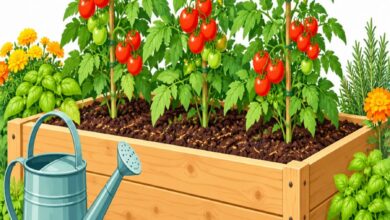
In fact, some of the most common raised garden bed mistakes show up on balconies in almost identical form: overcrowding roots, ignoring drainage, and choosing the wrong soil mix. If you’ve ever wondered why your balcony tomatoes wilted despite daily watering, the answer is often rooted in these exact same errors.
Understanding this connection is actually good news. It means you can borrow proven raised bed wisdom and apply it directly to your balcony containers, skipping the trial-and-error phase entirely.
Why this matters for small spaces: Every container on a balcony behaves like a miniature raised bed, so the stakes for getting soil structure right are even higher.
Idea One: Vertical Stacking to Avoid Classic Raised Garden Bed Mistakes
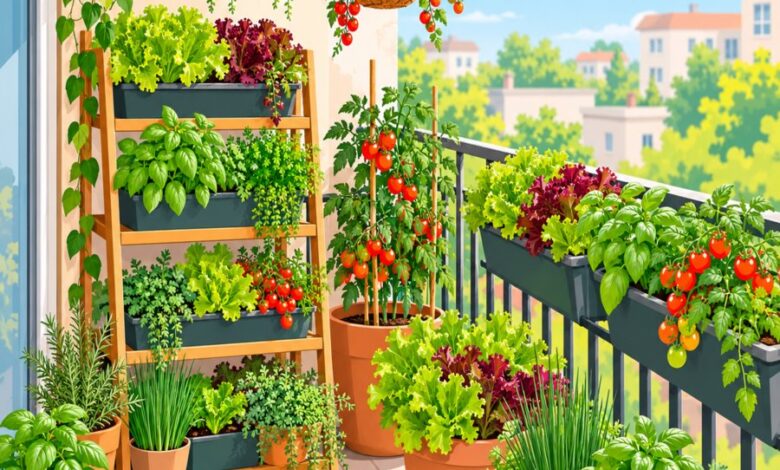
The single biggest space-saver for any balcony is going vertical. Tiered planters, wall-mounted pockets, and hanging baskets let you triple your growing surface without adding a single square foot of floor space.
But here’s where vertical gardening quietly repeats one of the most frequent raised garden bed mistakes: cramming too many plants into too little soil volume. Just because a vertical tower has five tiers doesn’t mean each tier can support a full-sized plant.
Smart stacking strategy: Reserve the top tiers for shallow-rooted greens like lettuce, arugula, and spinach, and save the bottom, deeper tiers for herbs or compact peppers that need more root room.
For vegetable gardening in vertical systems, rotate your crops every few weeks. Fast-growing greens like mesclun mix can be harvested in 25 to 30 days, which means a single vertical tower can produce several harvests through a single growing season.
Idea Two: Self-Watering Containers That Solve Soil Drainage Problems
Soil drainage is arguably the most misunderstood part of container gardening, and it’s where balconies suffer the most. Unlike ground beds, balcony pots have nowhere for excess water to escape except through their own drainage holes.
Self-watering containers solve this elegantly by using a reservoir system that wicks moisture upward as the soil dries, rather than drowning roots from above. This design naturally prevents the waterlogging that ruins so many balcony crops.
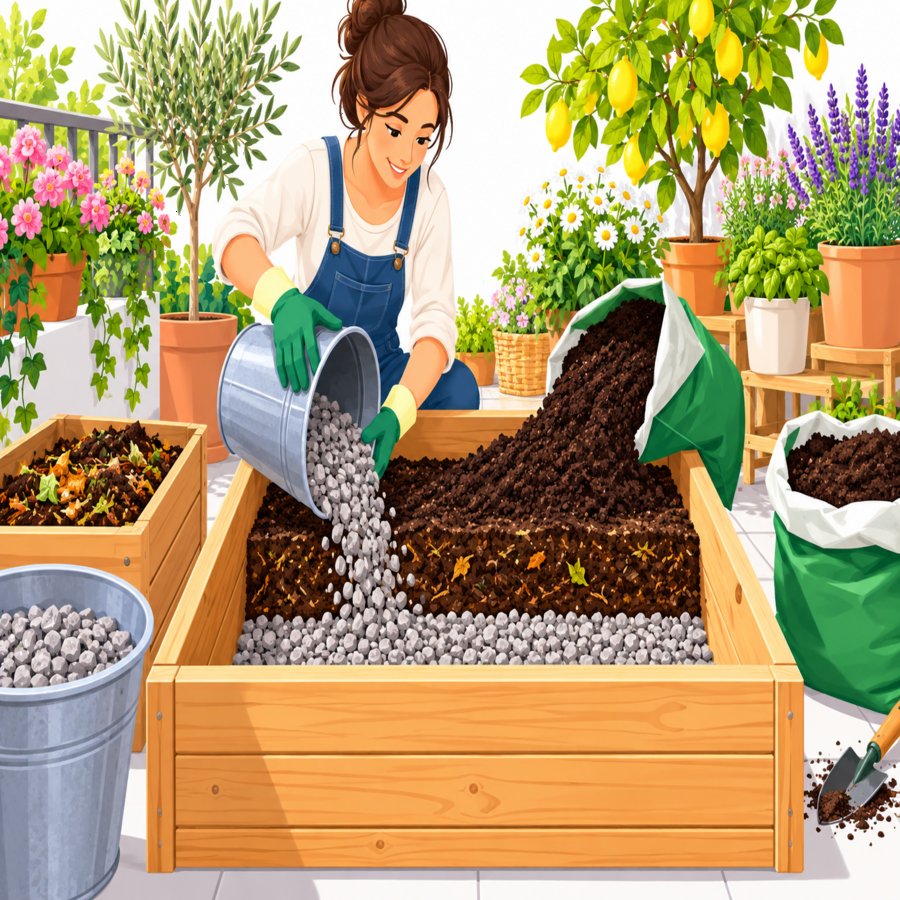
Still, even self-watering systems can fail if you skip the basics. Always add a layer of coarse material like gravel or broken terracotta at the bottom before adding your potting mix, since poor soil drainage is consistently ranked among the top raised garden bed mistakes gardeners make when they rush the setup process.
For deeper guidance on fixing compacted or waterlogged soil, the proven soil aeration techniques for healthier root systems are just as relevant for balcony pots as they are for backyard beds. Aerating your container soil every few weeks keeps roots oxygenated and prevents the dense, soggy texture that suffocates young plants.
Idea Three: Rail Planters for Maximizing Vegetable Gardening Space
Railing planters are the unsung heroes of balcony gardening. They hang off the balcony edge, using space that would otherwise go entirely to waste.
This setup is ideal for vegetable gardening on a small scale, especially for crops like cherry tomatoes, dwarf peppers, and trailing cucumbers that benefit from extra light exposure along the railing.
Safety and stability tips: Always use planters with secure locking brackets rated for your railing’s width, and never exceed the weight limit once the soil is fully saturated with water.
Rail planters are narrow, which means their soil dries out faster than wider containers. Check moisture levels daily during summer, and consider mixing in water-retaining amendments like coconut coir to extend the time between waterings.
According to the Royal Horticultural Society’s container growing guidance, consistent moisture management is one of the strongest predictors of healthy container yields, which makes rail planters particularly rewarding once you dial in a watering rhythm.
Idea Four: Companion Planting to Avoid Overcrowding Errors
Companion planting is a time-tested technique where compatible plants grow together to share resources, deter pests, and improve flavor. On a small balcony, it’s also a brilliant way to double your green output without doubling your container count.
Classic pairings like basil with tomatoes, or lettuce with chives, work beautifully in a single pot because their root systems occupy different soil depths rather than competing directly.
That said, overcrowding remains one of the sneakiest raised garden bed mistakes that transfers directly to balcony pots. Just because two plants are compatible doesn’t mean three or four will fit in the same container without competing for nutrients.
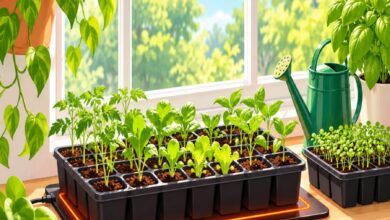
Spacing rule of thumb: Leave at least two to three inches between plant bases in a shared container, and thin seedlings ruthlessly once they develop their second set of true leaves.
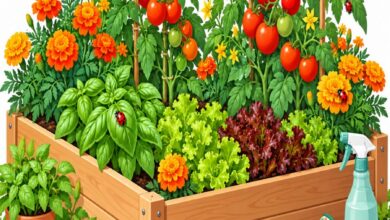
Good companion planting also reduces pest pressure naturally. Marigolds planted alongside leafy greens, for instance, repel aphids without a single drop of pesticide, which is especially valuable in tight balcony quarters where chemical drift can affect neighboring units.
Idea Five: Lightweight Soil Blends That Fix Drainage From the Start
Weight matters enormously on a balcony, both for structural safety and for your own back when hauling bags up the stairs. Standard garden soil is far too dense and heavy for container use, and it compacts quickly, choking roots of oxygen.
Instead, blend a lightweight mix using equal parts quality potting soil, perlite, and compost. This combination stays loose and airy, which directly combats the poor soil drainage issues that plague so many container gardens.
Using the wrong soil density is, again, one of the foundational raised garden bed mistakes that gardeners carry over into container growing without realizing it. Dense soil might look fine on day one, but after a few waterings it turns into a compacted brick that strangles roots.
The Old Farmer’s Almanac notes that healthy soil structure is foundational to strong root development, a principle that holds true whether you’re working with a quarter-acre plot or a two-foot-wide balcony planter.
Quick fix for existing pots: If your current soil already feels dense and compacted, gently fork the top few inches and mix in fresh perlite or coarse sand to restore airflow without fully repotting.
Sunlight Mapping Before You Plant Anything
Before committing to any of the five ideas above, spend a full day tracking how sunlight moves across your balcony. Most balconies receive uneven light, with one end basking in full sun while the other stays shaded most of the afternoon.
Sun-loving vegetables like tomatoes and peppers need at least six hours of direct light, while leafy greens and herbs like mint and parsley tolerate partial shade far better. Mapping this out prevents the heartbreak of watching a promising pepper plant stay stunted all season.
The USDA provides regional growing zone data that can help you choose cultivars suited to your specific light and temperature conditions, which is especially useful for balcony gardeners dealing with reflected heat from nearby walls or railings.
If your balcony runs shady most of the day, don’t despair. Leafy greens, mint, chives, and even some compact berry varieties can thrive with just three to four hours of filtered light daily.
Feeding Your Balcony Garden Without Overdoing It
Container plants exhaust their available nutrients far faster than those growing in open ground, simply because there’s less soil volume to draw from. Regular feeding isn’t optional on a balcony, it’s essential.
A balanced liquid fertilizer applied every two weeks during the growing season keeps leafy greens lush and tomatoes productive. Avoid the temptation to over-fertilize, though, since excess nitrogen produces leggy growth at the expense of fruit and flower production.
Organic alternative: Worm castings or diluted compost tea offer a gentler, slow-release nutrient boost that’s far more forgiving than synthetic fertilizers if you occasionally forget a feeding cycle.
Interestingly, over-fertilizing is another one of the raised garden bed mistakes that balcony gardeners inherit without meaning to. Because container soil has less buffering capacity than garden beds, nutrient imbalances show up faster and more severely, so always err on the side of less rather than more.
Seasonal Rotation for Year-Round Balcony Harvests
A balcony garden doesn’t have to go dormant once summer ends. With a little planning, you can rotate crops seasonally to keep fresh greens coming through most of the year.
Cool-season crops like kale, spinach, and radishes handle light frost well and can extend your harvest window into late autumn or even winter in milder climates. Swap these in as soon as summer vegetables like tomatoes and peppers finish producing.
According to Better Homes & Gardens, succession planting in small spaces can significantly extend your harvest season when timed around each crop’s maturity window, which is exactly the kind of planning that makes balcony vegetable gardening so rewarding.
Simple rotation calendar: Plant cool-season greens in early spring, swap to heat-tolerant vegetables by late May, then return to leafy greens again in early fall for a second cool-season harvest.
Final Thoughts on Avoiding Raised Garden Bed Mistakes on Your Balcony
Doubling your balcony’s green output isn’t about buying more pots or cramming in more plants. It’s about applying the same thoughtful principles that separate a thriving raised bed from a struggling one, scaled down to fit your available space.
Vertical stacking, self-watering systems, rail planters, companion planting, and lightweight soil blends each address a specific weakness that would otherwise sabotage your harvest. Together, they form a complete strategy for small-space success.
Keep circling back to the fundamentals: good drainage, appropriate spacing, adequate sunlight, and consistent feeding. Master these, and you’ll sidestep nearly every one of the raised garden bed mistakes that trip up beginner and experienced gardeners alike.
With these five ideas in place, your small balcony can produce a surprising volume of fresh greens, herbs, and vegetables all season long, proving that garden size has far less to do with harvest size than most people assume.