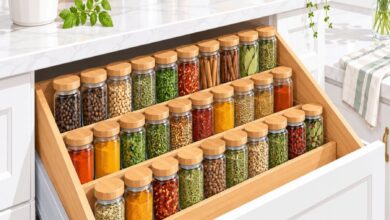
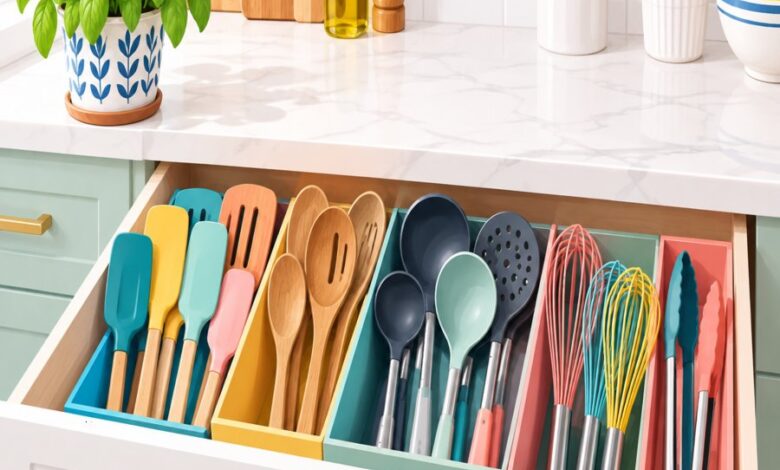
If your kitchen drawers look like a utensil avalanche every time you open them, you are not alone. Deep drawer organization is one of those small kitchen projects that delivers an outsized payoff, turning a chaotic jumble of spatulas and ladles into a calm, visible, grab-and-go system. The good news is you do not need a full renovation to get there. With a handful of simple tricks, some smart dividers, and about an hour of your weekend, you can transform even the deepest, most awkward drawer into a model of kitchen efficiency.
In this guide, we will walk through eight remarkably simple strategies that make deep drawer organization approachable for any home, any budget, and any skill level. Whether you are dealing with a single oversized pot drawer or an entire bank of deep kitchen storage, these tricks will help you reclaim order and keep it that way.
Why Deep Drawer Organization Matters More Than You Think
Deep drawers are a blessing and a curse. They offer generous vertical space for bulky items, but that same depth invites clutter to pile up in layers.
Without structure, a deep drawer quickly becomes a black hole where your favorite whisk sinks to the bottom, never to be seen again until the next deep clean. Good deep drawer organization solves this by creating defined zones, so every tool has a home and nothing gets buried.
There is also a practical time-saving benefit. Studies on kitchen workflow consistently show that cooks spend a surprising amount of time simply searching for tools mid-recipe. An organized drawer system cuts that wasted motion dramatically, letting you focus on the actual cooking instead of digging through a pile of mismatched gadgets.
Beyond convenience, there is a maintenance angle too. Items stored loosely in a deep drawer tend to get scratched, bent, or chipped as they shift around during opening and closing. Proper organization protects your cookware investment while keeping the kitchen looking sharp.
Trick One: Start With a Full Drawer Audit
Before you buy a single organizer, empty the drawer completely and lay everything out on your counter. This is the foundation of any successful deep drawer organization project.
Sort items into three piles: keep, relocate, and donate or discard. Duplicate ladles, that mystery gadget you have never used, and cracked spatulas can all go. Be honest about what you actually reach for during a typical week of cooking.
Measure as you go. Jot down the dimensions of your drawer, including depth, width, and length, along with the sizes of your bulkiest items like ladles, tongs, and large serving spoons. These measurements will guide every organizer purchase you make next.
Decluttering first means you are only organizing what you truly need, which makes every subsequent step faster and more effective.
Trick Two: Layer With Tiered Kitchen Drawer Dividers
Standard dividers work fine in shallow drawers, but deep drawers need a different approach. Tiered or two-level kitchen drawer dividers create stacked compartments so you are using vertical space instead of letting it go to waste.
Look for expandable spring-loaded dividers that wedge securely from side to side. These prevent items from sliding into one giant pile every time you shut the drawer, which is the single most common complaint homeowners have about deep storage.
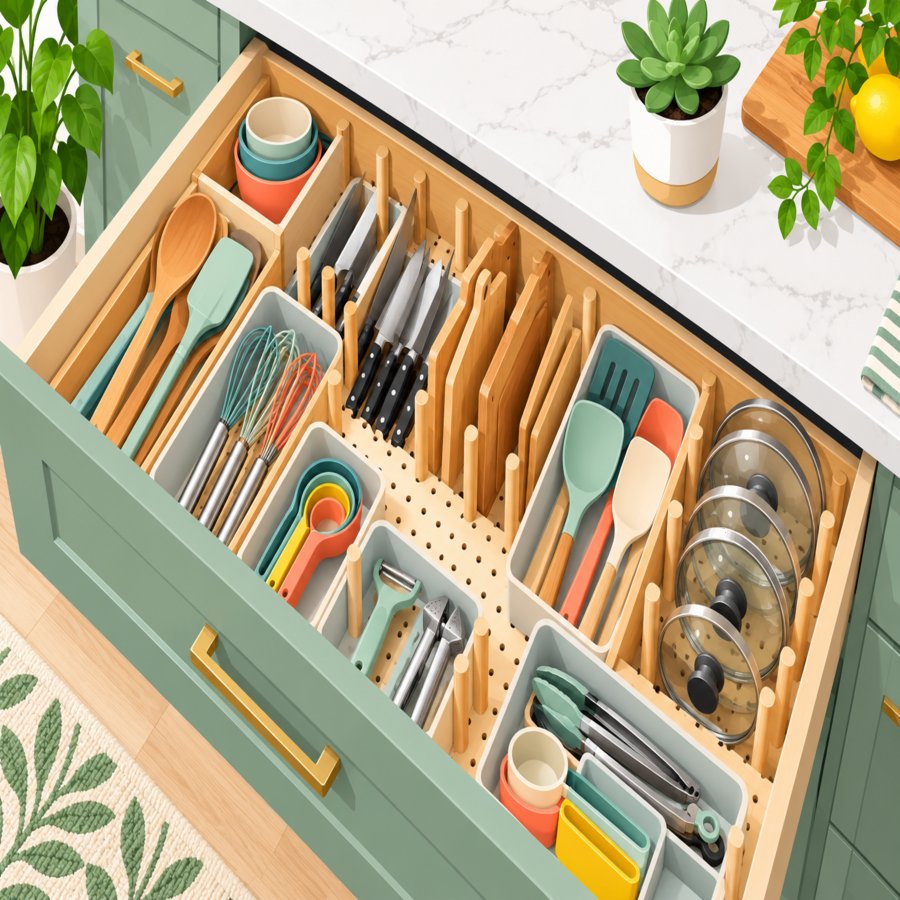
For an even more customized fit, bamboo or acacia wood dividers can be arranged in a grid pattern, giving you small, medium, and large compartments tailored to your specific tools. This is where deep drawer organization starts to feel genuinely bespoke rather than generic.
Pro tip: place taller dividers toward the back of the drawer and shorter ones near the front. This creates a gentle visual hierarchy that makes it easy to spot items at a glance, even in a drawer that is twice as deep as a standard one.
Trick Three: Dedicate a Zone for Utensil Storage
Mixing cooking utensils with baking tools, bar accessories, and odd gadgets is a recipe for visual chaos. Instead, carve out a clearly defined zone purely for utensil storage within your deep drawer.
Group by function rather than by shape. Keep all stirring tools together, all serving pieces together, and all measuring tools in their own compartment. This functional grouping mirrors how professional chefs organize their workstations for speed and consistency.
If you cook different cuisines regularly, consider zoning by cuisine instead. A section for pasta tools, a section for grilling tools, and a section for everyday stirring utensils can make meal prep noticeably smoother.
The Royal Horticultural Society frequently emphasizes that organized, dedicated zones for garden tools reduce maintenance time and prevent tool damage, and the same logic applies beautifully to the kitchen. A dedicated home for every tool means less wear and tear and far less daily frustration.
Trick Four: Try Pegboard Drawer Inserts for Full Customization
If you want the most flexible option available, pegboard drawer inserts are hard to beat. These systems use a perforated base board paired with movable pegs, allowing you to build custom-shaped compartments around your exact tools.
Unlike fixed dividers, pegboard drawer inserts adapt instantly as your tool collection changes. Bought a new set of measuring spoons? Simply reposition a few pegs to carve out a new compartment in seconds.
This system shines especially well in oddly shaped or unusually deep drawers where off-the-shelf dividers never quite fit right. It is also a favorite among renters, since most pegboard inserts require zero drilling or permanent installation.
Bonus idea: the same flexible-peg logic used in kitchen drawers is often borrowed from garage and workshop organization, which tells you just how durable and adaptable this method really is for heavy daily use.
Trick Five: Stand Items Upright With Drawer Caddies
One of the simplest yet most effective deep drawer organization tricks is switching from horizontal to vertical storage using small upright caddies or bins.
Rather than laying spatulas and whisks flat where they stack on top of each other, place a few slim bins inside the drawer and stand your long-handled tools up on their ends. This single change eliminates the dreaded utensil pile almost instantly.
Upright caddies work beautifully for cooking utensils, but they are equally useful for storing cutting boards, baking sheets, or even rolled dish towels on their sides, maximizing every inch of depth the drawer has to offer.
According to organizing experts at Better Homes & Gardens, vertical storage solutions consistently outperform flat storage in deep spaces because they rely on gravity and visibility rather than careful stacking that inevitably collapses over time.
Trick Six: Use Drawer Liners to Keep Everything in Place
A rubberized, non-slip drawer liner might seem like a minor detail, but it plays a surprisingly important role in deep drawer organization.
Liners grip your dividers and bins in place, preventing the entire organized system from sliding around every time the drawer opens and closes. Without a liner, even the best divider setup can shift and jumble within a few weeks of regular use.
Choose a liner that is easy to wipe clean, since deep drawers near the stove or sink tend to collect crumbs, spills, and the occasional grease splatter. A quick wipe-down keeps your organized drawer looking fresh for the long haul.
Design tip: if you enjoy coordinating small design details throughout your home, the same attention to visual consistency that goes into arranging a well-balanced gallery wall layout can also guide how you arrange colors and textures inside your drawers, creating a cohesive look even in spaces no guest will ever see.
Trick Seven: Reserve the Back Row for Rarely Used Tools
Not every tool in your kitchen gets used daily, and your deep drawer organization system should reflect that reality.
Reserve the back row, the hardest spot to reach, for seasonal or occasional tools like turkey lifters, canning funnels, or specialty cake decorating equipment. Save the front row, your prime real estate, strictly for everyday essentials.
This front-to-back hierarchy mirrors a classic landscaping principle used by gardeners when planning layered flower beds, where taller and less frequently tended plants go toward the back while the plants needing daily attention sit up front within easy reach.
Applying that same spatial logic to your kitchen drawer means less bending, less digging, and a noticeably faster cooking workflow during busy weeknights.
Trick Eight: Maintain the System With a Monthly Reset
Even the most beautifully organized drawer will slowly drift back toward clutter without a bit of ongoing maintenance.
Set a recurring reminder once a month to quickly scan your drawer, return any stray tools to their designated compartment, and remove anything that snuck in without a proper home. This five-minute habit is the secret to making deep drawer organization last well beyond the initial setup.
Seasonal swap idea: rotate tools based on the season, bringing grilling tools to the front in summer and baking tools to the front during the holiday months. This keeps your most relevant utensils always within easy reach.
Finally, involve the whole household in the system. Even a simple labeled divider or a quick explanation of the zones can encourage everyone to put tools back where they belong, keeping your hard-earned organization intact for months to come.
Final Thoughts on Lasting Deep Drawer Organization
A cluttered utensil drawer is a small annoyance, but fixing it delivers a surprisingly big boost to your daily kitchen experience. These eight tricks, from tiered kitchen drawer dividers to flexible pegboard drawer inserts, work together to create a system that is both functional and genuinely satisfying to use.
Remember that successful deep drawer organization is not a one-time project but an ongoing habit. Pair the right tools with a bit of consistent upkeep, and your deepest, most unruly kitchen drawer can stay tidy, functional, and genuinely enjoyable to open for years to come.