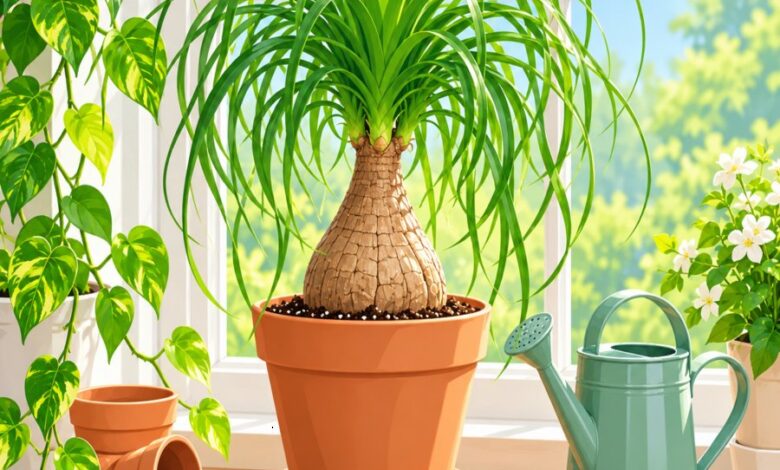
If your beloved Beaucarnea recurvata is looking more crispy than chic, you are not alone, and these ponytail palm hacks were designed specifically to rescue it. That signature bulbous trunk and cascading fountain of leaves are meant to signal a thriving desert native, not a plant in distress. Unfortunately, dry, cracking tips are the number one complaint among indoor growers, and the fix is often simpler than you think. Below, we are breaking down five expert-approved strategies that address the root causes of browning foliage, from watering habits to humidity mishaps. By the end of this guide, you will know exactly how to restore your plant’s vibrant green crown and keep it thriving for years.
Essential Guide to ponytail palm hacks
Why Your Ponytail Palm Is Crying Out for Help
Before diving into specific ponytail palm hacks, it helps to understand why this plant develops crispy tips in the first place. Native to the semi-desert regions of eastern Mexico, the ponytail palm is not actually a palm at all, it is a succulent relative that stores water in its signature bulbous base, called a caudex.
This storage system means the plant is built for scarcity, not abundance. When homeowners treat it like a thirsty tropical houseplant, overwatering the soil while ignoring the caudex itself, the roots suffer and the leaf tips pay the price.
The Most Common Culprits
Dry air from heating vents, mineral buildup from tap water, and inconsistent watering schedules are the three biggest offenders behind brown leaf tips indoor palm owners frequently report. Each of these stresses the plant differently, but all three show up as the same symptom: discolored, crunchy foliage edges.
Identifying which stressor is affecting your particular plant is the first step toward a lasting solution, and it is exactly what the hacks below will help you diagnose and correct.
Hack One: Master the Soak-and-Dry Watering Method
The single most transformative of all the ponytail palm hacks is switching to a soak-and-dry watering rhythm instead of a fixed weekly schedule. This succulent caudex care principle mimics the natural rainfall pattern of its arid homeland.
Instead of a light sprinkle every few days, saturate the soil thoroughly until water drains freely from the pot’s bottom, then wait until the top three inches are completely dry before watering again.
How to Test Soil Moisture Accurately
Insert a wooden skewer into the soil and leave it for ten minutes. If it comes out with damp particles clinging to it, hold off on watering for a few more days.
This simple test prevents the chronic overwatering that leads to root rot, which ironically causes the same crispy, browning tips as underwatering does, confusing many first-time growers.
According to horticultural experts at the Royal Horticultural Society, succulent and caudex-forming plants rely on well-timed drought periods between waterings to encourage healthy root development and prevent fungal issues.
Hack Two: Switch to Filtered or Rainwater
Tap water is loaded with chlorine, fluoride, and dissolved salts that build up in the soil over time, and this mineral accumulation is a sneaky cause of brown leaf tips indoor palm enthusiasts often overlook.
Switching to filtered, distilled, or collected rainwater removes this chemical burden entirely, allowing the roots to absorb moisture without the added stress of flushing out salts.
Flushing Out Existing Salt Buildup
If you suspect years of tap water have already left residue, run a generous amount of distilled water through the pot three times in a row, letting it drain completely between each pour.
This flushing technique resets the soil chemistry and is one of the easiest ponytail palm hacks to implement immediately, often showing visible improvement within a few new leaf growth cycles.
Pay close attention to white, crusty residue on the topsoil surface, as this is a telltale sign that mineral buildup has reached a problematic level requiring immediate attention.
Hack Three: Boost Humidity Without Overwatering
While ponytail palms tolerate dry air far better than tropical houseplants, extremely low humidity combined with forced-air heating can still scorch delicate leaf edges, especially during winter months.
The trick is raising ambient moisture in the air itself, not the soil, which keeps this plant firmly in the category of indoor drought tolerant plants that thrive on neglect rather than attention.
Simple Humidity Solutions That Work
Group your ponytail palm with other container plants to create a microclimate, or place a small humidifier nearby set to a gentle, low output rather than misting the leaves directly.
Avoid positioning the plant directly beside heating vents, radiators, or drafty winter windows, as sudden temperature swings dry out foliage faster than almost any other household factor.
The team at Better Homes & Gardens notes that rotating pots away from direct heat sources during colder seasons significantly reduces leaf-tip stress in houseplants of all varieties.
Hack Four: Repot Strategically to Support the Caudex
Proper succulent caudex care hinges on giving that iconic bulbous base room to breathe, and a cramped or waterlogged pot is often the hidden reason behind chronic browning that other fixes fail to resolve.
Choose a terracotta or unglazed ceramic pot, since these porous materials wick away excess moisture far more effectively than plastic or glazed containers ever could.
Building the Ideal Soil Mix
Combine standard potting soil with coarse sand and perlite in roughly equal parts to replicate the fast-draining, gritty terrain this plant evolved in across its native desert habitat.
Never bury the caudex itself beneath the soil line, as doing so traps moisture against the base and invites rot, one of the most damaging mistakes in amateur succulent caudex care routines.
When repotting, this is also the perfect moment to inspect roots for firmness, just as careful homeowners inspect surfaces for durability, similar to the diligence described in this guide on avoiding common epoxy countertop installation mistakes before committing to a final finish.
Hack Five: Trim Correctly and Feed Sparingly
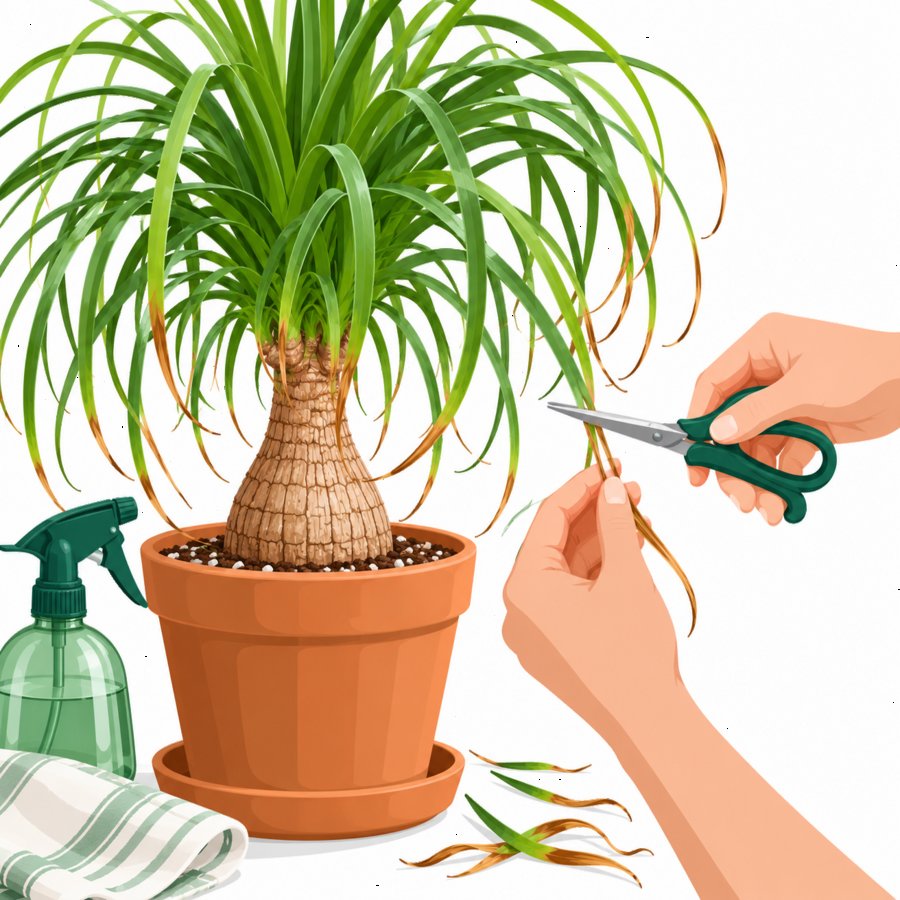
Once brown tips appear, resist the urge to cut leaves at random. The correct technique among seasoned ponytail palm hacks is trimming only the discolored portion with clean, sharp scissors at a slight angle.
Cutting into healthy green tissue stresses the plant further and can create new entry points for pests, so always trim conservatively and only on fully dried, crispy sections.
Fertilizing Without Overdoing It
Feed your plant a diluted, balanced liquid fertilizer no more than once every six to eight weeks during the active spring and summer growing season only.
Over-fertilizing is a common misstep that causes salt buildup in the soil, leading right back to the same tip-browning cycle these ponytail palm hacks are specifically designed to break.
Skip feeding entirely during fall and winter dormancy, since the plant’s growth slows dramatically and excess nutrients will simply sit unused in the soil, causing more harm than good.
Choosing the Right Light for Lasting Results
Light exposure plays a surprisingly large role in leaf health, and getting it wrong undermines every other effort you make toward reviving your plant’s appearance.
Ponytail palms crave bright, indirect sunlight for the majority of the day, with a few hours of gentle direct morning sun being ideal for encouraging compact, healthy new growth.
Signs of Improper Light Exposure
Pale, stretched leaves indicate insufficient light, while scorched patches combined with brown tips suggest too much harsh afternoon sun through an unfiltered window.
Rotating the pot every couple of weeks ensures even light distribution across the entire canopy, preventing the lopsided growth pattern that often accompanies one-sided sun exposure.
Reference material from the Old Farmer’s Almanac consistently recommends east or south-facing windows for most succulent and arid-climate houseplants seeking balanced daily light.
Building a Long-Term Care Routine That Prevents Relapse
Applying these fixes once is helpful, but true success comes from weaving them into a consistent, seasonal maintenance habit that anticipates problems before they start.
Create a simple monthly checklist covering soil moisture checks, dust removal from leaves, and a quick visual inspection of the caudex for any soft or discolored spots.
Why Ponytail Palms Make Excellent Low-Maintenance Choices
Among popular indoor drought tolerant plants, few offer the dramatic visual impact of a ponytail palm while demanding so little in return once its basic needs are properly met.
Their forgiving nature makes them perfect for busy households, vacation homes, or anyone newly transitioning into plant ownership without a confident green thumb just yet.
The USDA classifies Beaucarnea recurvata within plant groups well-suited to arid and semi-arid growing conditions, reinforcing why overwatering remains its single greatest threat indoors.
With these five ponytail palm hacks now in your toolkit, you are fully equipped to diagnose, treat, and prevent crispy brown tips for good, giving your plant the thriving, fountain-like crown it was always meant to display.