Summer heat waves are getting longer, hotter, and far less forgiving on traditional flower beds. If your garden wilts the moment the thermometer climbs past 90 degrees, it’s time to rethink your planting strategy with climate-resilient perennial pairings that actually thrive under pressure. These smart combinations don’t just survive drought — they bloom defiantly through it, turning a stressed landscape into a lush, low-maintenance showpiece.
In this guide, we’re breaking down five proven, battle-tested plant duos that laugh in the face of extreme summer drought. Whether you’re redesigning a sun-blasted front yard or filling in a neglected border, these pairings offer the perfect balance of texture, color, and toughness.
Why Climate-Resilient Perennial Pairings Matter More Than Ever
Gardeners everywhere are grappling with longer dry spells, restrictive water schedules, and soil that bakes hard by midsummer. Relying on a single tough plant isn’t enough anymore — the real magic happens when you combine species that support each other’s root systems, shade, and moisture retention.
That’s the entire philosophy behind climate-resilient perennial pairings: strategic plant partnerships that reduce watering needs while maximizing visual impact. Instead of fighting the climate, you’re designing with it.
This approach also ties directly into broader waterwise garden beds design, where every square foot is optimized for minimal irrigation and maximum resilience. When you select plants with similar water needs and complementary growth habits, you create a self-sustaining ecosystem that requires far less intervention from you.
According to horticultural experts at the Royal Horticultural Society, matching plants by their native growing conditions is one of the most effective ways to build a garden that genuinely withstands climate extremes rather than merely tolerating them.
Pairing One: Russian Sage and Black-Eyed Susan
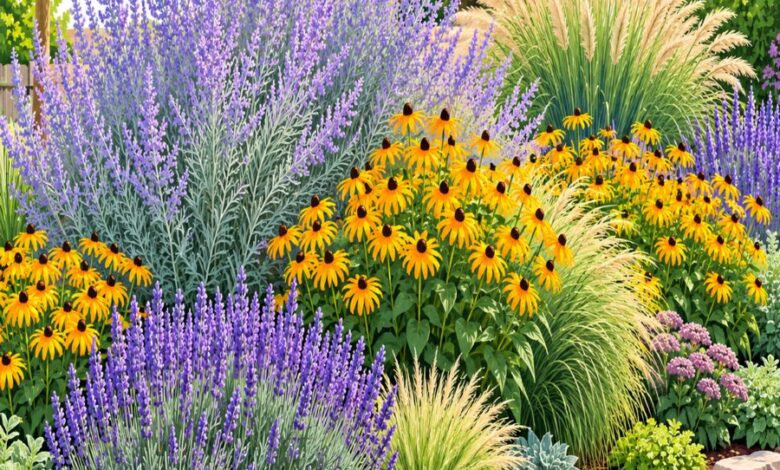
This classic duo is a cornerstone of drought tolerant perennials design, and for good reason. Russian sage brings airy silver-blue spikes that shimmer in full sun, while Black-Eyed Susan offers bold golden-yellow blooms that bloom reliably from midsummer into fall.
Why it works: Both plants share nearly identical water and soil requirements, meaning you’ll never overwater one while starving the other. Their contrasting textures — feathery versus structured — create visual depth without any extra maintenance.
Planting tip: Space plants generously to allow airflow, which prevents fungal issues during humid spells between dry stretches. Both tolerate poor, rocky soil exceptionally well, making this pairing ideal for neglected slopes or parkway strips.
Pairing Two: Lavender and Yarrow for Heat Hardy Borders
Few combinations deliver fragrance and resilience quite like lavender paired with yarrow. Together, they form some of the most reliable heat hardy borders you can plant, standing firm through scorching afternoons without a hint of wilting.
Why it works: Lavender’s compact, woody structure anchors the front of a border, while yarrow’s flat-topped flower clusters add height and movement behind it. Both plants actively prefer lean, well-drained soil and resent excess moisture, making overwatering mistakes nearly impossible.
Bonus benefit: This pairing attracts pollinators in droves, including bees and butterflies, while naturally repelling many common garden pests. It’s a functional and beautiful choice for anyone building climate-resilient perennial pairings near a patio or walkway where fragrance matters.
If you’re installing this border alongside a hardscape feature, be sure to review common concrete paver walkway mistakes to avoid so your planting beds and pathways work together rather than competing for drainage and space.
Pairing Three: Sedum and Ornamental Grasses
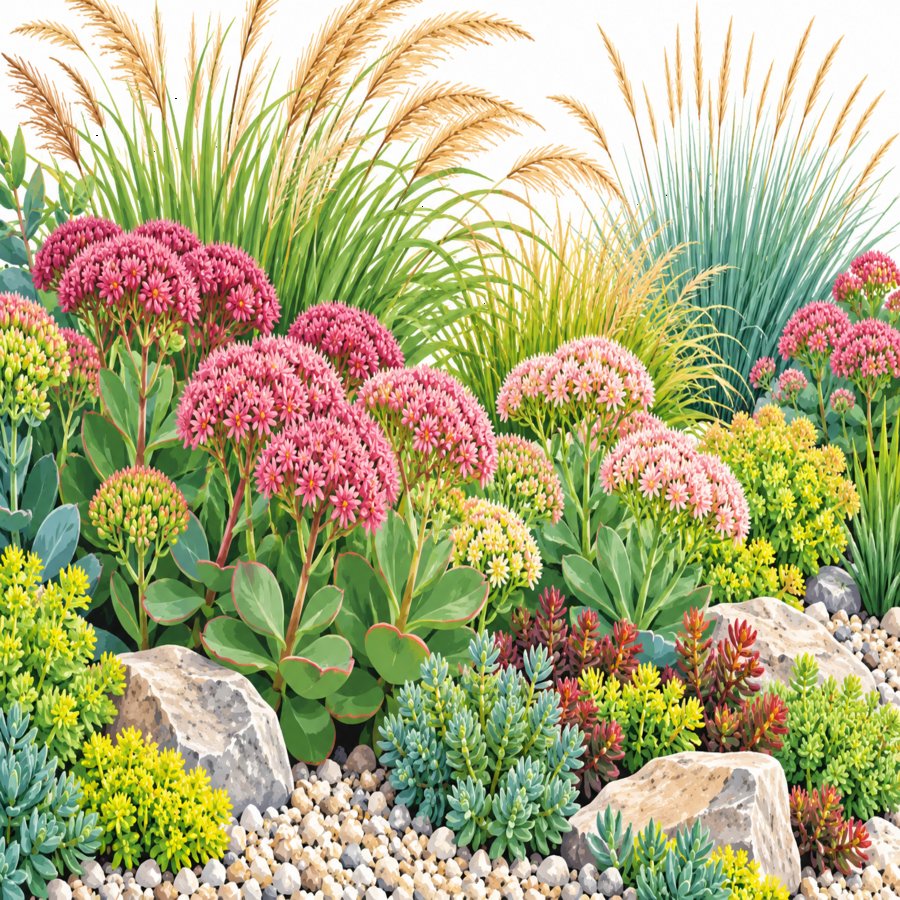
Succulent sedum varieties like ‘Autumn Joy’ are practically indestructible once established, and when paired with ornamental grasses such as Blue Fescue or Little Bluestem, they create a striking, low-water tapestry of color and motion.
Why it works: Sedum’s thick, water-storing leaves handle drought with ease, while grasses add vertical interest and sway beautifully in summer breezes. Neither plant demands rich soil, and both actually perform better when slightly neglected.
Design note: Use sedum as a ground-level filler and let grasses rise behind for a layered, meadow-inspired look. This combination is one of the easiest entry points for gardeners new to waterwise garden beds, since both plants forgive inconsistent watering schedules.
The Old Farmer’s Almanac notes that sedum and grass combinations are especially valuable in regions experiencing increasingly erratic rainfall patterns, as their root systems adapt efficiently to feast-or-famine moisture cycles.
Pairing Four: Coneflower and Salvia for Bold Color
Purple coneflower and salvia bring vibrant, long-lasting color to any bed that needs serious drought defense. Coneflower’s daisy-like blooms attract butterflies and goldfinches, while salvia’s upright purple spikes add architectural contrast.
Why it works: Both species develop deep, extensive root systems that reach moisture far below the surface, allowing them to shrug off weeks without rain. This makes the pairing one of the most dependable choices among drought tolerant perennials for full-sun gardens.
Maintenance tip: Deadhead spent coneflower blooms to encourage a second flush, and trim salvia lightly after its first bloom cycle to promote fresh growth through late summer. Together, they’ll fill a border with continuous color from June through September.
Pairing Five: Agastache and Red Yucca
For gardeners facing truly brutal, arid conditions, agastache (hummingbird mint) and red yucca form an unbeatable team. This pairing thrives in the hottest, driest corners of the yard where most other perennials simply give up.
Why it works: Red yucca’s spiky, architectural form provides a dramatic focal point, while agastache’s wispy flower spikes soften the composition and draw in hummingbirds and bees all season long. Both plants are remarkably indifferent to heat reflected off nearby pavement or stone.
This is precisely the kind of pairing that defines true climate-resilient perennial pairings — plants that not only survive but actively prefer the exact conditions that doom conventional landscaping choices. It’s a perfect fit for xeriscaped front yards or rocky side-yard beds.
Building Your Own Waterwise Garden Beds
Once you’ve selected your pairings, success comes down to proper soil prep and smart layout. Amend heavy clay soil with coarse sand or fine gravel to improve drainage, since soggy roots are often more damaging to drought-adapted plants than dry spells ever are.
Mulch wisely: A two-to-three-inch layer of gravel or shredded bark mulch locks in soil moisture and suppresses weeds that compete for limited water. Avoid piling mulch directly against plant crowns, as this can trap excess moisture and invite rot.
Group by thirst: Always cluster plants with matching water needs together rather than mixing thirsty annuals with drought-hardened perennials. This single design principle is the backbone of every successful waterwise landscape and prevents the common mistake of overwatering resilient species to compensate for needier neighbors.
The USDA also recommends checking your regional hardiness zone before finalizing plant selections, since even drought-tolerant species have specific temperature thresholds they require to overwinter successfully.
Watering Strategy for Long-Term Resilience
Even the toughest perennials need a thoughtful establishment period. Water newly planted pairings deeply two to three times per week for the first six weeks, then gradually taper off as root systems mature.
Deep, infrequent watering trains roots to grow downward in search of moisture, building long-term drought resilience. Shallow, frequent sprinkling does the opposite, creating weak surface roots that struggle the moment irrigation stops.
Consider installing a simple drip irrigation line on a timer for the first season, then removing it entirely once your plants prove established. Most of the pairings featured here will need little to no supplemental water after their first full year in the ground.
Common Mistakes That Undermine Drought Tolerant Perennials
Even the hardiest plant pairings can fail when paired with poor practices. Overly rich, amended soil is one of the sneakiest culprits, encouraging soft, leggy growth that collapses under heat stress instead of the compact, resilient habit these plants are known for.
Avoid these pitfalls: Skip the fertilizer on established drought-tolerant beds, resist the urge to water on a fixed daily schedule, and never crowd plants so tightly that airflow is restricted. Each of these habits slowly erodes the natural toughness these species have evolved to possess.
Patience is also essential. Many of these perennials take a full season or two to develop the deep root systems that make them so remarkably self-sufficient, so resist the temptation to replace “slow starters” too quickly.
Final Thoughts on Climate-Resilient Perennial Pairings
Building a garden that thrives despite extreme summer drought isn’t about luck — it’s about intentional design. By choosing proven climate-resilient perennial pairings, grouping plants by water needs, and prepping your soil correctly, you’ll create a landscape that looks stunning with minimal intervention.
Start with just one or two of these combinations this season, observe how they perform, and expand from there. Within a year or two, you’ll have a resilient, water-wise garden that stands tall through every heat wave the summer throws your way.