

There’s nothing quite like gathering around a crackling flame on a cool evening, but your beautiful stone surround could be silently cracking apart beneath the heat. Most homeowners never realize that backyard fire pit mistakes are the leading cause of shattered pavers, crumbling mortar joints, and premature structural failure in high-end outdoor living spaces. Whether you’re building from scratch or inspecting an existing feature, understanding these costly errors now can save you thousands in repairs later.
In this guide, we’re breaking down the nine most destructive backyard fire pit mistakes that homeowners and even some contractors make, along with the exact fixes to protect your investment.
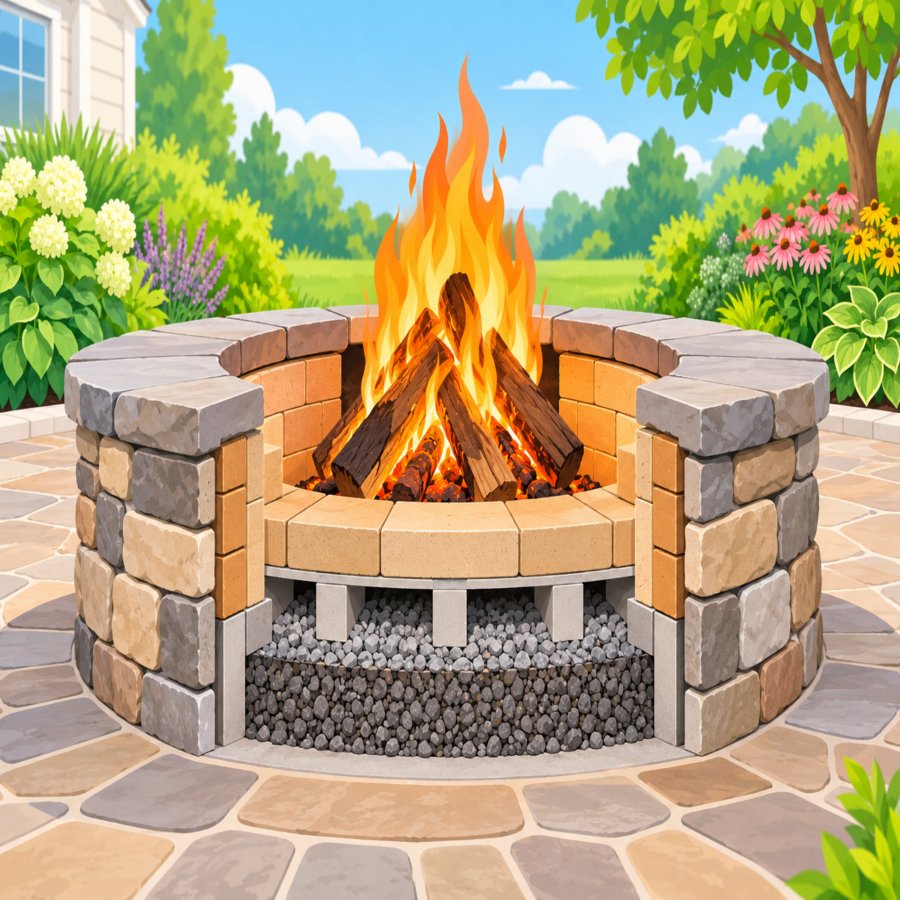
Why Backyard Fire Pit Mistakes Destroy Even the Best Stone Surrounds
Stone and masonry feel indestructible, but they are surprisingly sensitive to intense, repeated heat cycles. Every time a fire pit is lit and extinguished, the materials surrounding it expand and contract at different rates depending on their composition.
Over months of use, this constant stress creates micro-fractures that eventually turn into visible cracks, chips, and crumbling edges. The root cause is almost always one of several avoidable backyard fire pit mistakes made during planning or everyday use.
Understanding the science behind heat-related stone failure is the first step toward preventing it. Let’s walk through exactly what’s going wrong in so many backyards.
Mistake #1: Using the Wrong Paver Material Near the Flame
Not all pavers are created equal, and this is one of the most common backyard fire pit mistakes homeowners make when designing their patio. Standard concrete pavers, while beautiful and affordable, are not engineered to handle direct or radiant heat exposure.
Thermal shock pavers are purpose-built to resist rapid temperature changes without fracturing, unlike their standard counterparts. Regular concrete or natural flagstone can absorb moisture, and when that trapped water heats rapidly, it expands and causes the stone to pop, flake, or split entirely.
Always confirm with your supplier that the pavers you’re purchasing are rated specifically for fire feature applications before installation begins.
Mistake #2: Skipping Proper Fire Brick Installation
The interior lining of your fire pit does the heaviest lifting when it comes to heat resistance, yet it’s frequently overlooked. Proper fire brick installation creates a protective barrier between the flame and the structural stone surround, dramatically extending the lifespan of your entire feature.
Fire brick, sometimes called refractory brick, is specifically manufactured to withstand temperatures exceeding 2,000 degrees Fahrenheit without degrading. Using standard red clay brick or leftover landscaping brick instead is a shortcut that almost always backfires within a single season.
Pro Tip: Always use heat-rated mortar alongside fire brick, since standard mortar mixes will break down and crumble under sustained thermal stress.
Mistake #3: Ignoring Stone Fire Pit Ventilation Requirements
Heat and gases need somewhere to escape, and a sealed or poorly designed structure traps both inside the stone cavity. Inadequate stone fire pit ventilation is one of the sneakiest backyard fire pit mistakes because the damage builds slowly and invisibly over time.
Without proper airflow, heat becomes concentrated in small pockets rather than dispersing evenly, leading to uneven expansion across the stone surface. This uneven stress is a primary driver of cracking in high-end masonry designs.
Most professionally built gas and wood-burning fire pits include small vent gaps or weep holes near the base specifically to allow heat and moisture to escape safely.
Mistake #4: Building Too Close to the Structure’s Edge
Edges and corners are structurally weaker points in any stone assembly, and placing the flame source too close to them invites disaster. Heat concentrated near an unsupported edge causes rapid, uneven expansion that the stone simply cannot absorb.
A general rule of thumb is to maintain at least 12 to 18 inches of buffer space between the flame area and any decorative edge detailing. This buffer gives the stone room to expand and contract without stressing the joints.
Mistake #5: Dousing Hot Stone With Cold Water
This is perhaps the single most damaging habit among the common backyard fire pit mistakes, and it happens more often than you’d think. Pouring a bucket of cold water onto still-hot stone to extinguish flames quickly creates an extreme temperature differential almost instantly.
This rapid cooling is the textbook definition of thermal shock pavers are designed to resist, but even heat-rated stone has its limits when doused aggressively. Natural stone like granite, marble, or limestone is especially vulnerable to this kind of sudden stress fracture.
Instead, let your fire burn down naturally and use a metal lid or spark screen to smother remaining embers slowly and safely.
Mistake #6: Choosing the Wrong Base and Foundation Materials
A gorgeous stone surround is only as good as what it’s sitting on. Many homeowners pour concrete directly onto soil or gravel without accounting for drainage, moisture retention, or seasonal ground shifting.
When moisture becomes trapped beneath the foundation and then meets intense heat from above, the resulting pressure has nowhere to go but through your stonework. A compacted gravel base topped with a properly reinforced concrete pad is the gold standard for long-term stability.
According to the The Old Farmer’s Almanac, proper site preparation and drainage planning are essential for any permanent outdoor structure exposed to seasonal freeze-thaw cycles.
Mistake #7: Overloading the Pit With Oversized Fuel
Bigger logs might seem cozier, but cramming oversized firewood into a compact stone fire pit creates dangerously concentrated heat zones. This is one of those backyard fire pit mistakes that feels harmless in the moment but compounds damage with every single use.
Excess fuel also tends to push flames higher and closer to the surrounding stone edge, accelerating wear on decorative caps and ledges. Stick to appropriately sized, seasoned firewood and avoid piling logs against the interior walls of the pit.
Smaller, well-managed fires actually produce better ambient warmth while putting significantly less strain on your masonry investment.
Mistake #8: Neglecting Seasonal Sealing and Maintenance
Natural stone and even high-quality pavers are porous by nature, which means they absorb moisture from rain, dew, and snow throughout the year. Without regular sealing, this absorbed water becomes a ticking time bomb once the fire pit heats up again.
A high-quality penetrating sealant applied once or twice a year creates a moisture barrier that significantly reduces the risk of heat-triggered cracking. This small maintenance task is often skipped, yet it’s one of the easiest ways to prevent avoidable backyard fire pit mistakes from ruining your investment.
Pair your sealing routine with a cover during winter months to minimize snow and ice accumulation directly on the stone surface.
Mistake #9: DIY Installation Without Professional Heat Testing
DIY backyard projects are incredibly rewarding, and plenty of outdoor features can be tackled confidently without a contractor. However, fire features involve unique heat dynamics that even experienced DIYers can underestimate.
Skipping a professional consultation or heat-testing phase before full installation is one of the final major backyard fire pit mistakes on this list, and it’s often the most expensive to fix retroactively. A quick consultation with a landscape professional can confirm your fire brick installation plan, ventilation design, and material choices before you commit.
If you’re also updating other areas of your outdoor living space, consider browsing creative floating wood shelf storage solutions to keep fire pit tools, cushions, and accessories organized nearby.
Final Thoughts on Avoiding Backyard Fire Pit Mistakes
Your stone fire pit surround represents a significant investment in both beauty and functionality for your outdoor living space. By avoiding these nine critical backyard fire pit mistakes, you’ll protect that investment for decades rather than seasons.
From choosing proper thermal shock pavers to ensuring correct stone fire pit ventilation, every decision along the way compounds into long-term durability. Take the time to plan thoughtfully, maintain consistently, and your fire pit will reward you with countless cozy evenings for years to come.