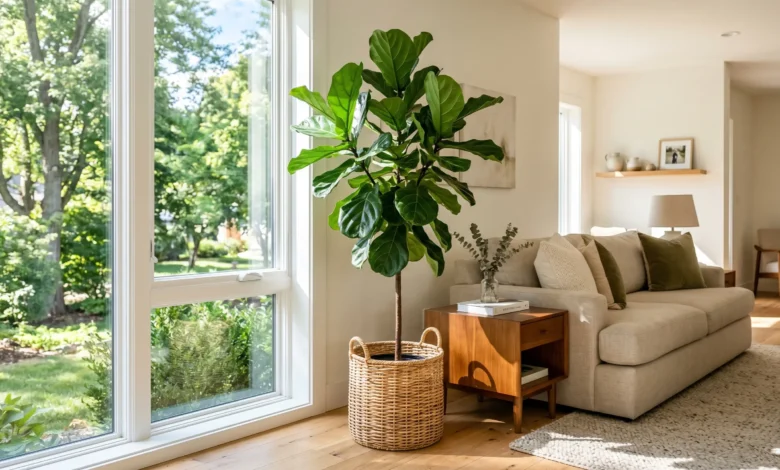
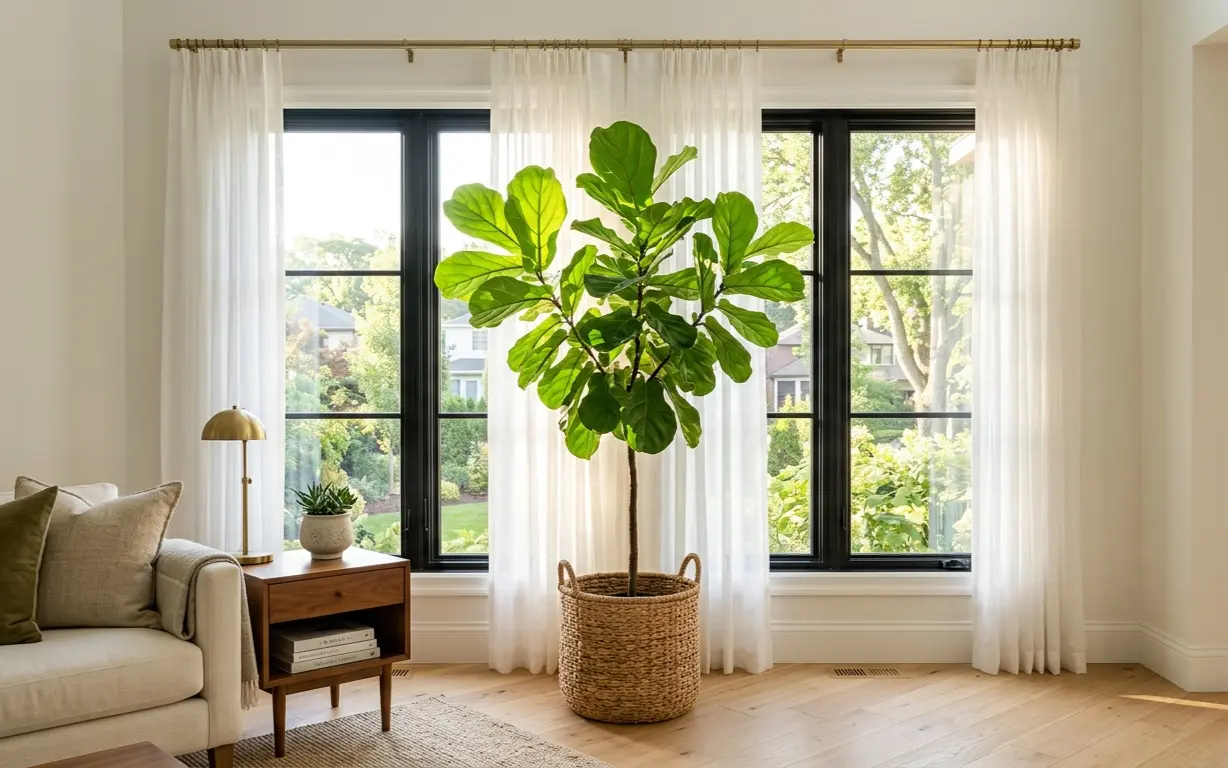
A thriving indoor tree demonstrating perfect fiddle leaf fig care in a sunny modern living room.Providing bright indirect sunlight is essential for successful fiddle leaf fig care.Mastering proper fiddle leaf fig care can feel like trying to solve a complicated puzzle. You bring home a stunning, leafy green masterpiece, only to watch it mysteriously drop leaves a few weeks later. This frustrating cycle happens to thousands of well-meaning indoor gardeners every single year.
Many plant parents struggle with the dramatic nature of the Ficus lyrata. However, the secret to maintaining a thriving indoor tree actually lies in knowing exactly what you should not do. Small errors in your daily routine can compound into massive problems for this specific species.
In this guide, we will uncover the most devastating errors houseplant owners make. By avoiding these common pitfalls, you will guarantee a lush, vibrant, and healthy centerpiece for your home.
The Foundations of Fiddle Leaf Fig Care
Before diving into the mistakes, you must understand the natural habitat of this popular houseplant. Originally from the tropical rainforests of West Africa, these trees thrive in warm, humid environments with filtered sunlight. Replicating this tropical environment inside a modern home is the ultimate goal.
Ultimate beginner guide to Ficus lyrata maintenance
When you deviate from their natural preferences, the plant will quickly let you know by developing brown spots or dropping its foliage. Let us examine the specific actions that are currently jeopardizing the health of your indoor tree.
Mistake 1: Getting the Watering Schedule Completely Wrong
The absolute fastest way to destroy your plant is through incorrect watering habits. Most beginners lean toward overwatering, which suffocates the root system and creates the perfect environment for dangerous fungal infections. When the roots sit in stagnant moisture, deadly root rot sets in rapidly.
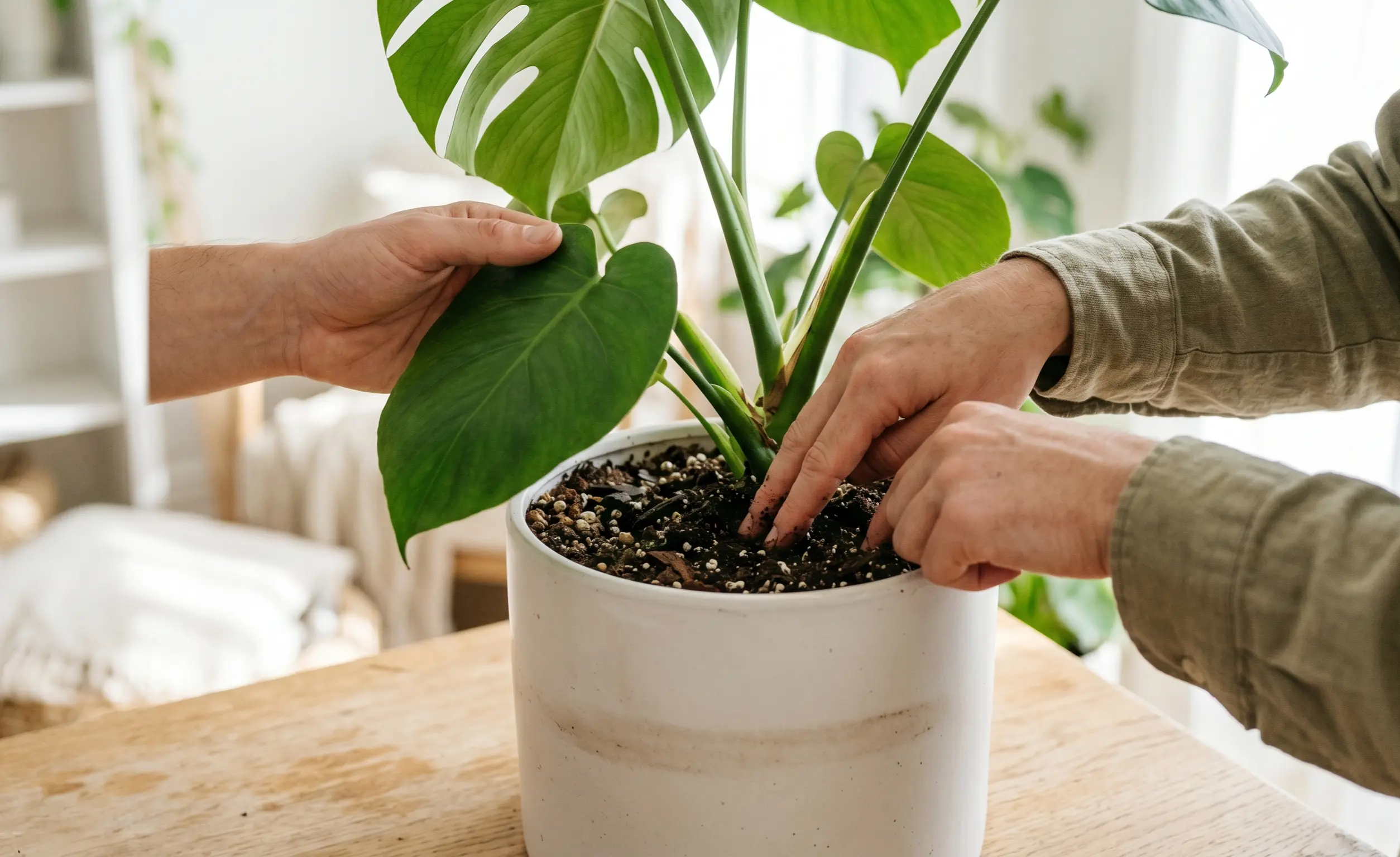
Conversely, allowing the soil to become completely bone dry for extended periods will cause the leaves to develop crispy, brown edges. You must find the perfect balance by allowing the top two inches of the soil to dry out before you add more moisture.
To prevent these watering disasters, always check the soil moisture level with your finger before grabbing the watering can.You can also learn about the Bottom Watering Plants: 7 Proven Hacks for Amazing Root Growth.
Mistake 2: Ignoring Proper Light Requirements for Fiddle Leaf Fig Care
Providing adequate light is a non-negotiable aspect of successful fiddle leaf fig care. These massive leaves act like solar panels, requiring massive amounts of bright, indirect sunlight to perform photosynthesis efficiently. Placing your tree in a dark, empty corner of the living room is a guaranteed death sentence.
Without sufficient lighting, the plant will stop growing new leaves and existing foliage will slowly turn a sickly yellow. For optimal health, you should position your pot directly in front of an east-facing window or a few feet away from a bright south-facing window.
If your home lacks natural sunlight, you must supplement the environment with high-quality artificial grow lights.You can read more about artificial lighting setups from this reputable university agricultural extension office on indoor plant lighting
Mistake 3: Moving Your Plant Constantly Around the House
Ficus lyrata trees despise sudden environmental changes more than almost any other common houseplant. Once they acclimate to a specific spot in your home, they want to stay exactly there permanently. Moving the pot from the living room to the bedroom can trigger severe shock.
When you constantly relocate the tree, it has to aggressively re-adjust to new light levels, humidity, and temperature fluctuations. This intense stress response usually results in a massive and sudden dropping of otherwise healthy green leaves.
Pick the brightest, safest spot in your home the day you bring the plant inside and commit to that location. If you absolutely must move it, transition the plant gradually over a period of several weeks to minimize the environmental shock.
Mistake 4: Forgetting to Clean the Dust Off the Giant Leaves
Those beautiful, violin-shaped leaves are massive dust magnets inside the average home. When a thick layer of household dust accumulates on the surface of the foliage, it blocks sunlight from reaching the plant cells. This severely restricts the plant’s ability to feed itself through photosynthesis.
Furthermore, dusty leaves create an ideal hiding place for invasive pests like spider mites and mealybugs. These tiny insects thrive in dry, dusty environments and will quickly drain the sap from your precious tree.
Make it a habit to gently wipe down every single leaf with a soft, damp microfiber cloth at least once a month. This simple step not only keeps the plant looking incredibly shiny but also serves as your monthly pest inspection.
Mistake 5: Using the Wrong Potting Soil and Drainage System
Even if your lighting and watering habits are completely perfect, improper drainage will eventually kill your plant. Leaving your tree in the dense, heavy nursery soil it came in is a massive mistake. That commercial soil is designed for greenhouse growing, not for the typical residential living room.
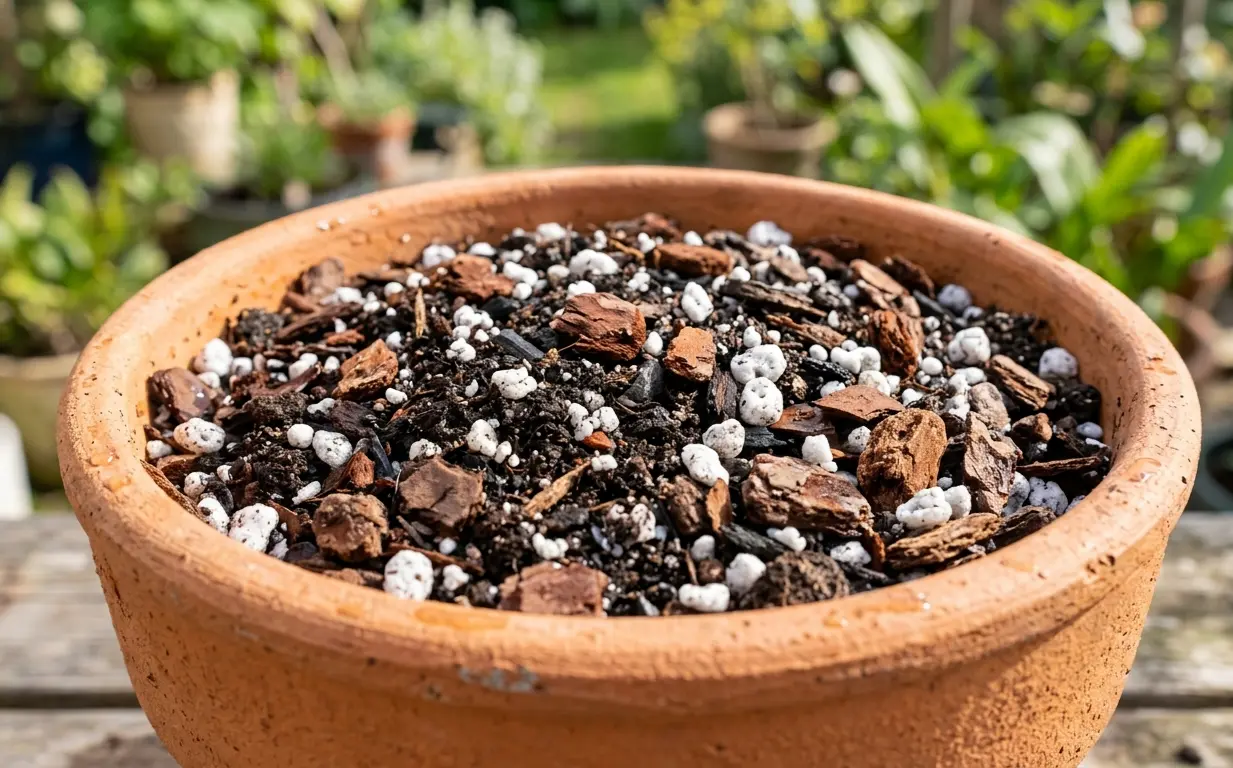
You need a chunky, well-aerated potting mix that allows water to flow through the root zone rapidly. A premium mixture of indoor potting soil, coarse perlite, and orchid bark provides the exact aeration these thick roots demand.
Additionally, your decorative planter absolutely must have a large drainage hole at the bottom. Never plant your tree directly into a decorative pot that lacks drainage, as water will inevitably pool at the bottom and rot the roots.
Conclusion: Perfecting Your Routine
Successful plant parenthood is entirely about consistency and observation. By providing bright indirect light, mastering your watering technique, and avoiding sudden environmental changes, your tree will flourish.
Remember to keep those massive leaves free of dust and always prioritize excellent soil drainage. If you actively avoid these five critical errors, your indoor tree will reward you with stunning, architectural beauty for decades to come