

If you have ever found a tangle of dangling baby plantlets hanging from your spider plant and wondered what to do with them, you are in exactly the right place. Learning a handful of reliable spider plant propagation tricks can transform a single thriving plant into dozens of new ones, completely free of charge. In this guide, we will walk through eight proven methods for rooting spider plant babies, troubleshoot common issues, and share the exact techniques that produce vigorous, healthy root systems every single time.
Spider plants, scientifically known as Chlorophytum comosum, are among the most forgiving houseplants on earth, which is precisely why they are such a perfect candidate for propagation experiments. Whether you are a seasoned plant parent or just dipping your toes into the world of houseplant multiplication, these tricks will help you build a thriving indoor jungle.
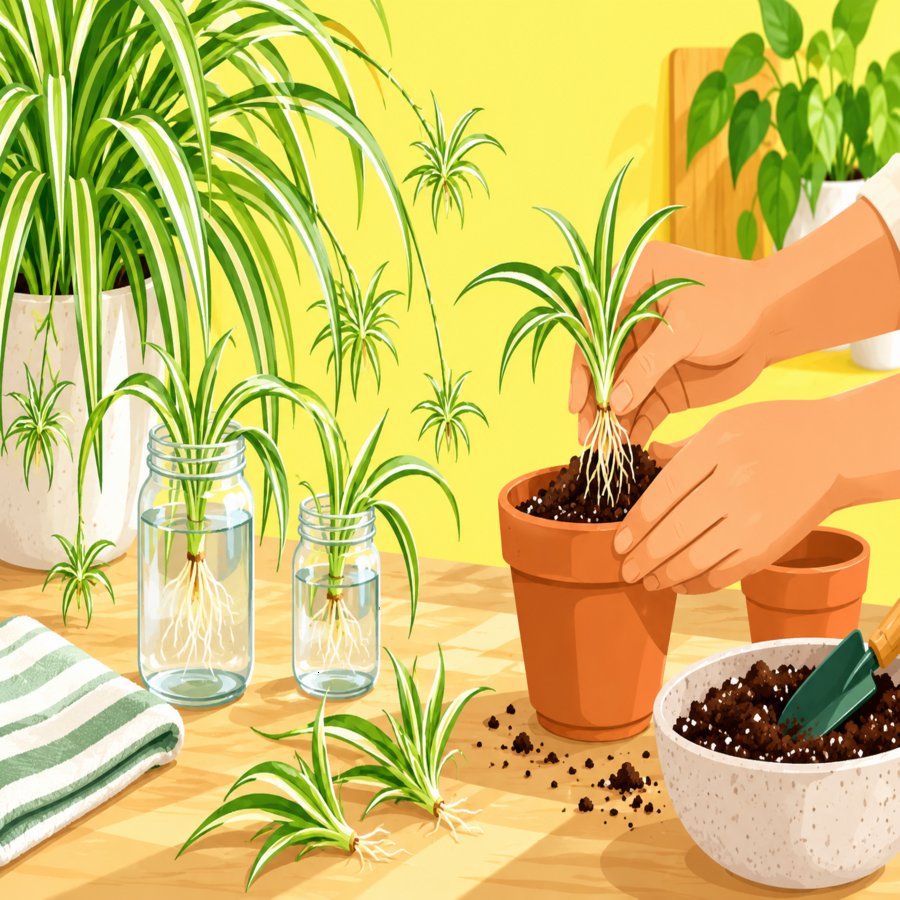
Understanding Chlorophytum Comosum Care Before You Propagate
Before diving into any propagation method, it helps to understand the plant you are working with. Proper Chlorophytum comosum care is the foundation that makes every rooting attempt successful.
Spider plants thrive in bright, indirect light, well-draining soil, and consistent but moderate watering. A stressed or underfed mother plant rarely produces strong, healthy plantlets worth propagating.
Healthy Mother Plant First Feed your spider plant a balanced liquid fertilizer every four to six weeks during spring and summer. A well-nourished plant sends out more flower stalks, which eventually produce the baby plantlets you need for propagation.
According to the Royal Horticultural Society, spider plants benefit from being slightly root-bound, which actually encourages more vigorous offshoot production. Keep this in mind before rushing to repot your mother plant.
Trick One and Two: Classic Water Propagation Houseplants Method
The most beloved of all spider plant propagation tricks is the simple water method, and for good reason. It is visually satisfying, requires minimal tools, and allows you to watch roots develop in real time.
Trick One: The Floating Plantlet Jar Snip a baby plantlet from the mother plant, leaving a small stub of stem attached. Suspend it over a jar of room-temperature water so only the base touches the surface, using a toothpick or clothespin as a bridge if needed.
This technique is one of the most effective water propagation houseplants strategies because it prevents the stem from rotting while still allowing root nodes to reach the water. Within one to two weeks, you should see small white roots emerging.
Trick Two: Full Submersion Rooting Alternatively, simply drop the plantlet directly into a glass of water, submerging the base entirely. Change the water every three to four days to prevent bacterial buildup and keep oxygen levels high.
This method tends to produce slightly faster results than the floating technique, though it requires more vigilant water changes. Both approaches are excellent entry points for beginners exploring rooting spider plant babies for the very first time.
Trick Three and Four: Direct Soil Rooting Strategies
While water propagation is popular, many gardeners prefer skipping straight to soil, which avoids a stressful transplant shock later on.
Trick Three: Still-Attached Soil Pinning Without cutting the plantlet from the mother plant, simply rest it on top of a small pot filled with moist potting mix. Pin the base gently against the soil using a bobby pin or small stone and keep it attached until roots form.
This trick allows the plantlet to continue drawing nutrients from the mother plant while simultaneously establishing its own root system, resulting in a remarkably strong transition. Once you notice resistance when gently tugging the plantlet, it is safe to snip the connecting stem.
Trick Four: Direct Cutting Into Soil Cut a plantlet free and insert the base directly into moistened potting soil, firming it gently in place. Cover with a clear plastic bag to maintain humidity, poking a few small holes for airflow.
Keep the soil consistently damp but never waterlogged, and place the pot in bright, indirect light. This is one of the fastest spider plant propagation tricks for gardeners who want to skip the water-rooting stage entirely.
Trick Five and Six: Advanced Rooting Spider Plant Babies Techniques
Once you have mastered the basics, these intermediate tricks for rooting spider plant babies can speed up results and increase your success rate even further.
Trick Five: Rooting Hormone Boost Dip the cut base of a plantlet into a powdered or gel rooting hormone before placing it in soil or water. This simple addition can cut rooting time nearly in half and results in thicker, more branched root systems.
Rooting hormone is especially useful for plantlets that seem weak or slow to establish, giving them the extra hormonal signal needed to kickstart cell division at the cut site.
Trick Six: The Sphagnum Moss Wrap Wrap the base of a plantlet in pre-moistened sphagnum moss, then secure it with plastic wrap to lock in humidity. Check every few days, misting the moss if it begins drying out.
Sphagnum moss retains moisture exceptionally well while still allowing airflow, making it a favorite among growers aiming for consistently vigorous, fibrous roots. This method mimics the humid microclimate spider plants naturally prefer.
Trick Seven and Eight: Division and Seasonal Timing Tricks
Not all propagation relies on baby plantlets. Sometimes the mother plant itself holds the key to multiplying your collection.
Trick Seven: Root Ball Division Remove a mature, overcrowded spider plant from its pot and gently separate the root ball into two or more sections by hand, ensuring each division has healthy roots and several leaves attached. Repot each section immediately into fresh, well-draining soil.
Division is ideal for gardeners seeking instant, full-sized plants rather than waiting for small plantlets to mature, and it simultaneously rejuvenates an overgrown mother plant.
Trick Eight: Timing With the Growing Season Always attempt propagation during spring or early summer when the plant is actively growing, rather than during dormant winter months. Warmer temperatures and longer daylight hours dramatically improve rooting speed and success rates.
The Old Farmer’s Almanac notes that most houseplants root fastest when ambient temperatures stay between 65 and 75 degrees Fahrenheit, which aligns perfectly with typical indoor spring conditions. Timing truly is one of the most overlooked yet powerful spider plant propagation tricks available to home gardeners.
Common Mistakes That Sabotage Spider Plant Propagation Tricks
Even with the best techniques, small missteps can quietly derail your propagation success. Here are the most frequent culprits to watch for.
Overwatering New Cuttings Soggy soil or stagnant water invites rot far more often than it encourages roots. Always ensure drainage holes are unobstructed and water is refreshed regularly.
Insufficient Light Exposure Plantlets left in dim corners struggle to photosynthesize enough energy to fuel root development. Bright, filtered light near an east or west-facing window works best.
Transplanting Too Early Moving a plantlet into soil before roots reach at least one inch in length often causes setback or failure. Patience during the rooting phase pays off tremendously in plant vigor later.
Interestingly, precision and patience matter in home projects far beyond the garden bed. Just as careful technique prevents costly errors, homeowners tackling tile work should also review these common tile grouting mistakes to avoid before starting a bathroom or kitchen renovation.
Caring for Newly Rooted Plantlets
Once your plantlets have successfully rooted using any of these spider plant propagation tricks, proper aftercare ensures they grow into robust, mature plants.
Gradual Light Acclimation Move newly potted plantlets into brighter conditions gradually over one to two weeks, rather than exposing them to intense direct sun immediately. Sudden light changes can scorch tender new growth.
Proper Potting Mix Selection Use a well-draining, peat-based or coir-based potting mix amended with perlite for optimal aeration. Heavy, compacted soils trap excess moisture and suffocate young roots.
Holding Off on Fertilizer Wait at least four weeks before feeding a newly transplanted plantlet, allowing roots to establish without the stress of added salts. Once established, resume a diluted monthly feeding schedule.
Following the fundamentals of Chlorophytum comosum care during this early stage sets the tone for years of healthy growth, variegated foliage, and future propagation opportunities of your own.
Troubleshooting Slow or Failed Rooting Attempts
If weeks have passed without visible root growth, do not panic. Several simple adjustments can revive a stalled propagation attempt.
Check Water Clarity Cloudy or discolored water signals bacterial growth that can inhibit rooting. Switch to fresh, filtered water and rinse the plantlet base thoroughly before continuing.
Verify Plantlet Maturity Immature plantlets that are too small or lack visible root nodules often fail to root regardless of technique. Choose larger, more developed plantlets with small white root bumps already forming at the base.
Reassess Temperature and Humidity Cold drafts near windows or doors can significantly slow cellular activity needed for root formation. Relocate cuttings to a warmer, more stable area of the home away from air vents.
The USDA highlights that most tropical and subtropical houseplants, including Chlorophytum comosum, root best within a narrow warm temperature band, reinforcing just how much environment influences propagation success.
Final Thoughts on Mastering Spider Plant Propagation Tricks
With these eight proven spider plant propagation tricks in your gardening toolkit, you now have everything needed to multiply your collection endlessly and share healthy plantlets with friends and family.
From simple water propagation houseplants methods to advanced division techniques, each approach offers a reliable path toward strong, vigorous roots when done correctly. Experiment with a few different methods to discover which one fits your lifestyle and patience level best.
Remember that successful rooting spider plant babies always comes down to the fundamentals: adequate light, clean water or soil, patience, and consistent care. Master these basics, and you will never run out of beautiful spider plants to fill your home with fresh, cascading greenery.