
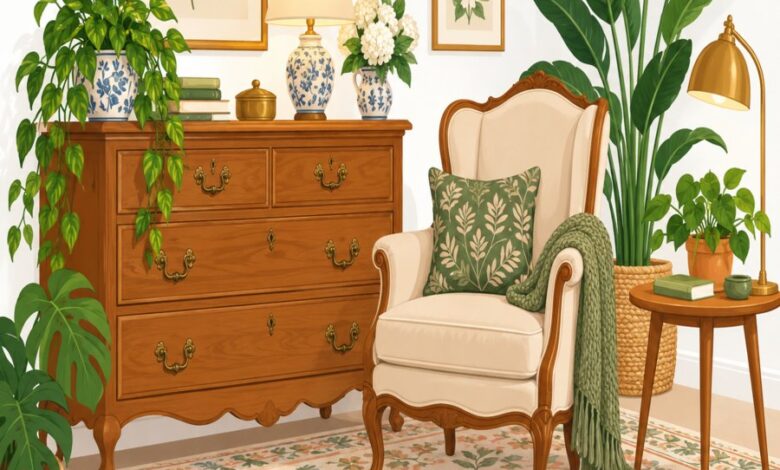
That gorgeous mid-century dresser you hauled home from the estate sale deserves better than a lonely corner next to a plastic lamp. Vintage furniture styling mistakes are more common than you’d think, and they quietly strip the character and value right out of pieces that took decades to earn their patina. Whether you’re working with a single antique sideboard or an entire room of retro finds, the way you style, place, and care for these pieces determines whether they read as curated treasures or cluttered thrift-store leftovers.
The good news is that every one of these missteps is fixable once you know what to look for. In this guide, we’re breaking down the nine most damaging habits that undercut vintage pieces, along with practical fixes rooted in real design principles and basic furniture care. By the end, you’ll be able to style your antique decor with the same confidence as a seasoned interior pro.
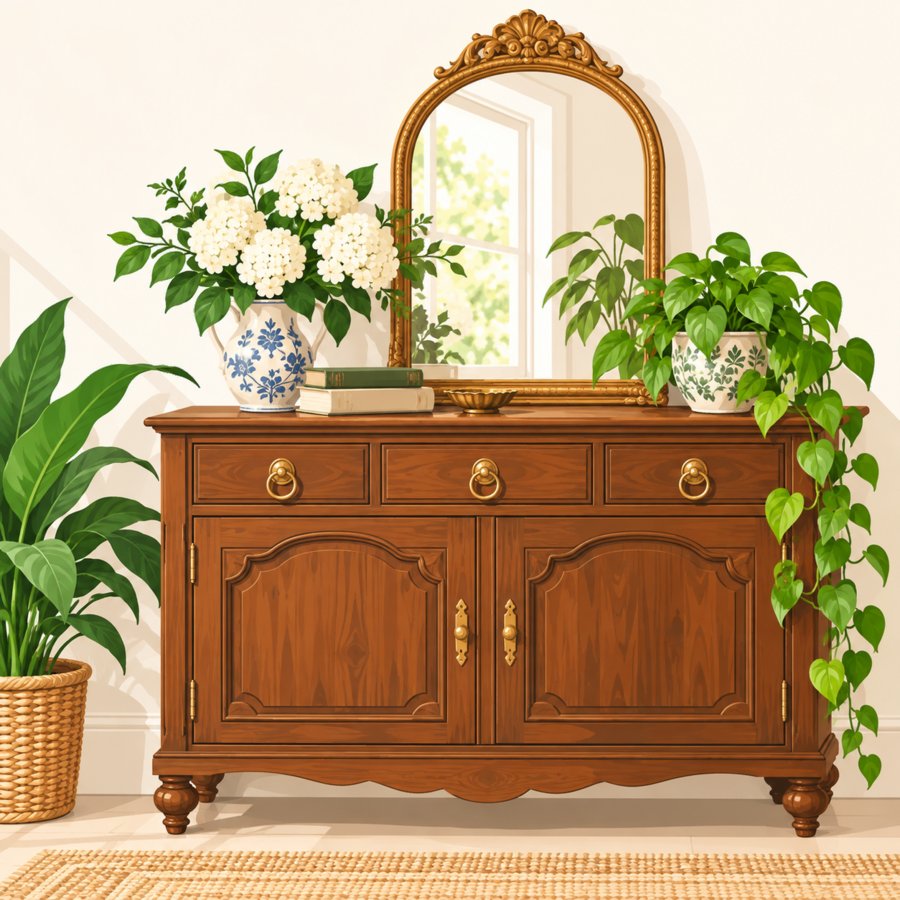
Essential Guide to vintage furniture styling mistakes
Mistake 1: Overcrowding a Single Room With Too Many Eras
One of the most common vintage furniture styling mistakes happens when homeowners try to showcase every antique they own in one single space. A Victorian armoire, a 1970s shag rug, and a Shaker-style rocking chair crammed into one living room creates visual chaos rather than charm.
Each era of furniture has its own silhouette, proportion, and finish language. When you stack too many conflicting periods together, the eye can’t settle anywhere, and your genuinely valuable pieces get visually lost in the noise.
The fix: Choose one dominant era per room and let other periods appear only as accents. A single Art Deco mirror can complement a mid-century console, but a room shouldn’t feel like a furniture museum timeline.
Mistake 2: Ignoring Scale and Proportion
Antique decor was often built for homes with different ceiling heights and room dimensions than what we have today. A towering Edwardian wardrobe that looked perfectly balanced in a grand 19th-century parlor can feel oppressive in a modern apartment with eight-foot ceilings.
Scale mismatches are sneaky because the piece itself isn’t flawed, it’s simply in the wrong context. This is one of those vintage furniture styling mistakes that makes an otherwise beautiful item feel clumsy and out of place.
The fix: Measure twice before committing to placement. Leave breathing room of at least 18 to 24 inches around large case pieces, and balance a tall antique with lower-profile modern furnishings nearby to keep the sightline from feeling top-heavy.
Mistake 3: Over-Restoring and Stripping Away Patina
Patina, that soft sheen and subtle wear that develops over decades, is part of what gives antique furniture its soul and often its resale value. Yet many well-meaning owners sand it down, strip the original finish, and slap on a glossy modern varnish thinking they’re “improving” the piece.
In reality, over-restoration is one of the most financially damaging vintage furniture styling mistakes a collector can make. Appraisers and serious collectors often value original surfaces far more than refinished ones, since patina is essentially irreplaceable evidence of age and authenticity.
The fix: Clean gently with a soft cloth and mild wax rather than sanding or stripping. If structural repairs are necessary, hire a conservator who specializes in preserving rather than replacing original surfaces. For further guidance on preserving historic finishes, the Royal Horticultural Society and similar heritage-focused organizations often publish useful conservation principles that apply beyond the garden, including respecting natural aging in outdoor furniture and garden structures.
Mistake 4: Pairing Mismatched Hardware and Finishes
Swapping out original brass pulls for cheap brushed nickel knobs might seem like a harmless update, but it flattens the character of retro home style pieces almost instantly. Hardware is a signature detail, and mismatched finishes across a room read as careless rather than curated.
This mistake compounds when multiple pieces in the same room have different metal tones competing for attention. Gold, chrome, and matte black hardware fighting in one space pulls focus away from the furniture’s actual craftsmanship.
The fix: Keep original hardware whenever possible, even if it needs gentle cleaning rather than replacing. If swapping is unavoidable, choose one consistent metal finish throughout the room to maintain cohesion.
Mistake 5: Styling Vintage Pieces With Zero Contrast
A room filled entirely with antique furniture, antique rugs, and antique art can feel more like a period film set than a lived-in home. Without any modern contrast, even stunning pieces start to feel heavy and dated rather than intentional.
Interior styling tips from seasoned designers consistently emphasize the “old meets new” principle. Contrast is what makes antique decor feel fresh rather than frozen in time.
The fix: Pair at least one antique statement piece with clean-lined, contemporary furnishings. A sleek modern sofa next to a carved Victorian coffee table instantly creates tension that reads as sophisticated rather than staged.
Mistake 6: Forgetting Lighting Changes Everything
Harsh overhead lighting flattens the texture and warmth that makes antique wood grain and vintage upholstery so appealing. Many homeowners place a beautiful antique directly under a cold, bright fixture and wonder why it looks lifeless instead of inviting.
Lighting is often overlooked among vintage furniture styling mistakes, yet it has one of the biggest visual impacts. Warm, layered light sources flatter aged wood tones and rich fabric textures far better than a single harsh bulb.
The fix: Layer your lighting with table lamps, floor lamps, and dimmable overhead fixtures set to a warm color temperature between 2700K and 3000K. Position accent lighting to highlight carved details or grain patterns rather than washing them out.
Mistake 7: Neglecting Humidity and Sunlight Exposure
Wood furniture is sensitive to its environment in ways that are easy to overlook until damage appears. Placing an antique chest directly under a sunny window can cause fading, warping, and cracking within a single season.
Likewise, humidity swings near kitchens, bathrooms, or poorly ventilated basements cause joints to loosen and veneers to lift. According to the USDA, humidity control is a critical factor in preserving wood products, a principle that applies directly to furniture care in the home.
The fix: Keep antique wood furniture at least a few feet from direct sunlight and heating vents. A small humidifier or dehumidifier can help maintain the 40 to 50 percent humidity range that wood furniture tolerates best.
Mistake 8: Treating Vintage Furniture Like Modern Furniture During Care Routines
Spraying an antique dresser with the same silicone-based polish you’d use on an IKEA bookshelf can cause buildup that dulls the wood over time and damages shellac or wax finishes underneath. This habit sits quietly among common vintage furniture styling mistakes because the damage happens slowly and invisibly.
Interestingly, the same mindfulness that applies to caring for delicate houseplants applies here too. Just as thoughtful watering habits protect root health, as explored in this guide on gentle bottom watering techniques for healthier houseplants, gentle and appropriate care methods protect the integrity of antique wood finishes rather than stressing them with harsh chemicals.
The fix: Use a soft, slightly damp microfiber cloth for regular dusting and a quality paste wax only a few times a year. Avoid all-purpose sprays, as many contain silicone or ammonia that damage original finishes permanently.
Mistake 9: Styling Without a Cohesive Color Story
Antique and retro home style pieces often carry rich wood tones, muted upholstery colors, or bold mid-century hues. When a room’s wall color, textiles, and accessories ignore these existing tones completely, the furniture ends up fighting its surroundings instead of anchoring them.
A mustard-yellow 1960s armchair in a room full of cool gray and icy blue accents will always feel like an outlier rather than a focal point. This disconnect is one of the final, and most visually obvious, vintage furniture styling mistakes on this list.
The fix: Pull two or three colors directly from your antique piece’s existing palette and echo them in throw pillows, rugs, or wall art. This creates a natural color story that makes the furniture feel like it belongs rather than merely occupies space.
A quick styling checklist:
Before finalizing any room, run through these quick checks to avoid the most common vintage furniture styling mistakes:
One era anchors the room, others appear only as accents.
Scale feels proportional to the ceiling height and surrounding furniture.
Original patina and hardware are preserved wherever possible.
Lighting is warm, layered, and flattering to wood tones.
Color palette echoes tones already present in the piece itself.
Avoiding these nine pitfalls isn’t about following rigid rules, it’s about honoring the craftsmanship and history embedded in every antique piece you bring home. For additional professional insight on blending furniture eras successfully, resources like Better Homes & Gardens regularly publish expert-backed styling advice worth bookmarking.
Ultimately, sidestepping these vintage furniture styling mistakes transforms your antique collection from a jumbled assortment into a genuinely elevated, cohesive home. Treat each piece with the same patience and intention it took to create, and your retro home style will reward you with timeless, magazine-worthy results for years to come.