

If your closet door barely closes and your off-season clothes live in a pile on the floor, you are not alone. The good news is that you do not need a renovation budget to fix the chaos. With the right walk-in closet hacks , you can transform a cramped, cluttered space into a beautifully organized wardrobe room that works twice as hard for you. This guide walks through five transformative strategies, plus the tools and materials you need to make them stick for good.
Whether you are dealing with a narrow reach-in or a generous walk-in, these ideas are scalable, budget-friendly, and designed to maximize every vertical and horizontal inch. Let’s get your closet working smarter, not harder.
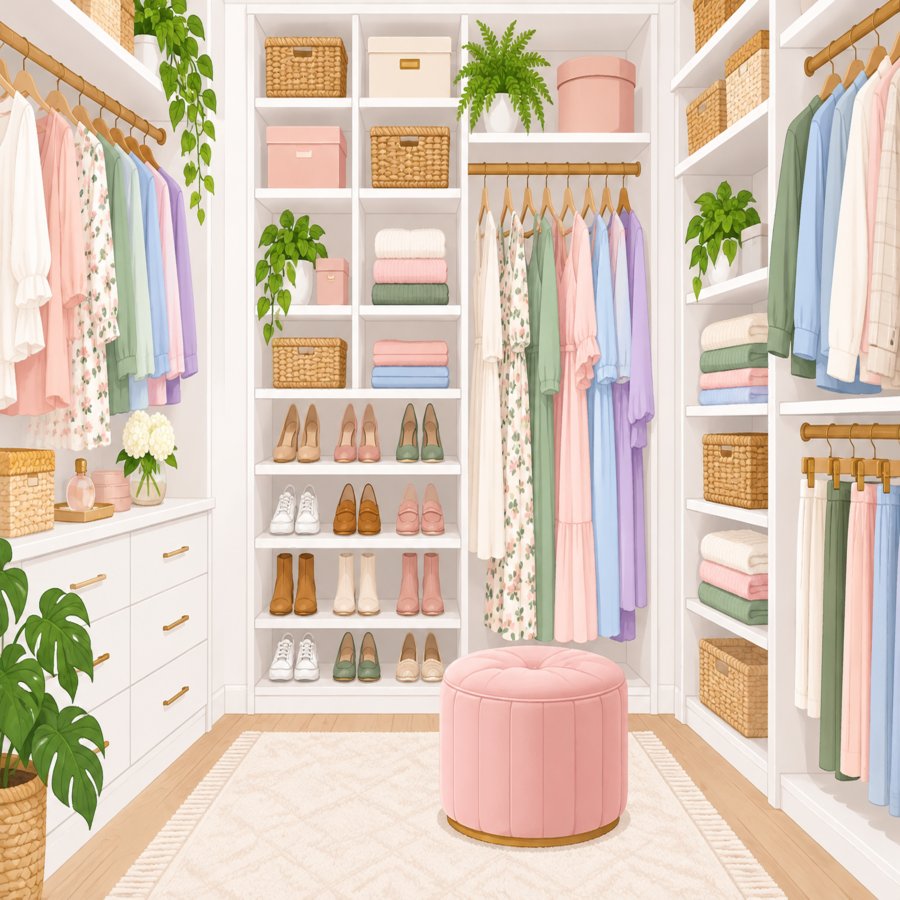
Why Smart Walk-In Closet Hacks Matter More Than a Full Renovation
Before grabbing a hammer, it helps to understand why strategic organization beats tearing out walls. Most closets waste 40 to 50 percent of their available space simply because of poor layout and a single hanging rod.
Smart walk-in closet hacks focus on reclaiming that wasted vertical space, from the floor to the ceiling, rather than expanding the room’s footprint. This approach is faster, far less expensive, and completely reversible if you rent your home.
It also forces a healthier relationship with your belongings. When you build a system around what you actually own, you naturally edit out items that no longer serve you, which keeps the space functional long after the initial organizing weekend.
Think of your closet the same way a designer thinks of a small garden bed. Every layer, from ground cover to climbing vine, has a purpose and a place. Your closet deserves that same layered thinking, with zones for folded items, hanging garments, shoes, and accessories all working in harmony.
Hack One: Install Double-Hang Rods for Instant Vertical Gain
The single most impactful of all the walk-in closet hacks on this list is also the simplest: add a second rod beneath your existing one. Most closets are built with one rod positioned for full-length garments, even though the majority of what we own, shirts, folded trousers, skirts, and jackets, only needs half that height.
By installing a second rod roughly 40 inches below the first, you effectively double your hanging capacity in that section without adding a single inch of floor space. Tension rods work for a temporary fix, but a properly screwed-in rod and bracket set will hold significantly more weight over time.
Tools and materials you will need:
A stud finder, a tape measure, a level, a drill with appropriate drill bits, closet rod brackets rated for your rod’s diameter, and either a wood or metal closet rod cut to length. Expect to spend between 25 and 60 dollars for a basic double-rod setup, depending on rod material and finish.
Start by locating studs with your stud finder and marking bracket positions on both sides of the closet. Use a level to ensure your lower rod sits perfectly horizontal, then pre-drill pilot holes before screwing in the brackets to avoid splitting the wood or drywall.
Once both rods are secure, sort your hanging clothes by length and assign the top rod to dresses, long coats, and gowns, while shorter items move to the new lower rod. This single change often frees up enough room to retire a dresser entirely.
Hack Two: Upgrade with Modular Closet Shelving Ideas
Once your rods are optimized, it is time to look up and down. Modular closet shelving ideas are a cornerstone of effective closet transformation because they create dedicated homes for folded items, shoes, bags, and bins that would otherwise clutter the floor.
The beauty of modular systems is flexibility. Adjustable shelving towers, available at most home improvement retailers, let you customize shelf height as your wardrobe changes with the seasons, which is far more sustainable than fixed built-ins.
Tools and materials you will need:
A modular shelving kit or melamine shelving panels, L-brackets or shelf standards, a drill, a level, wood screws, and a pencil for marking. Budget between 80 and 250 dollars depending on whether you choose laminate, solid wood, or a premium modular brand.
Map out zones before installing anything. Reserve the top shelf, which is hardest to reach, for seasonal or rarely used items like holiday sweaters or luggage. Middle shelves at eye level should house everyday folded clothing, while the lowest shelf or floor zone is ideal for shoe racks or storage bins.
For a cohesive look that elevates the entire room, consider matching your shelf brackets or shelf edging to your existing trim or hardware finishes. Just as a thoughtfully composed balanced gallery wall layout relies on consistent spacing and visual rhythm, your shelving should follow the same disciplined approach so the finished closet feels intentional rather than improvised.
Label each shelf zone, even if only in your own mind, and commit to returning items to their designated spot. This habit alone prevents 90 percent of the clutter creep that undoes organizing projects within a few months.
Hack Three: Choose the Right Wardrobe Organizers for Every Category
Shelving gives you surface area, but wardrobe organizers give you structure within that surface area. Without them, shelves quickly become shapeless piles that collapse the moment you pull one sweater from the bottom.
The best organizers are category-specific. Canvas shelf dividers keep stacked sweaters upright, while slim velvet hangers reduce the bulk of each garment on the rod, freeing up noticeably more rod length than standard plastic hangers.
Tools and materials you will need:
Slim velvet or wooden hangers, canvas or acrylic shelf dividers, stackable drawer organizers for accessories, a tie and belt rack, and clear fabric bins for folded knitwear. A full organizer refresh typically costs between 100 and 180 dollars for an average walk-in.
Swap every mismatched hanger for a single uniform style. This is one of the fastest visual upgrades available and instantly makes a closet look like it belongs in a design magazine, even before you have organized a single shelf.
Dedicate small bins or trays to jewelry, belts, scarves, and watches. These accessory categories are notorious for sprawling across every flat surface, and a designated container stops that spread before it starts.
For folded items prone to toppling, shelf dividers made of sturdy acrylic or canvas create vertical columns that keep each stack contained, much like plant dividers keep root systems from competing in a garden bed.
Hack Four: Build a Complete Clothes Storage System for the Off-Season
Even the most generous walk-in cannot comfortably hold every garment you own across all four seasons at once. A rotating clothes storage system solves this by keeping only the current season’s wardrobe fully accessible.
Off-season items, like heavy winter coats in July or linen dresses in January, get vacuum-sealed or boxed and moved to a secondary location such as an under-bed drawer, a top shelf, or a garage storage unit.
Tools and materials you will need:
Vacuum-seal storage bags, cedar blocks or lavender sachets for moth protection, labeled under-bed bins, and breathable garment bags for structured items like suits or wool coats. This system generally costs 40 to 90 dollars to set up fully.
Before sealing anything away, make sure garments are completely clean and dry. Storing soiled fabric invites pests and can set permanent stains, undoing all your organizing effort by the time the next season arrives.
Natural fiber protection matters here too. According to the The Old Farmer’s Almanac, cedar and lavender are time-tested, chemical-free deterrents against moths and other fabric pests, making them an excellent addition to any long-term storage bin.
Label every bin clearly with its contents and the season it belongs to. When rotation day arrives, you will spend minutes instead of hours hunting through boxes for your favorite cold-weather sweater.
Hack Five: Maximize Door, Wall, and Corner Space
The final and often most overlooked opportunity lies in the surfaces we walk past every day: the back of the closet door, blank wall sections, and awkward corners that standard shelving cannot reach.
An over-the-door organizer can hold a dozen pairs of shoes, scarves, or cleaning supplies without consuming a single inch of interior floor space. Corner shelving units, meanwhile, turn dead triangular zones into display or storage real estate.
Tools and materials you will need:
An over-the-door shoe or accessory organizer, adhesive hooks rated for the intended weight, a corner shelf unit, and a small cordless drill if you choose permanent wall-mounted hooks over adhesive versions. Expect to spend 30 to 70 dollars total.
Hang hooks at varying heights on any open wall segment to catch robes, bags, or tomorrow’s outfit, keeping it off the floor and visible at a glance. This small habit dramatically reduces the morning scramble.
If your closet includes a window, resist the urge to leave that wall bare. A slim floating shelf beneath natural light is perfect for folded linens or a small reading stack, turning unused space into something both functional and visually pleasing.
These five combined walk-in closet hacks work best as a complete system rather than isolated fixes. Layering double rods, modular shelving, dedicated organizers, seasonal rotation, and reclaimed wall space together is what actually doubles your usable storage.
Maintaining Your Newly Organized Closet Long-Term
An organized closet is not a one-time project; it is an ongoing habit. Set a recurring reminder every three months to reassess what is working and what has quietly drifted back into chaos.
Adopt a simple one-in-one-out rule for new clothing purchases. If a new sweater enters the closet, an older one leaves, whether through donation or resale. This single discipline prevents the slow creep that led to overcrowding in the first place.
Dust and vacuum your shelving monthly, paying particular attention to corners where lint and debris accumulate unnoticed. A clean closet also discourages pests that are attracted to fabric fibers and dark, undisturbed spaces.
Finally, revisit your zones seasonally. The system that works perfectly for a winter-heavy wardrobe may need slight adjustment come summer, and giving your closet that quarterly check-in keeps every hack performing at its best year-round.
With these strategies in place, your closet becomes more than storage. It becomes a calm, efficient starting point for every single day, proof that smart walk-in closet hacks can rival any full-scale renovation in impact.